Servant leadership is a leadership philosophy in which the leader’s primary role is to serve the needs of followers, the organization, and the broader community, rather than to accumulate power or status. It inverts the traditional hierarchy, positioning the leader’s success as measured by how well those they lead grow and thrive.
Greenleaf’s 1970 essay
The term was coined by Robert K. Greenleaf, who spent nearly four decades in management research and development at AT&T before turning to writing and consulting. In 1970, he published an essay titled The Servant as Leader, which argued that the great leaders throughout history were first experienced by others as servants, and that this servant quality was what made their leadership legitimate and lasting.
The Hesse inspiration
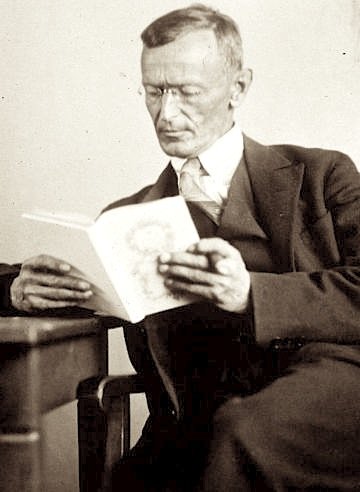
Greenleaf traced his own inspiration directly to Hermann Hesse’s 1932 novel Journey to the East, in which a group of travelers is accompanied by a servant named Leo, who performs menial chores and sustains the group with his spirit. When Leo disappears, the journey falls apart. Only later does the narrator discover that Leo was in fact the leader of the order that had sponsored the journey all along, a revelation Greenleaf used to illustrate his central claim about the servant nature of true leadership.
Core principles
Greenleaf summarized his philosophy with a now-famous test: the best test of servant leadership is whether those served grow as persons, becoming healthier, wiser, and more capable, and more likely themselves to become servants. He often framed the posture as “I serve” rather than “I lead,” emphasizing listening, empathy, and commitment to the growth of others as central practices rather than optional soft skills.
Contrast with traditional leadership models
Where many classic leadership theories focus on authority, charisma, or results, servant leadership measures success by the well-being and development of followers. This does not mean servant leaders avoid making decisions or exercising authority; rather, Greenleaf argued that a servant can only become a true leader if the leader also remains, at heart, a servant to those they guide.
Influence and adoption
Since Greenleaf’s essay, the Greenleaf Center for Servant Leadership has promoted the philosophy across business, education, healthcare, and nonprofit sectors. Companies and institutions have adopted elements of servant leadership in management training, often pairing it with related ideas such as empathetic listening and employee empowerment, and it continues to be taught as a counterpoint to more command-and-control leadership styles.
Key characteristics identified by later scholars
Building on Greenleaf’s original essay, scholar Larry Spears identified ten characteristics commonly associated with servant leaders: listening, empathy, healing, awareness, persuasion, conceptualization, foresight, stewardship, commitment to the growth of people, and building community. These characteristics gave later researchers and practitioners a more concrete checklist for identifying and developing servant leadership behaviors beyond Greenleaf’s original, more philosophical formulation.
Criticism and practical challenges
Critics of servant leadership argue that its emphasis on humility and service can be difficult to reconcile with the decisive, sometimes unpopular decisions leaders must make, particularly in competitive or crisis situations. Some scholars also note the model can be harder to implement in highly hierarchical or fast-moving organizations, and that its heavily values-based language makes it harder to measure empirically than more behaviorally defined leadership theories.
Servant leadership in modern organizations
Companies such as Southwest Airlines and TDIndustries have been cited by researchers and the Greenleaf Center as examples of organizations that have deliberately built servant leadership principles into management training and performance expectations. Healthcare and nonprofit organizations have also drawn heavily on the philosophy, given its natural alignment with missions centered on serving patients, clients, or communities rather than maximizing shareholder returns alone.
Servant leadership and employee well-being
Studies on servant leadership have linked it to higher employee job satisfaction, stronger trust in management, and reduced turnover, outcomes researchers attribute to the model’s explicit focus on employee growth and well-being rather than output alone. Some scholars argue these effects make servant leadership especially well suited to knowledge-based and service industries, where employee engagement and retention weigh heavily on organizational performance.
Distinguishing servant leadership from related styles
Servant leadership is sometimes grouped with other values-based leadership theories such as authentic leadership and ethical leadership, since all three emphasize integrity and follower welfare. Scholars generally distinguish servant leadership by its particular emphasis on humility and prioritizing followers’ needs ahead of the leader’s own, a specific orientation that is not necessarily central to every authentic or ethical leadership model.
Servant leadership and employee voice
A recurring theme in servant leadership research is the leader’s active encouragement of employee voice, meaning the degree to which staff feel safe raising concerns, ideas, or disagreement without fear of retaliation. Because servant leaders prioritize listening as a core practice, organizations that embed the philosophy often report stronger upward communication, which researchers link to better problem detection and more adaptive decision-making over time.
Spreading servant leadership through training
Organizations seeking to build servant leadership typically pair formal training on its principles with changes to how managers are evaluated and promoted, since a philosophy that rewards service to others tends to take hold only when performance systems actually recognize and reward those behaviors rather than continuing to reward purely individual achievement.
FAQs
What inspired Robert Greenleaf to write about servant leadership?
Hermann Hesse’s novel Journey to the East, particularly its servant character Leo, who turns out to be the true leader of the group.
How is servant leadership measured according to Greenleaf?
By whether the people served grow as individuals, becoming healthier, wiser, more autonomous, and more likely to become servant leaders themselves.
Key facts
- Coined by Robert K. Greenleaf in his 1970 essay The Servant as Leader; directly inspired by Hermann Hesse's 1932 novel Journey to the East; built on the idea that a leader must first be a servant to legitimately lead.
Related concepts
In the news
Quick checkWho coined the term 'servant leadership'?Show answer
Robert K. Greenleaf, a former AT&T executive, in his 1970 essay The Servant as Leader.
Sources
- Greenleaf, The Servant as Leader (1970); Greenleaf Center for Servant Leadership; Hesse, Journey to the East (1932)
Editorially reviewed by Specialty Digest Editorial TeamLast reviewed November 1, 2026Researched and drafted with AI assistanceReport an issue