Specialty Digest

DISCOVER IDEAS THAT SHAPE OUR WORLD

Section

History

The latest Specialty Digest coverage in History.

History

Business
World in a Day cover, Thursday, September 3, 2026

World in a Day: Thursday, September 3, 2026

WORLD IN A DAY · THURSDAY, SEPTEMBER 3, 2026 Six stories worth five minutes: Nvidia makes its biggest acquisition ever, a UN report concedes the world’s flagship climate target will likely be missed, and a Bronze Age Egyptian official’s tomb resurfaces after four thousand years underground. Technology Nvidia to Buy Hugging Face for $12.9 Billion […]

World in a Day: Thursday, September 3, 2026 Read More »

History
The Triumph of Death, a 16th-century painting by Pieter Bruegel the Elder depicting death and destruction evocative of the Black Death plague era

What Caused the Black Death, and How Did It Spread?

Within about five years, roughly a third of Europe’s population was dead. What caused the Black Death was a bacterium riding fleas on rodents, but that simple answer hides a more interesting story about how a disease born in the steppes of Central Asia rode the same trade networks that carried silk and spices, arriving

What Caused the Black Death, and How Did It Spread? Read More »

A rodent bacterium and its fleas traveled the same trade routes as silk and spices, killing a third of Europe in five catastrophic years.

History
Crowds gather at the Brandenburg Gate in Berlin shortly after the fall of the Berlin Wall in late 1989

What Actually Caused the Fall of the Berlin Wall?

The popular image of the Berlin Wall’s collapse is a triumphant, planned moment of liberation. What actually caused the fall of the Berlin Wall was messier: a slow buildup of Soviet reform, mass defections, and street protests that finally collided, on the night of November 9, 1989, with a bureaucratic mistake at a press conference.

What Actually Caused the Fall of the Berlin Wall? Read More »

The Wall fell not by government decree but through Soviet retreat, mass defections, and a spokesman's confused answer at a press conference.

History
Historical Japanese painting of Chinese explorer Zhang Qian, whose mission west helped open the Silk Road trade routes

What Was the Silk Road?

Ask what was the Silk Road and most people picture a single dusty highway stretching from China to Rome, with camel caravans hauling bolts of silk the entire way. The reality was messier and more interesting: a sprawling web of overland and maritime routes, built up over centuries by traders who each covered only a

What Was the Silk Road? Read More »

A single trade route connected China to Rome, but it carried far more than silk across its 1,600-year history.

History
An 18th-century painting depicting the storming of the Bastille on July 14, 1789, a pivotal event of the French Revolution.

What Actually Caused the French Revolution?

France in 1789 was not a poor country, but it was a broke and badly governed one, run by a king who could not pay his debts and a tax system that exempted the people best able to pay them. When bread prices spiked and the king dismissed a popular reformist minister, the pressure that

What Actually Caused the French Revolution? Read More »

A bankrupt crown, an unequal tax system, and a bread crisis pushed France toward the meeting halls of Versailles and, on July 14, 1789, the Bastille.

History
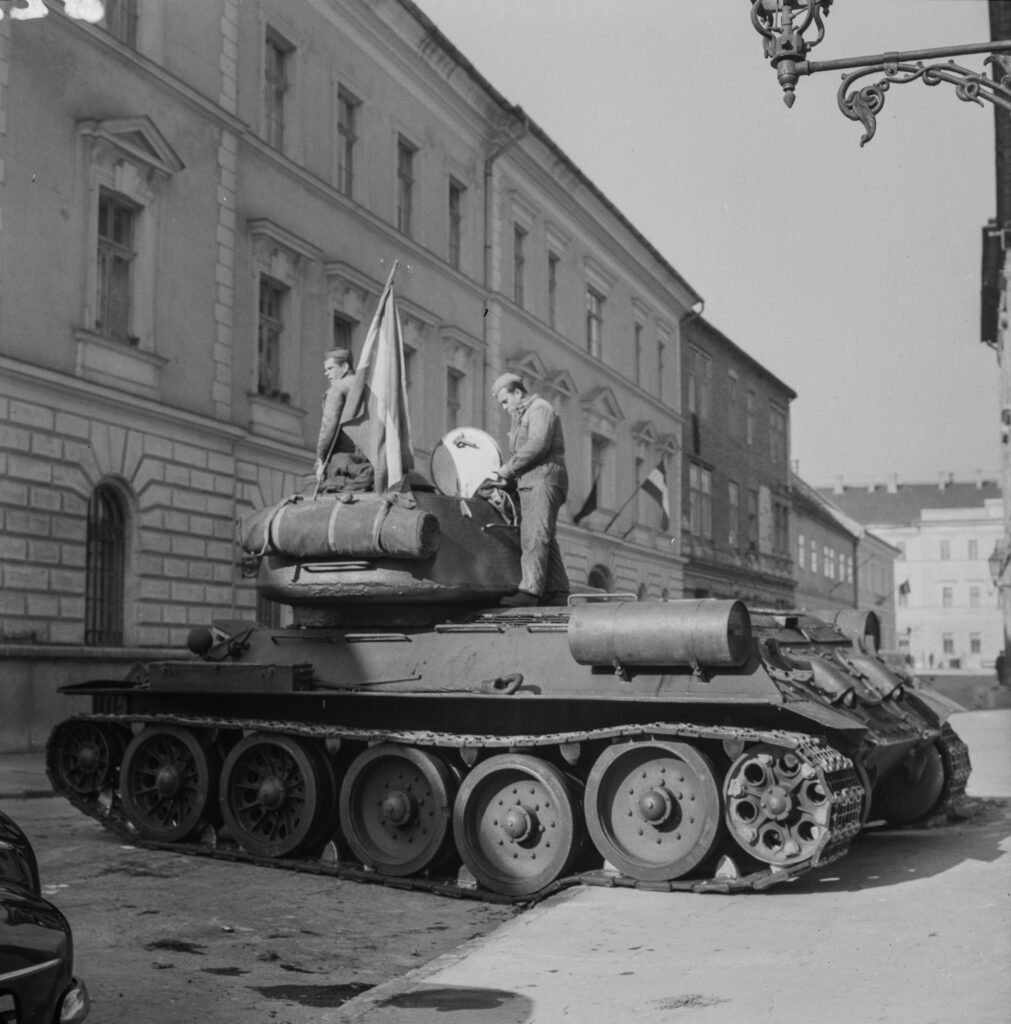
U.S. tanks face off with Soviet forces at Checkpoint Charlie in Berlin during the Cold War.

What Was the Cold War, Explained?

No formal declaration of war ever started it, and no peace treaty ever ended it — yet for more than four decades, the Cold War shaped nearly every corner of global politics, from proxy wars fought thousands of miles from Washington and Moscow to a nuclear standoff that brought the world to the edge of

What Was the Cold War, Explained? Read More »

No shots were fired between Washington and Moscow directly, but for 44 years the rivalry between two superpowers shaped nearly everything else.

History
German troops parade through Warsaw, Poland, in September 1939 after the invasion that began World War II.

What Actually Caused World War II?

World War II did not begin with a single act of aggression; it began with two decades of unresolved grievances, failed diplomacy, and a series of calculated gambles that Western democracies kept declining to stop. When German tanks crossed into Poland on September 1, 1939, it was the culmination of a chain of decisions stretching

What Actually Caused World War II? Read More »

A punishing peace, failed appeasement, and a secret pact between Hitler and Stalin cleared the way for the invasion that started the war.

History
The Great Pyramid of Khufu at Giza, built by paid Egyptian laborers around 2560 BCE.

Who Actually Built the Pyramids of Egypt?

Not slaves, not aliens, not a lost advanced civilization — the pyramids of Egypt were built by tens of thousands of ordinary Egyptians, organized into paid, fed, and medically cared-for labor crews. That conclusion comes not from guesswork but from decades of excavation at Giza, where archaeologists found the workers’ villages, their bakeries, their tools,

Who Actually Built the Pyramids of Egypt? Read More »

Not slaves and not aliens. Excavated villages, tombs, and pay records show the pyramids were built by paid, fed, and honored Egyptian laborers.

History
A crowd gathers outside the New York Stock Exchange during the 1929 crash that preceded the Great Depression.

What Actually Caused the Great Depression?

Black Tuesday gets all the credit, but the stock market crash of October 1929 did not, by itself, cause the Great Depression. It was the spark that exposed a financial system already riddled with weaknesses — and it was the policy response that followed, not the crash itself, that turned a sharp recession into a

What Actually Caused the Great Depression? Read More »

The 1929 crash was only the spark. Bank failures, a rigid gold standard, and a disastrous tariff turned a recession into a decade-long catastrophe.

History
A 19th-century painting depicting the Visigothic sack of Rome in 410 CE, one of the events that led to the fall of the Western Roman Empire.

What Actually Caused the Fall of the Roman Empire?

Rome did not fall in a single afternoon, and it did not fall for a single reason. The Western Roman Empire spent the better part of a century absorbing military defeats, economic strain, and political chaos before a Germanic commander named Odoacer deposed a teenage emperor in 476 CE and simply did not bother replacing

What Actually Caused the Fall of the Roman Empire? Read More »

It took a century of economic strain, military defeats, and political chaos before Odoacer quietly deposed the last Western emperor in 476 CE.