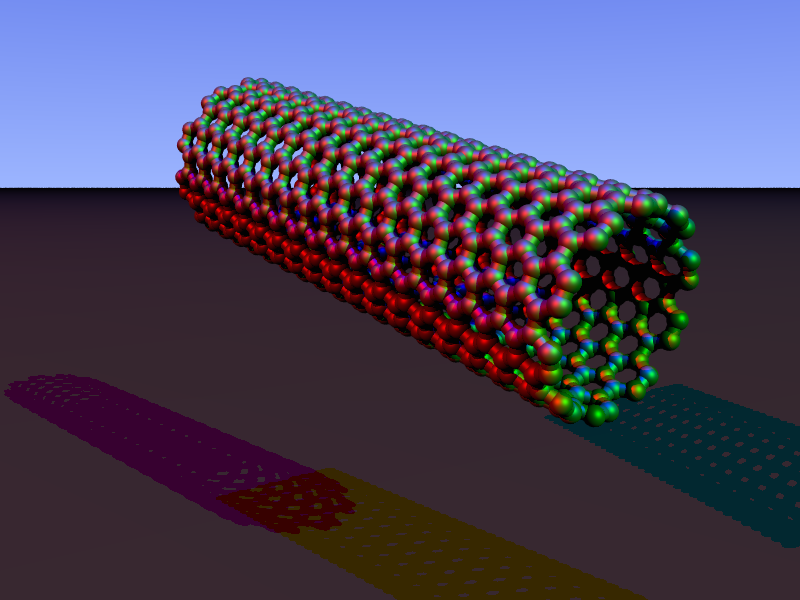
A nanomaterial is a material engineered to have at least one dimension measuring between roughly one and one hundred nanometers, a scale so small that a single nanometer is about one-billionth of a meter, or roughly the width of a few atoms placed side by side. At this scale, materials often display physical, chemical, and optical properties that differ sharply from the same substance in bulk form, because surface effects and quantum mechanical behavior become far more significant when particles are this small.
Why Size Changes Material Behavior
As a particle shrinks, the proportion of its atoms sitting at or near its surface grows dramatically compared to a bulk chunk of the same material, and surface atoms behave differently from atoms deep inside a structure because they have fewer neighboring atoms holding them in place. This surface effect can make nanomaterials more chemically reactive, mechanically stronger, or optically different in color than the same substance at everyday scale. Gold nanoparticles, for example, can appear red or purple rather than the familiar yellow of bulk gold, purely because of how their nanoscale size changes the way they interact with light.
Common Types of Nanomaterials
Nanoparticles are small, often roughly spherical structures used in applications ranging from sunscreen, where tiny zinc oxide or titanium dioxide particles block ultraviolet light, to targeted drug delivery in medicine. Carbon nanotubes are cylindrical structures made of rolled sheets of carbon atoms, prized for exceptional strength and electrical conductivity relative to their weight. Graphene, a single layer of carbon atoms arranged in a honeycomb pattern, is remarkably strong, electrically conductive, and transparent, generating enormous research interest since its isolation was first demonstrated in the mid-2000s.
Manufacturing Approaches
Nanomaterials are produced using two broad strategies. Top-down approaches start with larger bulk material and break it down into nanoscale pieces, often using milling, etching, or lithography techniques borrowed from the semiconductor industry. Bottom-up approaches instead build nanomaterials atom by atom or molecule by molecule, often through controlled chemical reactions that cause nanoscale structures to self-assemble under carefully controlled conditions of temperature, concentration, and time. Each approach offers different tradeoffs in precision, cost, and the types of structures that can realistically be produced at scale.
Applications Across Industries
Nanomaterials have found use across a wide range of industries. In electronics, nanoscale structures help continue shrinking the transistors inside computer chips. In medicine, nanoparticles can deliver drugs directly to targeted cells, improving treatment effectiveness while reducing side effects elsewhere in the body. In energy, nanomaterials improve battery electrodes and solar cell efficiency, while in consumer products, nanoscale coatings provide stain resistance, antimicrobial surfaces, or improved durability in products ranging from clothing to sports equipment.
Safety and Regulatory Considerations
Because nanomaterials behave differently from their bulk counterparts, their potential health and environmental effects cannot always be assumed to match those of the same substance at ordinary scale, and researchers continue studying how nanoparticles interact with biological systems and the environment once released. Regulators in many countries have developed specific guidance and testing requirements for nanomaterials used in consumer products, food, and medicine, reflecting both the promise of the technology and the recognition that its unique properties call for correspondingly careful safety evaluation.
Nanomaterials in Modern Electronics
The semiconductor industry’s long march toward smaller, faster, and more energy-efficient chips has pushed transistor features deep into the nanoscale, making nanomaterials and nanoscale fabrication techniques central to continued progress in computing. Beyond transistors themselves, nanoscale materials are used in advanced memory devices, flexible displays, and sensors that can detect extremely small quantities of a target chemical or biological molecule, taking advantage of how dramatically increased surface area at the nanoscale improves sensitivity compared to larger-scale sensor designs.
Research Frontiers and Future Directions
Scientists continue to discover new nanomaterials and new ways of combining existing ones, from two-dimensional materials beyond graphene to complex nanostructures designed for highly specific functions such as catalyzing particular chemical reactions or selectively filtering molecules from water. Much current research focuses on scaling up promising laboratory discoveries into materials that can be manufactured reliably and affordably at commercial volumes, since many nanomaterials that perform impressively in small research samples face significant engineering challenges when production must expand to an industrial scale.
History of Nanotechnology
Although materials with nanoscale structure, such as certain stained glass pigments used in antiquity, existed long before scientists understood why they behaved as they did, nanotechnology as a deliberate scientific field grew out of advances in microscopy that finally let researchers see and manipulate matter at this scale, beginning in the latter half of the twentieth century. Physicist Richard Feynman’s 1959 lecture exploring the possibilities of manipulating matter atom by atom is often cited as an early conceptual spark, while the development of tools such as the scanning tunneling microscope in the 1980s gave scientists the practical ability to directly observe and move individual atoms, transforming nanotechnology from theory into an active, rapidly growing area of research and industry.
FAQs
Why do gold nanoparticles appear a different color than bulk gold?
At the nanoscale, the way electrons on a gold particle’s surface interact with light changes depending on particle size, causing nanoparticles to absorb and scatter light differently than bulk gold and appear red or purple instead of yellow.
What is the difference between top-down and bottom-up nanomaterial manufacturing?
Top-down methods start with bulk material and break it down to nanoscale using techniques like etching or milling, while bottom-up methods build nanostructures from individual atoms or molecules through controlled chemical assembly.
Quick checkWhat is the difference between top-down and bottom-up nanomaterial manufacturing?Show answer
Top-down methods start with bulk material and break it down to nanoscale, while bottom-up methods build nanostructures from individual atoms or molecules through controlled assembly.
Editorially reviewed by Specialty Digest Editorial TeamLast reviewed November 2, 2026Researched and drafted with AI assistanceReport an issue