Epidemiology is the study of how diseases and other health events are distributed across populations, along with the factors that determine that distribution, with the ultimate goal of controlling health problems and improving public health. Rather than focusing on diagnosing or treating a single patient, epidemiologists examine patterns across groups of people, looking at who becomes sick, where and when outbreaks occur, and why certain populations face higher risk than others, generating evidence that shapes public health policy, clinical guidelines, and disease prevention programs.
Measuring Disease in Populations
Epidemiologists rely on a core set of measures to describe how common a disease is and how it behaves over time. Incidence refers to the rate at which new cases of a disease occur in a population over a specified period, while prevalence describes the total proportion of a population affected by a condition at a given point in time, regardless of when each case first developed. These measures serve different purposes, since a disease can have low incidence but high prevalence if it is chronic and long-lasting, or high incidence but low prevalence if it resolves quickly, and distinguishing between them is essential for understanding both the burden of a disease and how urgently new cases are emerging.
Study Designs
Epidemiologists use several study designs to investigate the causes and risk factors of disease, each with distinct strengths and limitations. Cohort studies follow a group of people over time, comparing outcomes between those exposed and not exposed to a suspected risk factor, while case-control studies work backward, comparing people who already have a disease to those who do not in order to identify differences in past exposures. Randomized controlled trials, considered the strongest design for establishing causation, randomly assign participants to receive an intervention or not, minimizing the influence of confounding factors that might otherwise distort the apparent relationship between an exposure and an outcome.
Outbreak Investigation
When a cluster of illness is identified, epidemiologists follow a systematic process to investigate its source and stop its spread, typically beginning by confirming that a true outbreak exists and establishing a case definition to identify who counts as affected. Investigators then describe the outbreak in terms of time, place, and person, often plotting an epidemic curve showing when cases occurred to help determine whether the outbreak stems from a single common source or is spreading from person to person, before testing hypotheses about the likely source through further data collection and analysis.
Causation and Confounding
Establishing that an exposure actually causes a disease, rather than merely appearing alongside it, is one of epidemiology’s central challenges, since many observed associations arise from confounding, in which a third factor is linked to both the exposure and the outcome and creates a misleading appearance of a direct relationship. Epidemiologists apply a range of criteria, including the strength and consistency of an association across different studies and populations, whether a plausible biological mechanism exists, and whether the exposure consistently precedes the outcome, to help distinguish genuine causal relationships from coincidental or confounded ones.
Applications in Public Health
Epidemiological evidence underlies most major public health decisions, from vaccination recommendations and screening guidelines to regulations on tobacco, food safety, and workplace hazards. Surveillance systems that continuously track disease occurrence allow public health agencies to detect emerging threats quickly, while epidemiological modeling helps predict how an outbreak might spread and evaluate which interventions, such as quarantine measures or vaccination campaigns, are likely to be most effective at reducing transmission and protecting vulnerable populations. Epidemiologists also work closely with policymakers to translate statistical findings into practical guidance, weighing the strength of the evidence against the costs and feasibility of proposed interventions before recommendations are adopted.
Bias and Study Limitations
Even well-designed epidemiological studies are vulnerable to systematic errors that can distort their findings if not carefully addressed. Selection bias occurs when the people included in a study differ in meaningful ways from the broader population they are meant to represent, while recall bias arises when participants with a disease remember or report past exposures differently than healthy participants, often because they have spent more time searching for an explanation for their illness. Researchers address these risks through careful study design, such as selecting appropriate comparison groups and using objective measures of exposure rather than relying solely on participant memory wherever possible.
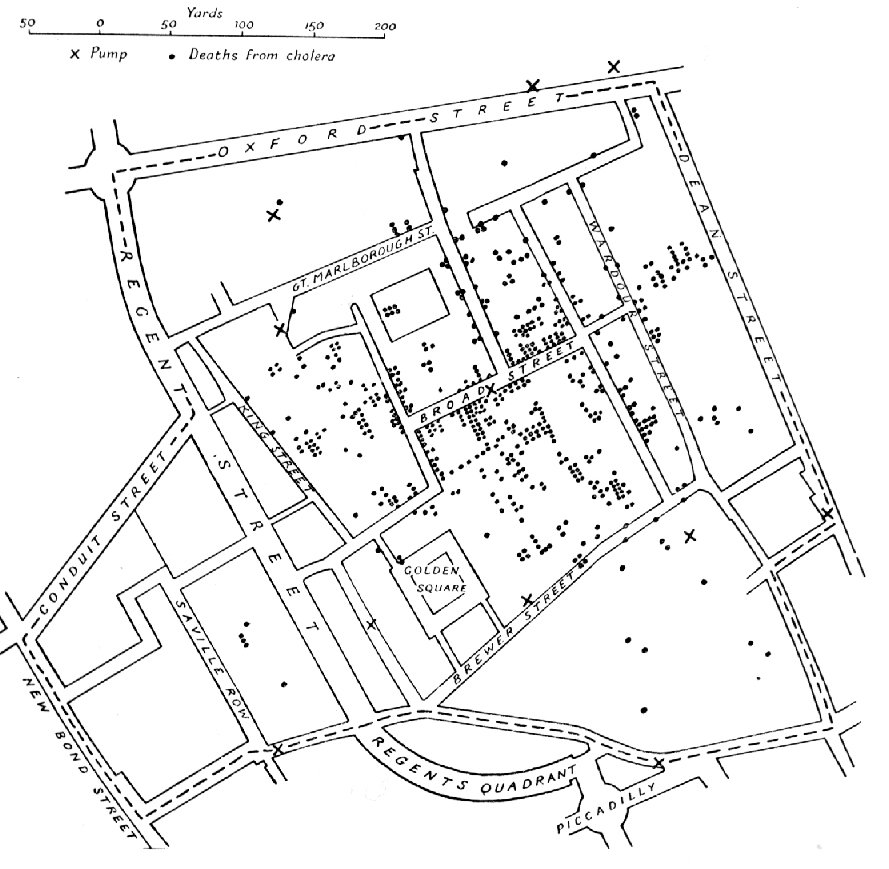
Epidemiology’s modern methods trace back to foundational investigations such as physician John Snow’s nineteenth-century work tracing a cholera outbreak in London to a contaminated water pump, demonstrating that disease could be tracked and controlled through systematic observation of patterns in a population well before the specific causative organism was identified. That basic approach, observing who becomes sick, mapping where and when, and testing hypotheses about the underlying cause, remains the foundation of outbreak investigation today, even as modern epidemiology has added sophisticated statistical modeling, genomic sequencing of pathogens, and large-scale electronic health record analysis to its toolkit.
FAQs
What is the difference between incidence and prevalence?
Incidence measures the rate of new cases occurring over a period of time, while prevalence measures the total proportion of a population affected by a condition at a given point in time.
Why are randomized controlled trials considered stronger evidence than observational studies?
Randomly assigning participants to an intervention or not helps minimize the influence of confounding factors, making it easier to attribute differences in outcomes to the intervention itself rather than to other underlying differences between groups.
Quick checkWhat does an epidemic curve help investigators determine during an outbreak?Show answer
Plotting when cases occurred over time helps investigators determine whether an outbreak stems from a single common source or is spreading from person to person.
Editorially reviewed by Specialty Digest Editorial TeamLast reviewed November 2, 2026Researched and drafted with AI assistanceReport an issue