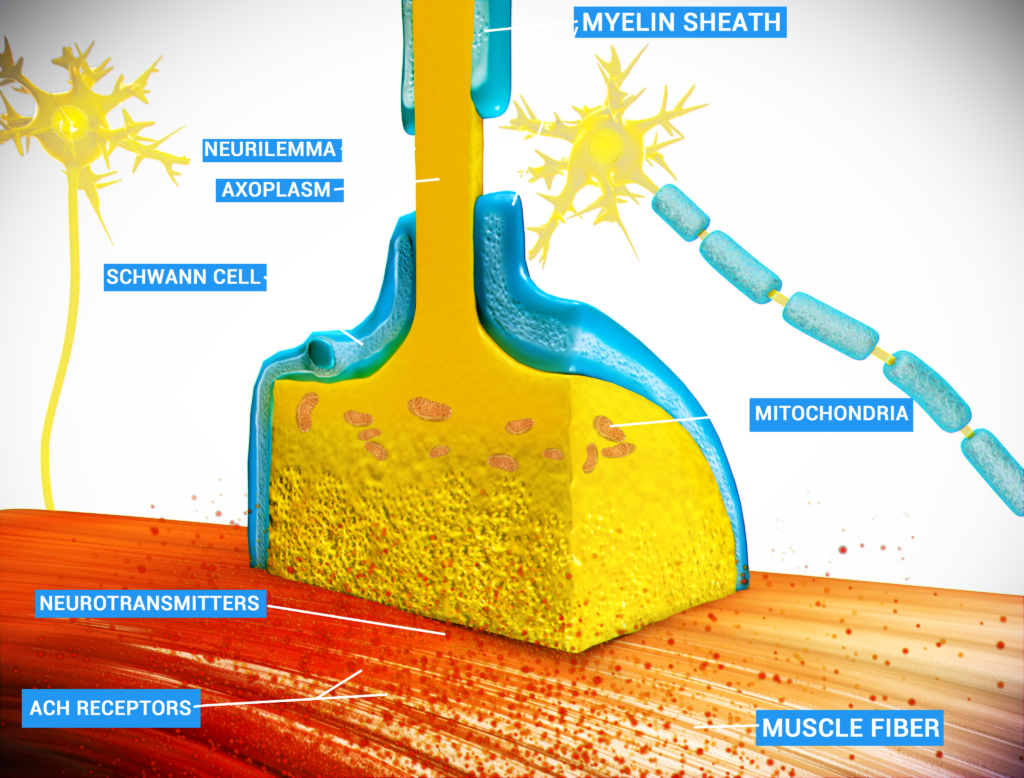
A synapse is the specialized junction where one neuron communicates with another neuron, a muscle cell, or a gland cell, typically by releasing chemical messengers across a microscopic gap. The human brain is estimated to contain well over 100 trillion synapses, and the specific pattern of which neurons connect to which, and how strongly, is what encodes memories, skills, habits, and essentially all of the brain stored information, making the synapse one of the most important structures in all of neuroscience. Although electrical synapses also exist, allowing signals to pass directly between cells through specialized channels without any chemical messenger, chemical synapses are far more common throughout the human nervous system and offer greater flexibility in how strongly a connection can be adjusted. The term synapse was coined around 1897 by the physiologist Charles Sherrington, from Greek roots meaning to clasp together, to describe this critical point of contact between nerve cells.
Structure of a synapse
A typical chemical synapse consists of three parts: the presynaptic terminal, a swelling at the end of the sending neuron axon that stores chemical messengers called neurotransmitters in small membrane-bound sacs; the synaptic cleft, a narrow gap, typically only about twenty nanometers wide, separating the two neurons; and the postsynaptic membrane, a region on the receiving neuron studded with specialized proteins called receptors that detect and respond to the released neurotransmitter. This arrangement allows signals to pass from one neuron to the next without the two cells ever physically fusing together, giving the nervous system far greater flexibility to strengthen, weaken, or rewire specific connections than a system of fixed, permanent wiring would allow. A single neuron can participate in thousands of these junctions simultaneously, receiving input from many other neurons across its dendrites while sending its own output through a single axon to multiple downstream targets.
How synaptic transmission works
When an electrical signal called an action potential reaches the presynaptic terminal, it triggers the release of neurotransmitter molecules into the synaptic cleft through a process requiring calcium ions to enter the terminal. These neurotransmitter molecules then diffuse a short distance across the cleft and bind to matching receptors on the postsynaptic membrane, which can either excite the receiving neuron, making it more likely to fire its own action potential, or inhibit it, making firing less likely. After delivering their signal, neurotransmitter molecules are rapidly cleared from the synaptic cleft, either broken down by enzymes or reabsorbed back into the presynaptic terminal through a process called reuptake, resetting the synapse so it can respond to the next incoming signal. This entire sequence, from the arrival of an action potential to the clearing of the synaptic cleft, typically unfolds in only a few milliseconds, allowing the nervous system to process and respond to information with remarkable speed.
Synaptic plasticity and learning
Synapses are not fixed in strength; they can become stronger or weaker over time in response to how frequently and how closely they are used, a property called synaptic plasticity that forms the physical basis of learning and memory. A frequently cited principle, often summarized as cells that fire together wire together, describes how repeatedly activating two connected neurons at nearly the same time tends to strengthen the synapse between them, a process called long-term potentiation that has been studied intensively in brain regions involved in memory formation. Synapses that go unused for extended periods tend to weaken or disappear entirely in a complementary process called synaptic pruning, which is especially active during childhood and adolescence as the developing brain eliminates connections it does not regularly use, a process that removes a substantial fraction of the synapses present in early childhood in order to make the remaining circuitry more efficient.
Synapses, drugs, and disease
Many psychiatric and neurological medications work by altering synaptic transmission, including antidepressants that block the reuptake of certain neurotransmitters, prolonging their effect in the synaptic cleft, and medications for conditions such as schizophrenia and epilepsy that target specific neurotransmitter receptors. Recreational and addictive drugs frequently work through the same synaptic machinery, and drugs such as cocaine and amphetamines interfere directly with the reuptake or release of neurotransmitters involved in the brain reward system, which helps explain both their powerful rewarding effects and the risk of dependence that accompanies repeated use. Several neurological and psychiatric conditions, including depression, schizophrenia, and certain forms of epilepsy, are now understood at least partly as disorders of synaptic structure or function rather than problems confined to any single brain region alone.
FAQs
What is a synapse?
A synapse is the specialized junction where one neuron communicates with another cell, typically by releasing chemical messengers called neurotransmitters across a microscopic gap.
How many synapses does the human brain have?
The human brain is estimated to contain well over 100 trillion synapses, forming the physical basis for memory, learning, and essentially all brain function.
What is synaptic plasticity?
The ability of synapses to grow stronger or weaker over time depending on how frequently they are used, forming the physical basis of learning and memory.
How do antidepressants affect synapses?
Many antidepressants work by blocking the reuptake of certain neurotransmitters at the synapse, prolonging their effect and altering communication between neurons.
What is the difference between an electrical and a chemical synapse?
An electrical synapse passes a signal directly between two cells through specialized channels, while a chemical synapse relies on neurotransmitters crossing a small gap, and is far more common in the human nervous system.
Key facts
- The junction where one neuron communicates with another neuron, muscle, or gland
- The human brain contains an estimated 100+ trillion synapses
- Term coined around 1897 by physiologist Charles Sherrington
- Synaptic plasticity, the strengthening or weakening of synapses, underlies learning and memory
- Many psychiatric medications work by altering synaptic transmission
Quick checkWhat is synaptic plasticity?Show answer
The ability of synapses to grow stronger or weaker over time based on how frequently they are used, forming the physical basis of learning and memory.
Sources
- National Institute of Neurological Disorders and Stroke, Synapse; Britannica, Synapse
Editorially reviewed by Specialty Digest Editorial TeamLast reviewed November 2, 2026Researched and drafted with AI assistanceReport an issue