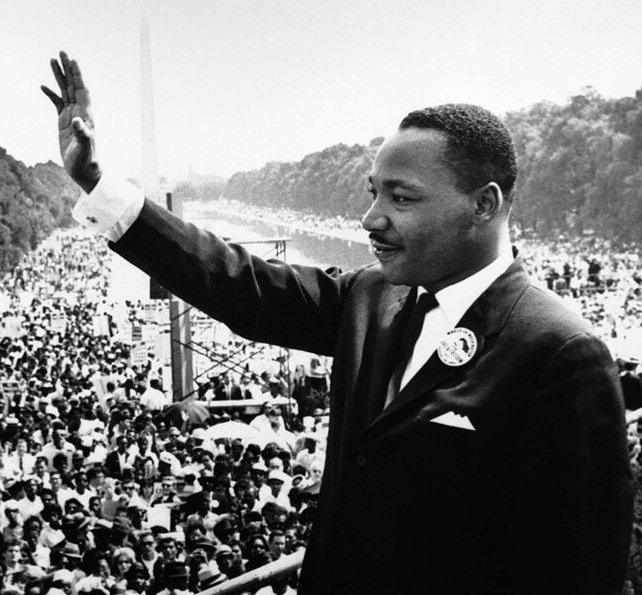
Charismatic leadership is a style in which a leader influences followers primarily through personal charm, confidence, and the emotional appeal of their vision, rather than through formal position, inherited status, or bureaucratic rules. Followers of a charismatic leader often feel a strong personal devotion to that individual specifically, rather than to the organization or office they hold.
Weber’s theory of authority
German sociologist Max Weber identified charismatic authority as one of three fundamental types of legitimate authority in his foundational work on sociology, alongside traditional authority, based on long-established custom, and legal-rational authority, based on formal rules and procedures. Weber argued charismatic authority rests entirely on followers’ perception of a leader’s extraordinary personal qualities.
Characteristics of charismatic leaders
Charismatic leaders are typically described as highly confident, visionary, and skilled communicators who can articulate a compelling future in emotionally resonant terms. They often challenge existing norms and present themselves as capable of extraordinary achievement, generating intense loyalty and enthusiasm among followers who might otherwise be indifferent to a more conventional leader’s message.
The instability of charismatic authority
Weber noted that charismatic authority is inherently unstable because it depends entirely on one individual’s continued ability to inspire belief. Unlike traditional or legal-rational authority, which can pass smoothly to a successor through custom or formal rules, charismatic authority often struggles to survive its original leader, a problem Weber called the “routinization of charisma,” describing the difficult transition organizations face after a charismatic founder departs.
Risks and criticisms
Because charismatic leadership relies so heavily on personal appeal rather than accountability structures, it carries real risks. Followers can become uncritically devoted to a leader’s vision, and history includes charismatic leaders who used this influence for destructive ends. Scholars distinguish charismatic leadership that channels genuine values from forms that merely manipulate followers’ emotions for self-serving purposes, a tension similar to the authentic-versus-pseudo distinction found in transformational leadership theory.
Charismatic leadership in business versus politics
While Weber developed his theory largely to explain political and religious movements, researchers have since applied charismatic leadership to corporate settings, studying how certain chief executives build intense employee and investor enthusiasm around their personal vision for a company. The underlying dynamic, followers attributing extraordinary qualities to the leader, operates similarly whether the setting is a nation, a social movement, or a corporation.
Research on charismatic leadership outcomes
Studies have linked charismatic leadership to higher follower motivation and willingness to exert extra effort, particularly during periods of crisis or major change when followers are most receptive to a compelling, confident vision. Researchers have also found that charismatic leadership can overlap substantially with transformational leadership, since both rely on inspiring followers through vision rather than formal authority.
Building charisma deliberately
Some leadership researchers argue that charismatic behaviors, confident body language, storytelling, and emotionally expressive communication, can be learned and practiced rather than existing only as an innate trait some people are born with. Executive coaching programs increasingly teach specific charismatic leadership techniques, suggesting the style sits on a spectrum rather than being purely a fixed personal gift.
Charisma and organizational succession
Because charismatic authority is so personal, organizations led by a highly charismatic founder often struggle when that person eventually steps down, a challenge closely tied to Weber’s concept of routinization. Succession planning in such organizations frequently involves deliberately building more formal, rule-based structures alongside the charismatic leader’s tenure, so the organization does not depend entirely on one individual’s personal appeal.
Charismatic leadership and ethics
Because followers of a charismatic leader can become unusually uncritical, scholars emphasize the importance of ethical charismatic leadership, in which the leader’s vision genuinely serves followers’ and stakeholders’ interests, as distinct from manipulative charisma used primarily for personal gain or to suppress dissent within an organization or movement.
Charismatic leadership during crisis
Charismatic leaders are often most visible and most effective during periods of genuine crisis or uncertainty, when followers are actively searching for confident direction and a compelling narrative about how the situation will be resolved, conditions that research suggests make audiences unusually receptive to charismatic appeals compared with stable, routine circumstances.
Charismatic leadership and social movements
Beyond business and politics, charismatic leadership has long been studied in the context of social and religious movements, where a single compelling figure often galvanizes a following around a cause well before any formal organizational structure exists, illustrating Weber’s original point that charismatic authority can emerge entirely outside established institutions.
Measuring charisma in research
Researchers studying charismatic leadership typically rely on follower surveys rating a leader’s perceived vision, confidence, and emotional expressiveness, since charisma itself cannot be measured directly as an objective leader trait; it exists only as a perception held by followers, which is part of why the same leader can appear highly charismatic to one audience and unremarkable to another.
Gender and perceptions of charisma
Some studies have found that the same charismatic behaviors are perceived and rewarded differently depending on a leader’s gender, suggesting that charisma is not evaluated in a purely neutral way but is filtered through followers’ existing expectations about how leaders of different genders should behave.
Charisma in interviews and hiring
Some organizational researchers caution that charisma can bias hiring and promotion decisions, since confident, articulate candidates are often rated more favorably in interviews regardless of their actual track record, prompting some companies to add structured, skills-based evaluation steps specifically to counteract this charisma-driven bias.
FAQs
What are the three types of authority Max Weber identified?
Traditional authority, legal-rational authority, and charismatic authority, each resting on a different basis for legitimacy.
Why did Weber consider charismatic authority unstable?
Because it depends entirely on one individual’s personal qualities, making succession difficult once that leader departs, a challenge Weber termed the routinization of charisma.
Key facts
- Sociologist Max Weber identified charismatic authority as one of three types of authority, alongside traditional and legal-rational authority, distinguishing it by its basis in a leader's personal qualities rather than inherited position or formal rules.
Related concepts
Quick checkWho identified charismatic authority as a distinct form of leadership legitimacy?Show answer
Sociologist Max Weber, who distinguished charismatic authority from traditional authority and legal-rational authority.
Sources
- Weber, Economy and Society; Wikipedia (Charismatic authority); academic leadership studies literature
Editorially reviewed by Specialty Digest Editorial TeamLast reviewed November 1, 2026Researched and drafted with AI assistanceReport an issue