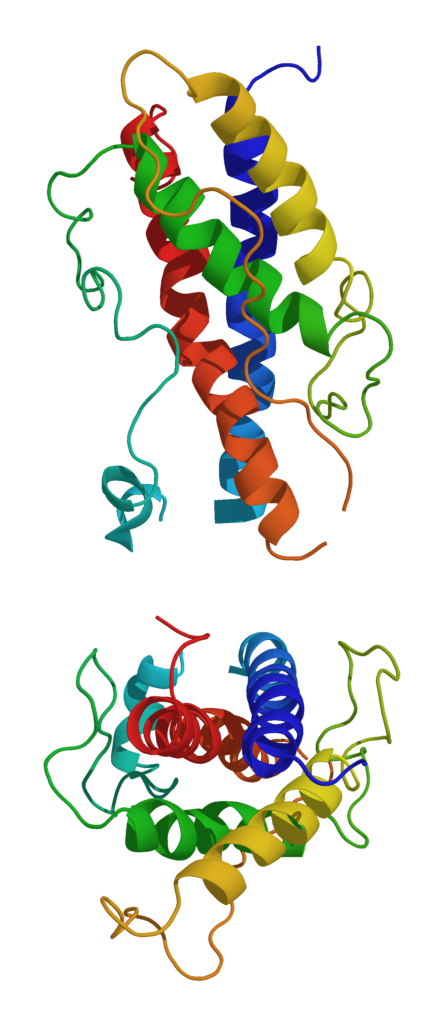
Growth hormone, also called somatotropin, is a hormone produced and released by the pituitary gland that stimulates growth, cell reproduction, and cell regeneration throughout the body. Beyond its well-known role in childhood growth, growth hormone continues to influence metabolism, muscle and bone health, and body composition throughout adulthood, making it relevant to a much broader range of physiological processes than its name alone suggests.
Production and Regulation
Growth hormone is secreted by the anterior pituitary gland in a pulsatile pattern, meaning its levels rise and fall in bursts throughout the day rather than remaining constant, with the largest pulses typically occurring during deep sleep. Its release is controlled by two opposing signals from the hypothalamus, growth hormone-releasing hormone, which stimulates secretion, and somatostatin, which suppresses it, and this balance can be influenced by factors including sleep, exercise, stress, and nutritional status. Vigorous physical activity and short-term fasting are both known to temporarily boost growth hormone release, which is one reason researchers have studied exercise timing and meal patterns as potential ways to naturally support the body’s own hormone output.
Role in Childhood Growth
During childhood and adolescence, growth hormone drives the lengthening of bones at the growth plates, working largely through a secondary hormone called insulin-like growth factor 1, which growth hormone stimulates the liver to produce. Growth hormone deficiency in children can result in short stature and delayed growth, and is typically diagnosed through a combination of growth tracking, blood tests, and sometimes imaging, with synthetic growth hormone therapy available to help affected children reach a more typical adult height.
Role in Adults
Although bone lengthening stops after the growth plates close at the end of puberty, growth hormone continues to play an important role throughout adult life, supporting the maintenance of muscle mass, bone density, and a healthy ratio of lean tissue to body fat. Adults with growth hormone deficiency, often resulting from a pituitary tumor or its treatment, may experience reduced muscle mass, increased body fat, fatigue, and decreased bone density, and some benefit from carefully monitored hormone replacement therapy.
Growth Hormone Disorders
Excess growth hormone production, usually caused by a benign pituitary tumor, leads to gigantism if it occurs before growth plates close or acromegaly if it occurs in adulthood, both characterized by abnormal growth of bones and soft tissue, particularly in the hands, feet, and face. These conditions are typically treated by surgically removing the tumor when possible, along with medications that reduce growth hormone production or block its effects, and ongoing monitoring to manage any lasting metabolic or cardiovascular effects, since both conditions raise the long-term risk of diabetes, joint damage, and heart disease if left untreated for an extended period.
Growth Hormone and Athletic Performance
Because growth hormone promotes muscle growth and can influence body composition, it has been misused by some athletes seeking a competitive advantage, despite being banned by major sporting organizations due to both fairness concerns and health risks associated with supraphysiological doses. Evidence for growth hormone’s performance-enhancing effects in healthy adults without a deficiency is notably weaker than popular belief suggests, and misuse carries real risks including joint pain, fluid retention, and adverse effects on heart structure over time. Detecting misuse is also technically challenging, since growth hormone is chemically similar to the body’s own natural version, which has driven anti-doping agencies to develop specialized blood tests capable of distinguishing synthetic growth hormone from what the pituitary gland would normally produce on its own.
Diagnosis and Testing
Because growth hormone is released in short pulses rather than at a steady level, a single blood draw is often uninformative and can miss or misrepresent a person’s typical secretion pattern. Clinicians instead frequently use stimulation tests, in which a substance known to trigger growth hormone release is administered and blood levels are measured at intervals afterward, or suppression tests for suspected excess, alongside measurement of insulin-like growth factor 1, which stays more stable in the blood and serves as a useful proxy for overall growth hormone activity over time.
Imaging of the pituitary gland, typically with magnetic resonance imaging, is also commonly used when a tumor is suspected as the underlying cause of either excess or deficient growth hormone production. Identifying whether a growth hormone abnormality stems from the pituitary gland itself, from the hypothalamus that regulates it, or from a problem elsewhere in the body helps determine the most appropriate course of treatment.
Growth Hormone Therapy
Synthetic growth hormone, produced using recombinant DNA technology since the 1980s, replaced an earlier and far more limited supply derived from human pituitary glands, which carried serious safety risks including transmission of a rare but fatal neurological disease. Modern recombinant growth hormone is used to treat confirmed deficiency in both children and adults, administered through regular injections, and treatment is closely monitored through growth tracking, blood tests, and periodic reassessment, since dosing needs can change over time and inappropriate use carries metabolic risks.
FAQs
Why does growth hormone release mostly happen during sleep?
The largest pulses of growth hormone secretion occur during deep sleep, which is part of why adequate, high-quality sleep is considered important for normal growth and for the hormone’s broader metabolic functions.
What is the difference between gigantism and acromegaly?
Gigantism occurs when growth hormone excess begins before the growth plates close, causing excessive height, while acromegaly occurs when excess begins in adulthood after growth plates have closed, causing abnormal growth of bone and soft tissue without an increase in height.
Quick checkWhy is a single blood draw often uninformative for measuring growth hormone levels?Show answer
Growth hormone is released in short pulses rather than at a steady level, so a single measurement can miss or misrepresent a person's typical secretion pattern; clinicians often use stimulation tests or measure IGF-1 instead.
Editorially reviewed by Specialty Digest Editorial TeamLast reviewed November 2, 2026Researched and drafted with AI assistanceReport an issue