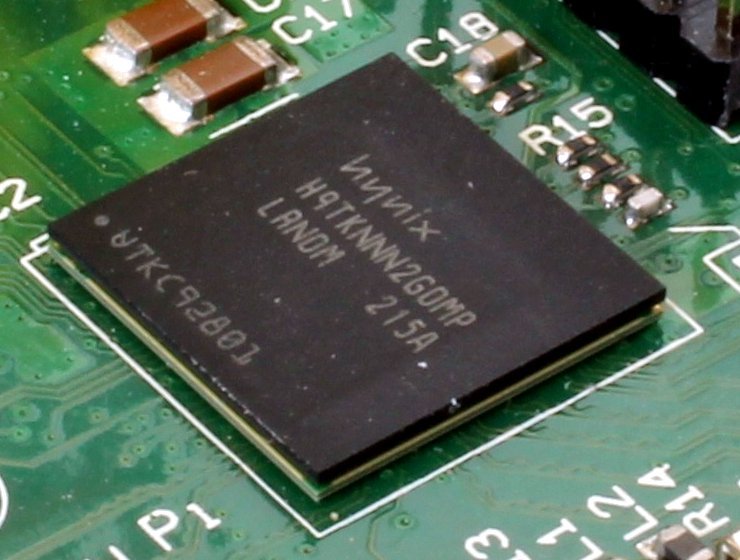
An integrated circuit, often called a chip or microchip, is an electronic circuit built on a single small piece of semiconductor material, usually silicon, that contains many interconnected components such as transistors, resistors, and capacitors. Integrated circuits are the foundation of nearly all modern electronics, from the processors inside computers and phones to the simple control chips found in household appliances, because they pack enormous computing or signal-processing capability into a space smaller than a fingernail.
How Integrated Circuits Are Built
Integrated circuits are manufactured through a process called photolithography, in which patterns are etched onto a thin wafer of silicon using light and chemical processes, building up transistors and connecting wires layer by layer. A modern advanced chip can contain tens of billions of transistors, each smaller than a virus, arranged in patterns designed by software and then physically realized in enormous, highly controlled manufacturing facilities called semiconductor fabrication plants, or fabs, that cost billions of dollars to build and operate.
Types of Integrated Circuits
Integrated circuits generally fall into a few broad categories. Digital integrated circuits, including microprocessors and memory chips, process information as discrete binary signals representing ones and zeros. Analog integrated circuits handle continuously varying signals, such as those from a microphone or sensor, and include components like amplifiers and voltage regulators. Mixed-signal chips combine both digital and analog circuitry on the same die, which is increasingly common in devices such as smartphones that must process both digital data and real-world analog signals from cameras, microphones, and radios.
Moore’s Law and Miniaturization
For decades, the semiconductor industry followed a pattern known as Moore’s Law, an observation by Intel co-founder Gordon Moore that the number of transistors that could be economically packed onto a chip roughly doubled every two years. This relentless miniaturization drove huge gains in computing power while lowering the cost per transistor, transforming computers from room-sized machines into devices that fit in a pocket. In recent years, the pace of miniaturization has slowed as transistors approach physical limits measured in just a few nanometers, pushing engineers toward new techniques such as stacking chips vertically and designing specialized processors for specific tasks.
Design and Testing
Designing a modern integrated circuit requires specialized software tools that let engineers lay out billions of transistors and simulate how the finished chip will behave before any physical manufacturing begins, since a design mistake discovered after fabrication can waste months of work and enormous sums of money. Once chips are manufactured, they undergo rigorous testing to catch manufacturing defects, since even a tiny flaw in a single transistor among billions can render a chip unusable, and testing strategies have become a specialized engineering discipline in their own right.
The Global Semiconductor Supply Chain
No single country currently controls the entire process of designing and manufacturing advanced chips. Chip design often happens in one country, specialized equipment for fabrication comes from a small number of highly specialized suppliers, and the most advanced manufacturing is concentrated in just a handful of facilities worldwide. This concentration has made semiconductor supply chains a significant topic in international trade and national security policy, since a disruption at even one critical facility can ripple through industries ranging from automobiles to consumer electronics.
History of the Integrated Circuit
The integrated circuit was independently developed in the late 1950s by Jack Kilby at Texas Instruments and Robert Noyce at Fairchild Semiconductor, who found ways to build multiple electronic components on a single piece of semiconductor material rather than wiring together separate individual components by hand. This innovation eliminated much of the size, cost, and reliability problems of earlier electronics and set off decades of rapid advancement that eventually made possible the personal computer, the internet, and the smartphone.
Integrated Circuits in Everyday Devices
Beyond the processors and memory chips that get the most attention, integrated circuits quietly run countless everyday devices. A modern car can contain more than a thousand chips controlling everything from the engine and brakes to infotainment and airbags, while household items such as thermostats, washing machines, and light bulbs increasingly rely on small, low-cost microcontroller chips to manage basic functions. This widespread embedding of computing power into ordinary objects, sometimes called the Internet of Things when those chips also connect to networks, has made integrated circuits one of the most consequential inventions of the twentieth century, even though most people never see the chips themselves at work.
Power Consumption and Heat
As chips pack more transistors into a smaller area and run at higher speeds, they generate more heat, which engineers must manage carefully since excessive heat can slow a chip down or damage it permanently. Designers balance performance against power consumption, often including features that reduce a chip’s clock speed or shut down unused sections when full performance is not needed, which is especially important in battery-powered devices such as phones and laptops where every fraction of a watt saved extends how long a device can run between charges.
FAQs
What is the difference between an integrated circuit and a transistor?
A transistor is a single electronic component that can switch or amplify electrical signals, while an integrated circuit combines many transistors and other components together on one piece of semiconductor material to perform a complete function.
Why has chip miniaturization slowed down in recent years?
Transistors have shrunk to just a few nanometers across, approaching physical limits where quantum effects and heat dissipation make further shrinking increasingly difficult and expensive, pushing the industry toward other ways of improving performance.
Quick checkWhy has chip miniaturization slowed down in recent years?Show answer
Transistors have shrunk to just a few nanometers across, approaching physical limits where quantum effects and heat dissipation make further shrinking increasingly difficult and expensive.
Editorially reviewed by Specialty Digest Editorial TeamLast reviewed November 2, 2026Researched and drafted with AI assistanceReport an issue