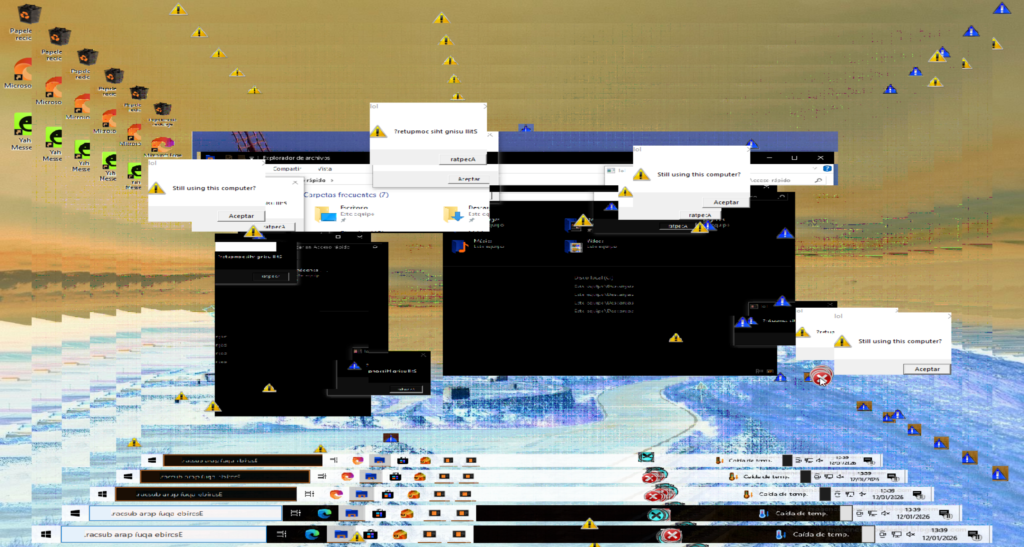
Malware, a term combining malicious and software, is any program or code deliberately designed to damage a computer system, steal information, or gain unauthorized access to a device or network without the owner’s informed consent. The term serves as an umbrella category covering a wide range of specific threats, including viruses, worms, trojans, ransomware, and spyware, each of which spreads or operates in its own particular way but shares the common trait of acting against the interests of the device’s legitimate owner or user.
Major Categories of Malware
A computer virus attaches itself to a legitimate file or program and spreads when that infected file is shared or executed, requiring some form of human action, such as opening an infected attachment, to begin spreading further. A worm, by contrast, can spread entirely on its own across a network by exploiting software vulnerabilities, without requiring a user to open or run anything, which has historically allowed particularly dangerous worms to spread to huge numbers of vulnerable computers within hours of being released. A trojan disguises itself as a legitimate, desirable program to trick a user into installing it voluntarily, only to carry out malicious actions once it has gained access to the system, borrowing its name from the ancient story of a deceptive wooden horse used to smuggle soldiers past a city’s defenses.
Spyware secretly monitors a user’s activity, often capturing keystrokes, browsing history, or login credentials, and sends that stolen information back to an attacker without the user’s knowledge. Ransomware encrypts a victim’s files or locks them out of their own system entirely, then demands payment, typically in cryptocurrency, in exchange for restoring access, and has become one of the most financially damaging categories of malware affecting both individuals and large organizations. Rootkits are designed specifically to hide their own presence and that of other malware deep within a system’s core software, making them especially difficult to detect and remove using standard security tools.
How Infections Happen and How to Prevent Them
Malware commonly spreads through phishing emails carrying malicious attachments or links, software downloaded from untrustworthy websites, infected removable storage devices such as USB drives, and exploitation of unpatched software vulnerabilities that have not yet been fixed with a security update. Attackers continually refine these delivery methods, often disguising malicious files as legitimate documents, invoices, or software updates, and increasingly using convincing, well-researched social engineering tactics to persuade a target to lower their guard and take the action that triggers an infection.
Defending against malware typically combines several layers of protection: antivirus and endpoint security software that scans for and blocks known malicious code, regular software updates that close known vulnerabilities before attackers can exploit them, firewalls that limit unauthorized network access, regular data backups that allow recovery without paying a ransomware demand, and ongoing user education, since many successful infections still ultimately depend on tricking a human being into taking an action that lets the malware in. No single layer of defense is ever fully foolproof on its own, which is why security professionals generally recommend combining several of these different protections together rather than relying on any one single tool alone.
From Early Experiments to a Global Industry
Some of the earliest self-replicating programs were created in the 1970s and 1980s largely as academic experiments or pranks rather than tools for financial gain, with early viruses spreading slowly through shared floppy disks long before most computers were ever connected to a network. The arrival of widespread internet connectivity in the 1990s and 2000s transformed malware from a relatively contained nuisance into a much faster-spreading and more damaging threat, as infected email attachments and vulnerable, internet-connected software gave malicious code far more opportunities to reach new victims.
Malware creation and distribution has since grown into a large, organized criminal industry in many parts of the world, with specialized groups developing and selling malware tools, stolen data, and even ready-made ransomware kits to other criminals who lack the technical skill to build such tools themselves, an arrangement often called malware-as-a-service. Nation-states have also developed sophisticated malware for espionage and sabotage purposes, blurring the line between ordinary cybercrime and state-sponsored cyber operations, and pushing security researchers and governments to continually track and respond to an increasingly well-resourced and professionalized threat landscape.
Frequently Asked Questions
What is the difference between a virus and a worm? A virus needs a human action, such as opening an infected file, to spread, attaching itself to legitimate programs or documents. A worm can spread on its own across a network by exploiting vulnerabilities, without needing a person to open or run anything, which generally lets worms spread much faster than viruses.
How can I tell if a device is infected with malware? Common warning signs include unexpectedly slow performance, unfamiliar programs or browser toolbars appearing on their own, frequent crashes or pop-up advertisements, unusual network activity, and files that have become encrypted or inaccessible, though some well-designed, carefully engineered malware is built specifically to avoid producing any obvious symptoms at all for as long as possible.
Is antivirus software enough to protect against all malware? No single tool catches everything. Antivirus software is effective against known and recognizable threats but can struggle against brand-new malware it has never encountered before, which is why layered defenses, including regular software updates, careful attention to suspicious emails and links, and reliable backups, remain important even on a device running up-to-date antivirus protection.
Key facts
- Malware is an umbrella term covering viruses, worms, trojans, spyware, and ransomware.
- Viruses need human action to spread; worms spread automatically across networks.
- Trojans disguise themselves as legitimate software to gain access.
- Ransomware encrypts files and demands payment for their release.
- Layered defenses, including updates, backups, and user education, work best against malware.
Quick checkWhat is the key difference between how a virus and a worm spread?Show answer
A virus requires some human action, like opening an infected file, to spread further, while a worm can spread on its own across a network by exploiting software vulnerabilities, without needing anyone to open or run anything.
Sources
- NIST Special Publication 800-83; Malware Analysts Cookbook (Ligh et al.)
Editorially reviewed by Specialty Digest Editorial TeamLast reviewed November 2, 2026Researched and drafted with AI assistanceReport an issue