Project-based learning is an instructional approach in which students learn academic content and skills by engaging in extended, real-world projects that culminate in a tangible product or presentation, rather than through a traditional sequence of lectures and isolated assignments.
Roots in experiential education
Project-based learning traces its philosophical roots to early twentieth-century educational theorist John Dewey, who argued that genuine learning happens through active experience and reflection rather than passive reception of information. This experiential, constructivist view of learning, students building understanding by doing rather than simply being told, underlies most modern project-based learning models.
Key design features
Education organizations that have formalized project-based learning standards, most notably the Buck Institute for Education, now operating as PBLWorks, identify several essential design elements: a driving question that frames the project’s purpose, meaningful student voice and choice in how the project unfolds, sustained inquiry over an extended period rather than a single class period, and a public product that students present to an audience beyond the teacher.
Contrast with traditional direct instruction
Project-based learning stands in deliberate contrast to direct instruction, where a teacher explains content step by step before students practice it. In a project-based model, the teacher instead acts primarily as a facilitator, with content knowledge introduced largely in service of completing the project rather than taught upfront in isolation.
Benefits and criticisms
Proponents argue project-based learning builds durable engagement, collaboration skills, and the ability to apply knowledge to open-ended problems more effectively than lecture-based instruction. Critics point to practical difficulties: projects can be time-consuming to design and assess fairly, stronger students sometimes carry weaker group members, and covering a full curriculum’s worth of discrete content through projects alone can be harder to guarantee than through more structured, sequential teaching.
The teacher’s shifting role
In a project-based classroom, the teacher’s role shifts from the primary source of information to a facilitator who poses the driving question, provides resources and checkpoints, and coaches students through research, collaboration, and revision. This shift requires a different kind of classroom management and pacing than direct instruction, since students are often working at different points in the project at the same time rather than moving through a single lesson in lockstep.
Assessing project-based work
Because project-based learning culminates in a complex, often collaborative product rather than a simple test, teachers typically rely on detailed rubrics covering both the final product and the process used to create it, including research quality, collaboration, and revision based on feedback. This makes assessment more multidimensional than a single test score, which supporters consider a strength and critics consider a source of inconsistency between classrooms.
Where project-based learning is used
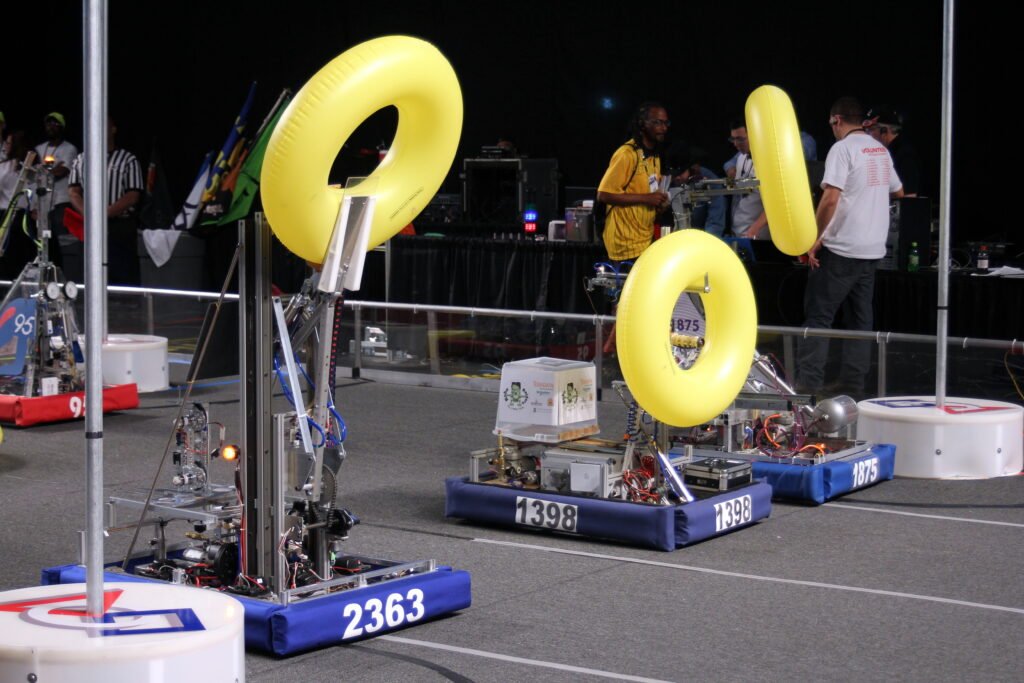
Project-based learning appears across subject areas and age groups, from elementary science projects investigating a local environmental question to high school engineering courses where students design and build a physical solution to a stated problem. Its flexibility across disciplines is part of why organizations like PBLWorks provide subject-specific project libraries rather than a single fixed curriculum.
Some schools built entirely around project-based learning as a central instructional philosophy, rather than an occasional supplement to traditional lessons, further distinguish the model’s deepest implementations from classrooms that use a project only occasionally alongside otherwise conventional instruction.
Measuring long-term impact
Longitudinal research on project-based learning’s academic impact has grown alongside its classroom adoption, with several large-scale studies finding that well-implemented project-based units can produce learning gains comparable to or exceeding traditional instruction on standardized measures, while also building collaboration and communication skills that conventional tests do not directly capture. As with differentiated instruction, researchers caution that outcomes depend heavily on how faithfully a given classroom implements the model’s core design elements rather than simply labeling an activity a project.
Schools considering a shift toward project-based learning are generally advised to start with a single well-supported unit rather than converting an entire curriculum at once, since the planning and facilitation skills the model demands typically take more than one cycle to develop.
Peer observation and coaching from more experienced project-based educators are commonly used during this early period to help new facilitators adjust pacing and scaffolding before expanding the approach further.
Grading group contributions fairly
One persistent practical challenge in project-based learning is fairly assessing individual contribution within a group product, since a single group grade risks rewarding students who contributed little and penalizing those who carried a disproportionate share of the work. Many practitioners address this by combining a shared group score for the final product with an individual component based on documented contribution, reflection, or a separate individual assessment of the underlying content knowledge.
Clear expectations set before the project begins, rather than introduced only after a fairness dispute arises, tend to make this balance easier to manage for both teachers and students.
Some teachers also build in periodic peer-feedback checkpoints during the project itself, rather than waiting until the final product, so uneven participation can be addressed while there is still time to correct it.
These small structural safeguards tend to matter more for a project’s ultimate fairness and learning value than the choice of topic itself.
FAQs
What organization is known for formalizing project-based learning standards? The Buck Institute for Education, now known as PBLWorks.
Which educational philosopher is most associated with the experiential roots of project-based learning? John Dewey, who argued learning happens through active experience rather than passive reception of information.
Key facts
- Project-based learning's experiential roots trace to educational theorist John Dewey.
- The Buck Institute for Education (PBLWorks) formalized widely used project design standards.
- Key design elements include a driving question, student voice and choice, and a public product.
Related concepts
Quick checkWhich philosopher is most associated with the experiential learning roots of project-based learning?Show answer
John Dewey.
Sources
- General education reference; PBLWorks (Buck Institute for Education) literature
Editorially reviewed by Specialty Digest Editorial TeamLast reviewed November 2, 2026Researched and drafted with AI assistanceReport an issue