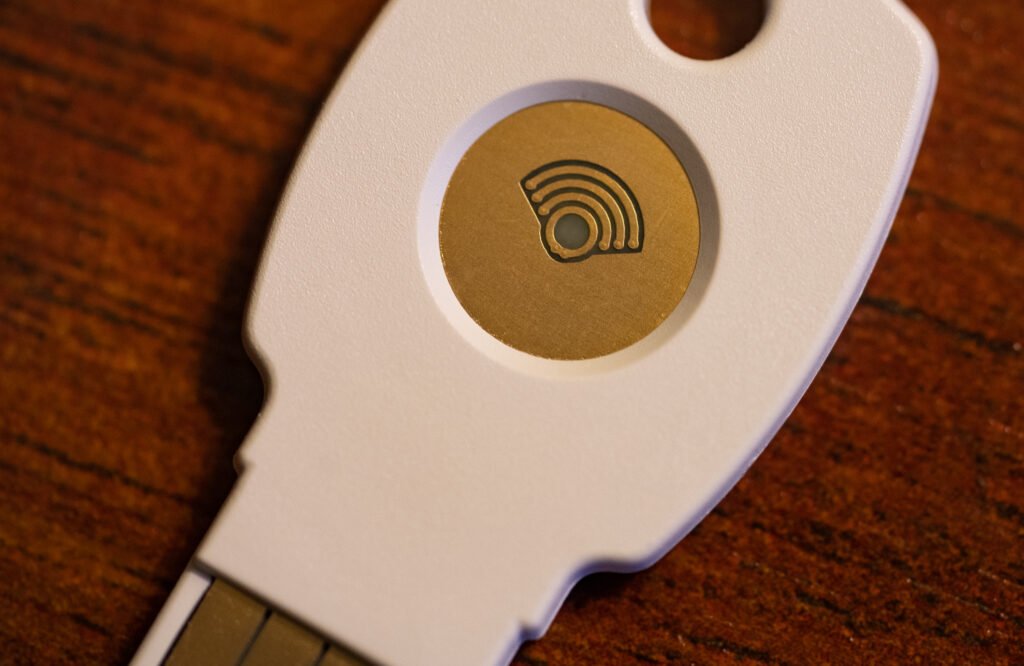
Two-factor authentication, often abbreviated 2FA, is a security method that requires a person to provide two distinct types of evidence to verify their identity before gaining access to an account or system, rather than relying on a password alone. The goal is to make unauthorized access substantially harder, since an attacker who manages to steal or guess a password still cannot get in without also possessing the second required factor, which is typically something the legitimate user has physical access to, such as a phone, or something inherent to them, such as a fingerprint.
The Three Categories of Factors
Authentication factors are traditionally grouped into three categories. Something you know covers information a person memorizes, most commonly a password or a personal identification number, and represents the oldest and still most widely used authentication factor, despite being vulnerable to guessing, theft, and reuse across multiple accounts. Something you have covers a physical item in the user’s possession, such as a smartphone receiving a one-time code, a dedicated hardware security key, or a smart card, and it generally provides much stronger protection than a password alone because an attacker typically cannot access it remotely. Something you are covers biometric characteristics unique to the individual, including fingerprints, facial recognition, and iris scans, which cannot be as easily shared, forgotten, or guessed as a password, though biometric data carries its own distinct privacy considerations since, unlike a password, it generally cannot be changed if ever compromised.
Genuine two-factor authentication combines factors from two of these different categories, such as a password paired with a one-time code sent to a phone. Requiring two pieces of evidence from the same category, such as two different passwords, does not provide the same security benefit, since compromising one factor through methods like phishing or data breaches often makes compromising a similar factor from the same category substantially easier as well.
Common Methods and Their Tradeoffs
SMS text message codes remain widely used because nearly everyone already owns a phone capable of receiving them, but security researchers have identified meaningful weaknesses, including attacks where a criminal convinces a mobile carrier to transfer a victim’s phone number to a device the attacker controls, intercepting the codes meant for the real owner. Authenticator apps generate time-limited codes directly on a user’s device without relying on a cellular network at all, offering stronger protection against that specific interception risk, and physical hardware security keys, which must be plugged in or tapped to approve a login, offer some of the strongest available protection since they are specifically resistant to many remote phishing techniques that can otherwise defeat simpler forms of two-factor authentication.
Passkeys, a newer approach built on cryptographic standards, are increasingly offered as an alternative to traditional two-factor authentication entirely, combining the strength of a hardware-backed cryptographic key with the convenience of a device’s existing fingerprint or face recognition, and are explicitly designed to resist the kind of phishing attacks that can trick a user into handing over a password or even a one-time code. Major technology companies have promoted passkeys heavily as a more phishing-resistant successor to the traditional password-plus-code model, though adoption across the full range of websites and services remains a gradual, ongoing transition rather than a completed shift.
From Niche Security Tool to Everyday Expectation
Multi-factor authentication concepts have existed in specialized settings, including banking and government systems, for many years, often relying on physical hardware tokens that generated a new numeric code every minute. Two-factor authentication became far more common for ordinary consumer accounts starting in the 2010s, as major email providers, social media platforms, and banks began offering it as an optional security feature in response to a steady rise in large-scale data breaches that exposed millions of reused or weak passwords at once.
What began as an optional feature many users ignored has increasingly become a default expectation or even a requirement, with many services now enabling some form of two-factor authentication automatically or strongly encouraging it during account setup. Regulatory requirements in sectors such as banking and healthcare have reinforced this shift, often mandating multi-factor authentication for access to sensitive systems, while the continued rise of passkeys suggests the underlying technology will keep evolving toward methods that are both more secure and less burdensome for everyday users than typing in a one-time code.
Frequently Asked Questions
Is two-factor authentication the same as multi-factor authentication? Two-factor authentication specifically requires exactly two distinct types of verification, while multi-factor authentication is the broader term covering any method requiring two or more factors, meaning two-factor authentication is technically one specific, common case of multi-factor authentication.
Why is an SMS code considered weaker than an authenticator app? SMS codes travel over the cellular network and can potentially be intercepted or redirected through attacks such as convincing a mobile carrier to transfer a victim’s phone number, while an authenticator app generates codes directly on the device itself without depending on that same cellular delivery path, closing off that particular avenue of attack.
Does two-factor authentication make an account completely unhackable? No security measure provides absolute protection. Two-factor authentication substantially raises the difficulty for an attacker, blocking many common attacks that rely on a stolen password alone, but sophisticated, highly targeted attacks can sometimes still find ways around certain two-factor methods, which is part of why stronger options such as hardware security keys and passkeys continue to be developed and recommended.
Key facts
- 2FA requires two different factors: something you know, have, or are.
- Genuine 2FA combines factors from two different categories, not two of the same kind.
- SMS codes are convenient but vulnerable to interception and SIM-swapping attacks.
- Authenticator apps and hardware keys offer stronger protection than SMS codes.
- Passkeys are a newer, phishing-resistant alternative built on cryptographic standards.
Quick checkWhy does genuine two-factor authentication require factors from two different categories?Show answer
Factors are grouped as something you know, something you have, and something you are, and combining two from the same category offers little extra protection, since compromising one often makes compromising a similar factor from that same category easier too.
Sources
- NIST Special Publication 800-63B; FIDO Alliance technical documentation
Editorially reviewed by Specialty Digest Editorial TeamLast reviewed November 2, 2026Researched and drafted with AI assistanceReport an issue