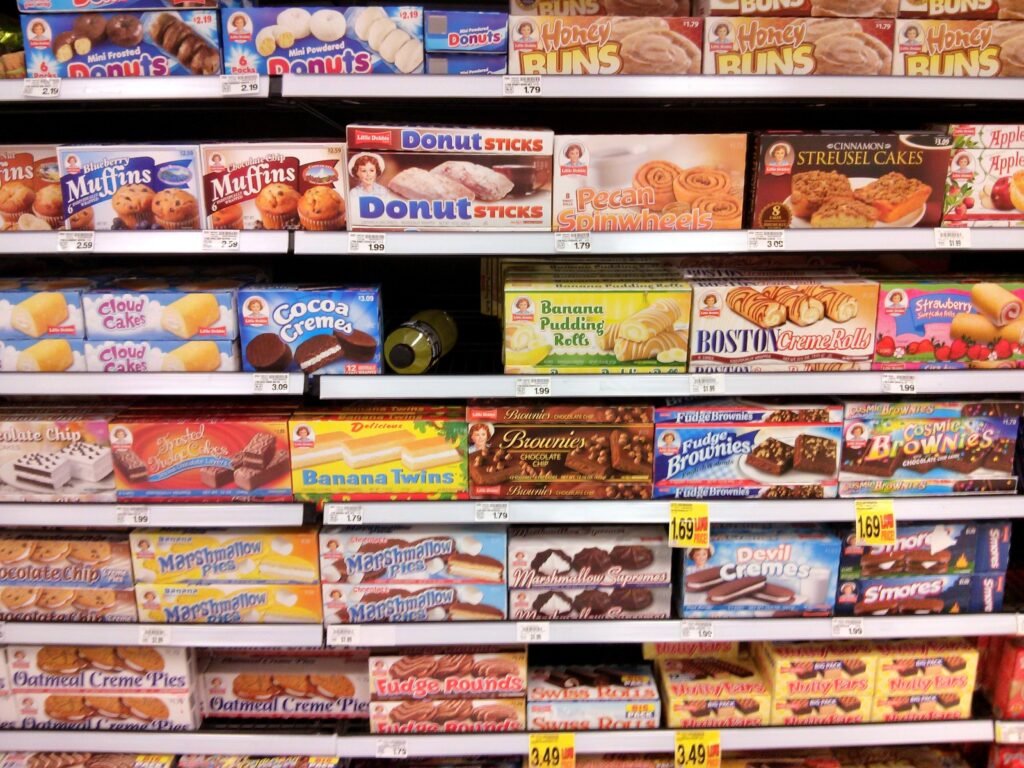
Ultra-processed food refers to industrially manufactured food products made predominantly from substances extracted or refined from whole foods, combined with additives such as preservatives, emulsifiers, artificial colors, and flavor enhancers, and typically bearing little visible resemblance to the whole-food ingredients they originally came from. The category, formalized through the widely used NOVA food classification system, includes items such as packaged snacks, sugary cereals, instant noodles, many sodas, and various reconstituted or restructured meat products, distinguishing them clearly from minimally processed whole foods and from foods that undergo only simpler forms of processing, such as freezing or pasteurization.
The NOVA Classification System
The NOVA system sorts foods into four groups based on the extent and purpose of processing rather than nutritional content alone: unprocessed or minimally processed foods, processed culinary ingredients such as oils and sugar used in home cooking, processed foods combining minimally processed foods with culinary ingredients, and ultra-processed foods, formulated mostly from industrial ingredients and additives rarely used in home kitchens. This classification approach has influenced public health research and policy discussions in many countries, shifting some research attention away from focusing on individual nutrients in isolation and toward the broader degree of industrial processing a given food has undergone overall.
Common Characteristics
Ultra-processed foods often share several features that distinguish them from less processed alternatives, including high energy density, elevated levels of added sugar, refined starch, salt, or unhealthy fats, low fiber and micronutrient content relative to their calorie content, and the use of flavor and texture additives designed to make the product highly palatable. Many are also engineered for convenience and long shelf life, designed to be ready to eat or require minimal preparation, which contributes substantially to their widespread popularity and heavy consumption, particularly in busy, time-pressed households.
Health Associations
A substantial and growing body of observational research has linked higher consumption of ultra-processed foods with a meaningfully increased risk of obesity, type 2 diabetes, cardiovascular disease, and certain other chronic, long-term health conditions, though researchers continue to actively debate exactly which specific features of ultra-processed foods, whether their nutrient composition, their texture and effect on eating speed, or other factors, best explain these observed associations. Some controlled feeding studies have found that people spontaneously eat more calories when offered ultra-processed diets compared with minimally processed diets matched for nutrients, suggesting that mechanisms beyond nutrient content alone, such as texture, eating speed, and palatability, may well be involved.
Criticisms and Debates
Not all researchers fully agree on how useful the ultra-processed category is for guiding individual dietary choices, since it groups together an extremely wide range of products, from candy and soda to some fortified breakfast cereals and plant-based meat alternatives, that may differ considerably in their actual health effects. Critics argue that focusing primarily on the degree of processing, rather than on specific nutritional content such as added sugar, sodium, or fiber, may sometimes obscure genuinely meaningful nutritional differences between products that fall within the very same broad category.
Practical Dietary Guidance
Many nutrition professionals suggest that rather than treating all ultra-processed foods identically, a more practical approach focuses on building the foundation of a diet around minimally processed foods such as vegetables, fruits, whole grains, and lean proteins, while staying mindful of specific ultra-processed products that are particularly high in added sugar, sodium, or unhealthy fats. This approach allows for flexibility and practicality in daily life, since some ultra-processed foods, such as fortified plant milks or certain whole-grain breads, can still contribute meaningfully to a generally healthy overall dietary pattern when eaten regularly.
Ultra-Processed Food and Eating Behavior
Beyond their nutrient composition, researchers have also studied how the physical and sensory properties of ultra-processed foods might influence how much people eat. Many ultra-processed products are soft, easy to chew quickly, and specifically engineered to maximize palatability through carefully balanced combinations of sugar, salt, and fat, which some researchers suggest may encourage faster eating speed and reduced feelings of fullness compared with foods that require more chewing and have a higher proportion of fiber and water.
Marketing and widespread availability also play a meaningful role in consumption patterns, since ultra-processed foods are often less expensive, require little to no preparation, and are heavily marketed and prominently placed in grocery stores and convenience outlets, making them an especially accessible and convenient option, particularly for households facing financial or time constraints that limit opportunities to prepare meals from minimally processed ingredients.
Policy Responses
Several countries have introduced policies specifically aimed at addressing high ultra-processed food consumption, including taxes on sugar-sweetened beverages, mandatory front-of-package warning labels that flag products high in sugar, sodium, or saturated fat, and restrictions on marketing certain ultra-processed products directly to children. Evaluations of these policies have generally shown modest but measurable effects on purchasing patterns, though researchers continue to study which combinations of policy approaches most effectively shift overall dietary patterns at a population level over the longer term.
FAQs
What makes a food ultra-processed rather than simply processed?
Ultra-processed foods are formulated predominantly from industrial ingredients and additives rarely used in home cooking, while processed foods typically combine minimally processed foods with simple culinary ingredients like oil, sugar, or salt.
Are all ultra-processed foods equally unhealthy?
No, the category includes a wide range of products that differ considerably in nutritional content, and some, such as certain fortified foods, may still contribute meaningfully to a generally healthy diet despite being classified as ultra-processed.
Quick checkWhat makes a food ultra-processed rather than simply processed?Show answer
Ultra-processed foods are formulated predominantly from industrial ingredients and additives rarely used in home cooking, while processed foods typically combine minimally processed foods with simple culinary ingredients like oil, sugar, or salt.
Editorially reviewed by Specialty Digest Editorial TeamLast reviewed November 2, 2026Researched and drafted with AI assistanceReport an issue