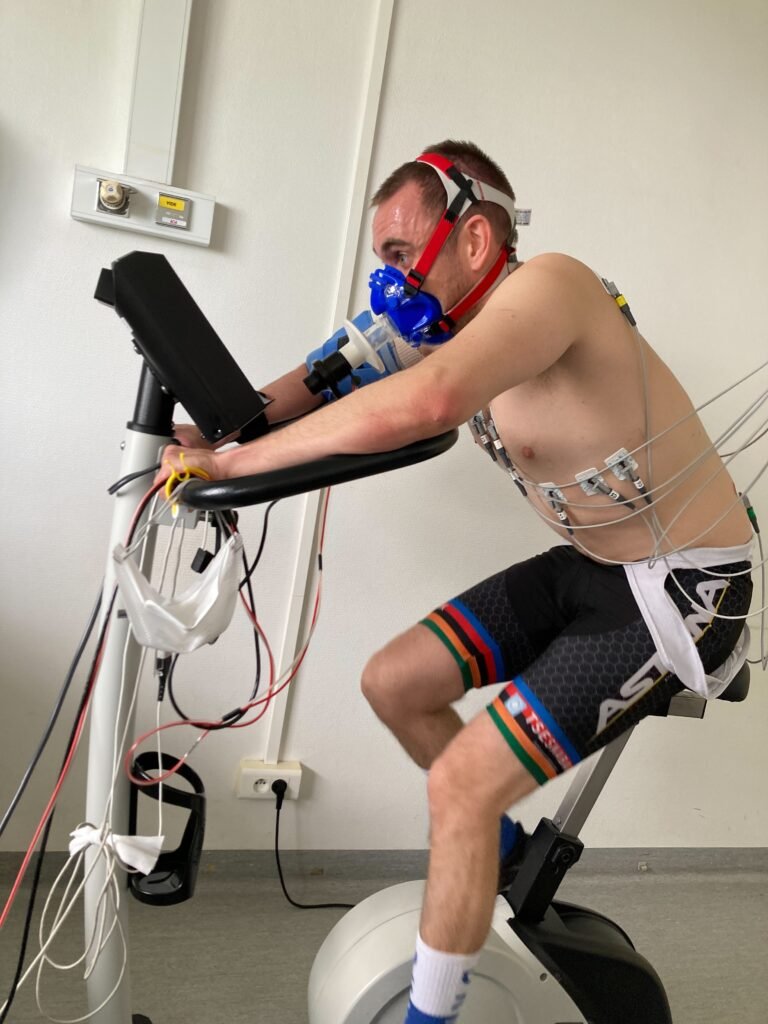
VO2 max, short for maximal oxygen uptake, is the maximum rate at which a person’s body can take in, transport, and use oxygen during intense exercise, expressed as milliliters of oxygen consumed per kilogram of body weight per minute. It is widely considered the single best laboratory measure of cardiovascular fitness, since it captures the combined performance of the lungs, heart, blood, and working muscles in delivering and using oxygen to fuel aerobic energy production under maximal physical demand.
How VO2 Max Is Measured
The gold-standard measurement of VO2 max involves a graded exercise test, typically performed on a treadmill or stationary bike, where exercise intensity increases in stages until the person reaches voluntary exhaustion, while a mask captures and analyzes the oxygen and carbon dioxide content of every breath. A true VO2 max is confirmed when oxygen consumption plateaus despite further increases in workload, indicating the body has reached its genuine physiological ceiling for oxygen use rather than simply being limited by motivation or muscular fatigue at that moment. Because laboratory testing requires specialized equipment, many fitness trackers and smartwatches instead estimate VO2 max using algorithms based on heart rate response to submaximal exercise, which are reasonably useful for tracking personal trends over time but less accurate than a true laboratory measurement.
The Physiology Behind the Number
VO2 max is fundamentally limited by two interacting systems: the cardiovascular system’s capacity to deliver oxygenated blood to working muscles, driven primarily by maximum heart rate and stroke volume, the amount of blood pumped per heartbeat, and the muscles’ own capacity to extract and use that oxygen once delivered. In untrained individuals, cardiovascular delivery capacity is usually the limiting factor, while highly trained endurance athletes often develop such efficient oxygen delivery that the muscles’ own oxidative capacity becomes comparatively more limiting.
Training Effects on VO2 Max
Aerobic endurance training reliably increases VO2 max in previously untrained individuals, commonly by 10 to 20 percent over several months, primarily through increases in stroke volume driven by a larger, more efficient heart and improved capillary density delivering blood to muscle tissue. High-intensity interval training, which alternates short bursts of near-maximal effort with recovery periods, has been shown in numerous studies to improve VO2 max as effectively as, and in some cases more efficiently than, longer continuous moderate-intensity training, making it an attractive option where training time is limited.
Genetic Ceiling and Trainability
Genetics account for a substantial portion of the variation in both baseline VO2 max and how much a given person’s VO2 max can improve with training, a phenomenon researchers call trainability, meaning two people following an identical training program can see meaningfully different improvements. This genetic ceiling is why elite endurance athletes in sports like distance running, cross-country skiing, and professional cycling tend to have unusually high baseline VO2 max values well before specialized training, alongside the extensive training that further develops their aerobic capacity.
VO2 Max and Health Outcomes
Beyond its relevance to athletic performance, VO2 max has been shown in large population studies to be one of the strongest predictors of long-term cardiovascular health and overall mortality risk, with low cardiorespiratory fitness associated with substantially higher risk of death from any cause compared to higher fitness levels, independent of other risk factors like body weight. This has led some researchers and clinicians to advocate for cardiorespiratory fitness to be treated as a vital sign that should be assessed and tracked in routine clinical care, much like blood pressure or cholesterol.
Typical VO2 Max Values
Average VO2 max values vary considerably by age, sex, and training status, with untrained adult men typically falling somewhere in the range of 35 to 45 milliliters per kilogram per minute and untrained adult women somewhat lower, largely reflecting average differences in body composition, hemoglobin concentration, and heart size between sexes rather than any difference in trainability itself. Elite endurance athletes can reach values exceeding 80 or even 90 milliliters per kilogram per minute, among the highest ever recorded in elite cross-country skiers and professional cyclists, representing an aerobic capacity roughly double that of a healthy but untrained adult of the same age.
VO2 max declines gradually with age after reaching a peak typically in a person’s twenties, at a rate of roughly 1 percent per year for people who remain sedentary, though regular aerobic exercise can substantially slow this decline and some lifelong endurance athletes in their sixties and seventies maintain VO2 max values higher than untrained people decades younger. This age-related decline results from a combination of reduced maximum heart rate, decreased stroke volume, and loss of muscle mass and oxidative capacity, each of which training can partially, though not completely, offset.
Altitude training, where athletes live or train at elevations where the air contains less available oxygen, is a popular strategy among endurance athletes seeking to boost VO2 max, since the body responds to this reduced oxygen availability by producing more red blood cells and hemoglobin over several weeks, which can improve oxygen-carrying capacity once the athlete returns to sea level. The benefits of altitude training remain somewhat debated among sports scientists, since individual responses vary considerably and some studies find the practical performance gains are smaller than commonly assumed once an athlete returns to competing at lower elevations.
FAQs
What usually limits VO2 max more: the heart or the muscles?
In untrained individuals, the cardiovascular system’s capacity to deliver oxygen is usually the limiting factor, while highly trained endurance athletes often shift toward being limited more by the muscles’ own capacity to use that oxygen.
Can VO2 max improve at any age?
Yes, aerobic training can meaningfully improve VO2 max across the lifespan, though the rate and ceiling of improvement are influenced by genetics, training history, and age-related physiological changes.
Quick checkWhy is VO2 max considered the best single measure of cardiovascular fitness?Show answer
It captures the combined performance of the lungs, heart, blood, and muscles in delivering and using oxygen under maximal physical demand, rather than any single component alone.
Editorially reviewed by Specialty Digest Editorial TeamLast reviewed November 2, 2026Researched and drafted with AI assistanceReport an issue