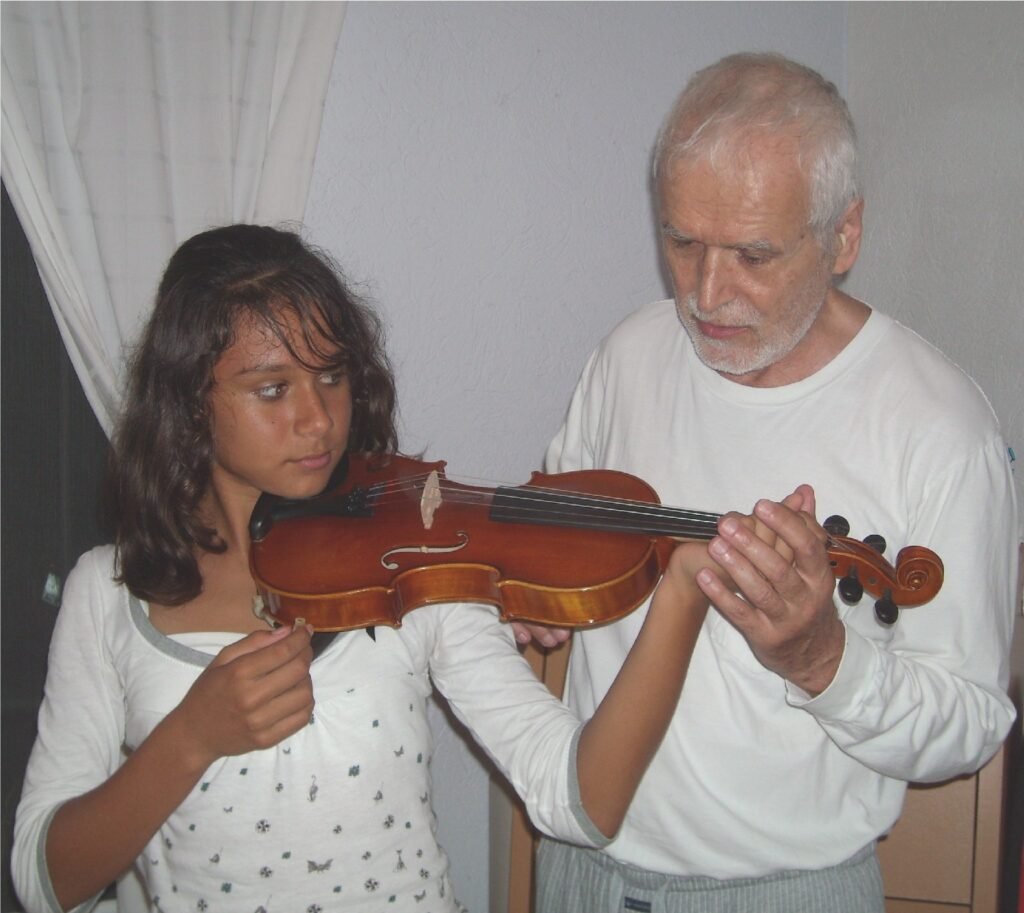
The zone of proximal development is a concept from developmental psychology describing the gap between what a learner can accomplish independently and what that same learner can accomplish with guidance from a more knowledgeable other, such as a teacher, parent, or peer.
Vygotsky’s sociocultural theory
The concept originates with Soviet psychologist Lev Vygotsky, who developed it as part of a broader sociocultural theory of cognitive development arguing that learning is fundamentally a social process, happening first through interaction with others before being internalized individually. Vygotsky proposed that the most productive instruction targets this zone directly, tasks too easy offer little learning, while tasks far beyond a learner’s current ability, even with help, remain out of reach.
Scaffolding as the practical mechanism
While Vygotsky himself did not use the specific term scaffolding, the concept is closely associated with his zone of proximal development and was formally named by researchers Jerome Bruner, David Wood, and Gail Ross in a 1976 paper. Scaffolding describes the temporary support a more capable guide provides while a learner works within their zone of proximal development, support that is deliberately withdrawn as the learner becomes capable of performing the task independently.
Practical classroom application
Teachers apply the zone of proximal development by assessing what a student can already do alone, then designing tasks and support calibrated just beyond that point rather than either reviewing already-mastered material or introducing content so far ahead that guidance cannot bridge the gap. This calibration is part of why formative assessment, continuously checking current understanding, is treated as closely linked to effective scaffolding in practice.
Influence beyond education
Although most closely associated with classroom teaching, the zone of proximal development has also influenced fields such as speech and occupational therapy, where practitioners similarly calibrate support to a patient’s current capability rather than either the easiest or the most advanced possible task.
Vygotsky’s broader legacy
The zone of proximal development is one part of Vygotsky’s larger argument that cognitive development is inseparable from social and cultural context, a view that stood in contrast to developmental theories, such as Jean Piaget’s, that emphasized largely self-directed stages of individual cognitive growth. Vygotsky’s work was written mostly in the 1920s and 1930s but did not become widely influential in Western educational psychology until decades after his death in 1934, once translations became available.
Gradual release of responsibility
Many current instructional models operationalize the zone of proximal development through a gradual release of responsibility, moving from a teacher fully modeling a skill, to guided practice where the teacher and student work together, to independent practice where the student performs the task alone. Each stage is designed to track where the student’s zone of proximal development currently sits, shifting the balance of responsibility only as the student demonstrates readiness.
Risks of poor calibration
When tasks are pitched well below a student’s zone of proximal development, instruction can become unproductively repetitive; when pitched well above it, even substantial support fails to make the task achievable, leading to frustration rather than learning. Accurately locating the zone for a given student and skill is therefore considered a core, ongoing diagnostic skill for teachers rather than a one-time assessment.
Peer collaboration within the zone
While the zone of proximal development is often discussed in terms of teacher-student interaction, Vygotsky’s theory also supports peer collaboration as a mechanism for learning, since a more capable peer can serve the same scaffolding role as an adult for a given task. This has influenced widespread use of structured peer tutoring and collaborative group work as deliberate instructional strategies rather than purely social arrangements.
Assessment implications
Vygotsky argued that assessing only what a student can do independently, without any supported assistance, underestimates that student’s true developmental potential. This insight has influenced dynamic assessment approaches, which deliberately measure how much a student’s performance improves with graduated hints or support, rather than relying solely on an unassisted test score to judge ability.
Together, scaffolding and dynamic assessment reflect the same underlying principle: a learner’s capability is best understood, and best developed, in the context of appropriate support rather than in isolation.
That principle continues to shape how modern classrooms balance independent practice against guided instruction at every grade level.
It also informs how curriculum designers sequence content, aiming for each new unit to build on skills just within reach rather than skills already mastered or far out of reach.
Nearly a century after Vygotsky first described it, the zone of proximal development remains one of the most frequently cited concepts in both developmental psychology and teacher education.
Its durability reflects how directly it connects an abstract theory of cognitive development to the concrete, daily decisions teachers make about how much support to offer.
Few ideas from early twentieth-century psychology have translated as directly into everyday classroom practice as this one has.
Teacher candidates encounter it early in their training precisely because it offers such a practical lens for everyday instructional decisions.
That early exposure shapes how new teachers think about pacing and support long before they have a full classroom’s worth of students to apply it to.
FAQs
Who developed the zone of proximal development concept? Soviet psychologist Lev Vygotsky, as part of his broader sociocultural theory of learning.
Who coined the term scaffolding to describe support within the zone of proximal development? Researchers Jerome Bruner, David Wood, and Gail Ross, in a 1976 paper.
Key facts
- Lev Vygotsky developed the zone of proximal development as part of his sociocultural theory of learning.
- Jerome Bruner, David Wood, and Gail Ross named the related concept of scaffolding in a 1976 paper.
- Effective instruction is said to target tasks just beyond a learner's independent ability, with guided support.
Related concepts
Quick checkWhich psychologist developed the zone of proximal development concept?Show answer
Lev Vygotsky.
Sources
- General developmental psychology reference; Vygotsky sociocultural theory literature
Editorially reviewed by Specialty Digest Editorial TeamLast reviewed November 2, 2026Researched and drafted with AI assistanceReport an issue