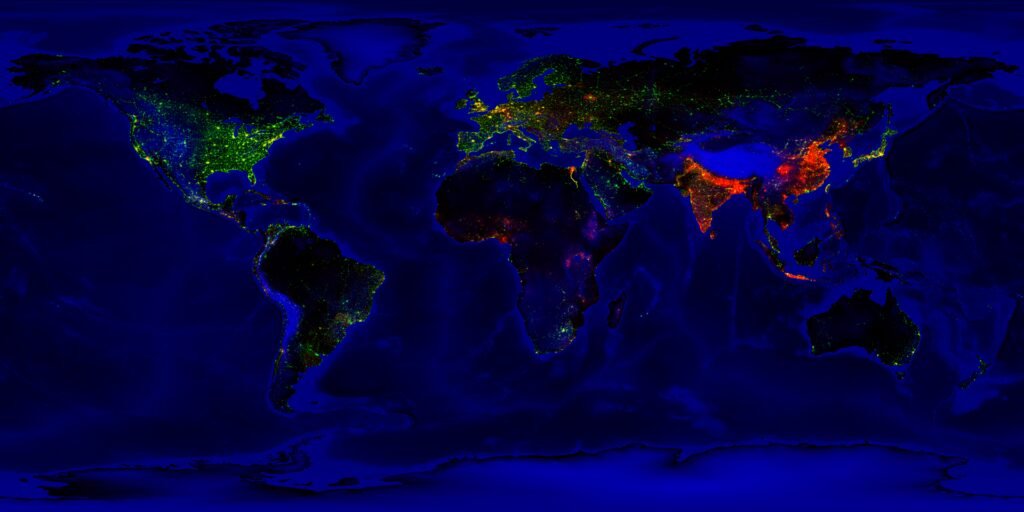
The world has never had more people. The United Nations Population Division, whose World Population Prospects 2024 is the latest edition we could verify, estimates 8.2 billion people in 2024. The same report asks a question that matters for economies, cities and climate: when will the number stop rising?
When will world population peak?
According to the UN, the world’s population will peak in the mid-2080s at around 10.3 billion people. It is then projected to ease to about 10.2 billion by 2100. That end-of-century figure is 700 million fewer people, or six percent lower, than projected a decade earlier. The change reflects falling fertility in many countries.
Why is population growth slowing?
Women globally are having one child fewer, on average, than around 1990. Global fertility stood at 2.3 live births per woman in 2024, down from 3.3 in 1990, according to a summary of the UN report by the International Institute for Sustainable Development. The measure behind this is the total fertility rate, the average number of births per woman over a lifetime. Replacement level is about 2.1 births per woman, the level at which each generation just replaces itself without migration. The UN reports:
- More than half of all countries and areas are below the replacement level of 2.1 births per woman
- Nearly a fifth of countries and areas have ultra-low fertility, below 1.4 births per woman, including China, Italy, the Republic of Korea and Spain
What is the demographic transition?
The UN report frames its projections around the demographic transition, the shift from high birth and death rates to longer lives and smaller families. It tracks that shift using the timing at which populations peak in size. Countries are at different stages, which is why the world total hides very different national stories. The 2024 edition is the twenty-eighth revision of the official UN estimates, covering 237 countries or areas with projections to 2100.
Which countries have already peaked?
Sixty-three countries and areas have already passed their peak population. They include China, Germany, Japan and the Russian Federation. Their combined population is projected to fall by 14 percent over the next thirty years, and one in four people already lives in a country whose population has peaked. Another 48 countries and areas are expected to peak between 2025 and 2054, among them Brazil, Iran, Turkiye and Viet Nam.
Which countries will keep growing?
A total of 126 countries are projected to keep growing through 2054, including India, Indonesia, Nigeria, Pakistan and the United States. Nine countries are projected to roughly double between 2024 and 2054: Angola, the Central African Republic, the Democratic Republic of the Congo, Niger and Somalia are among them. The global total can plateau even while some regions grow quickly, because falling numbers in some countries offset rising numbers in others.
How does migration change the picture?
Migration can offset or deepen national trends. Immigration is the main projected driver of growth in Australia, Canada and the United States, and it offsets population decline in 50 countries and areas. In 14 countries and areas with ultra-low fertility, emigration is likely to reduce population size through 2054. Migration therefore explains why some low-fertility countries still grow while others shrink faster than births alone would suggest.
How long do people live?
Global life expectancy at birth reached 73.3 years in 2024, up from 70.9 years during the COVID-19 pandemic. Longer lives and smaller families change the age structure of societies, and by 2080 the world is projected to have more people aged 65 or older than under 18. By the late 2050s, more than half of global deaths are projected to occur at age 80 or older, up from 17 percent in 1995. Cities and public services are already adapting, a theme explored in our piece on how aging populations are redesigning the modern city.
Population peak vs. population decline
A peak does not mean a sudden fall. Population can plateau for years or decades before shrinking, and the UN projects only a modest drop after the mid-2080s peak. Some countries are already in decline, while others are still growing quickly, so the world total hides very different national stories. For readers following the topic, the useful questions are which countries drive the global total, how fast their fertility is changing and how much migration offsets natural change. The UN data let anyone compare countries on the same basis.
Why does the peak matter?
Many systems are built around growth, from school enrollment to pension funding and housing demand. Countries past their peak and countries still growing quickly face different planning questions, so the same global headline can mean very different things in Tokyo, Lagos or Dhaka.
How reliable are population projections?
Projections are not predictions. They depend on assumptions about fertility, mortality and migration, and the assumptions change as new data arrive. The 700 million downward revision in the 2100 figure shows how much a decade of new data can move the result. The UN’s figures are the most widely used reference because they apply the same method to every country, but users should treat distant years as scenarios, not forecasts.
Frequently asked questions
How many people are alive today?
The UN estimates 8.2 billion people in 2024.
When will the world population stop growing?
The UN projects a peak of around 10.3 billion in the mid-2080s.
What is the replacement fertility rate?
About 2.1 births per woman. More than half of countries and areas are below it.
Will there be more older people than children?
By 2080, the UN projects more people aged 65 or older than under 18.
Which countries are growing fastest?
Nine countries, including Angola, the Central African Republic, the Democratic Republic of the Congo, Niger and Somalia, are projected to roughly double by 2054.