Overview
The social safety net refers to the full set of government programs designed to catch individuals and families before they fall into severe poverty, particularly during periods of job loss, illness, or other economic hardship. The term encompasses both contributory social insurance programs and non-contributory means-tested assistance, viewed collectively as society protective floor beneath which no one is meant to fall.
Key Components
In the United States, the social safety net includes unemployment insurance, the Supplemental Nutrition Assistance Program, Medicaid, housing assistance, Temporary Assistance for Needy Families, and the Earned Income Tax Credit, among other programs. Many of these programs expand automatically during economic downturns as more people become eligible, functioning as automatic stabilizers that help cushion the broader economy as well as individual households.
International Comparisons
The generosity and structure of the social safety net varies considerably across countries. Nordic countries generally maintain more extensive and universal safety nets funded through higher taxation, while the United States relies more heavily on targeted, means-tested programs. These structural differences produce measurably different outcomes in poverty rates and income inequality across comparable high-income nations.
Strengths and Gaps
Researchers studying safety net effectiveness often examine how well different programs reach eligible populations and how quickly benefits respond to sudden income loss. Programs with simpler eligibility rules and automatic enrollment, such as Social Security, tend to reach nearly all eligible individuals, while more complex, means-tested programs often leave a meaningful share of the eligible population unenrolled, creating persistent gaps in safety net coverage even where programs technically exist on paper.
Role During Economic Crises
The safety net function became especially visible during major economic disruptions, including the 2008 financial crisis and the COVID-19 pandemic, when governments temporarily expanded unemployment benefits, food assistance, and direct cash payments to offset sudden job losses. Researchers have documented that these temporary expansions measurably reduced poverty rates during the crisis periods, offering evidence about the potential effects of permanently strengthening safety net programs during ordinary times as well.
Automatic Stabilizers
Programs within the social safety net that expand automatically as economic conditions worsen, without requiring new legislation, are known as automatic stabilizers. Unemployment insurance and SNAP both function this way, with enrollment rising as job losses increase, providing both direct support to affected households and broader macroeconomic stimulus during downturns by maintaining consumer spending power when it might otherwise collapse.
Looking Ahead
Debates over strengthening or restructuring the social safety net often intensify following major economic shocks, when gaps in coverage become most visible. Policymakers continue to weigh proposals ranging from permanent expansions of pandemic-era benefit increases to more fundamental restructuring aimed at reducing fragmentation across the dozens of separate programs that currently make up the American safety net.
Measuring Poverty Reduction
Researchers measure the safety net poverty-reduction effect using the Supplemental Poverty Measure, which unlike the official poverty measure accounts for the value of in-kind benefits such as SNAP and housing assistance alongside cash income and taxes. Studies using this measure consistently find that the social safety net, taken as a whole, cuts the poverty rate roughly in half compared to what it would be based on market income alone, underscoring its substantial if often underappreciated effect.
Fragmentation Concerns
Unlike several peer countries that administer safety net benefits through more unified systems, the American safety net consists of dozens of separate programs, each with its own eligibility rules, application process, and administering agency. This fragmentation can make navigating the system difficult for families, who may need to apply separately to multiple agencies to access the full range of benefits for which they qualify, prompting some policy proposals aimed at streamlining and integrating applications.
Community organizations that help families navigate safety net programs often serve as an informal extension of the system, filling gaps left by program fragmentation and limited outreach capacity within government agencies themselves.
Private Charitable Contributions
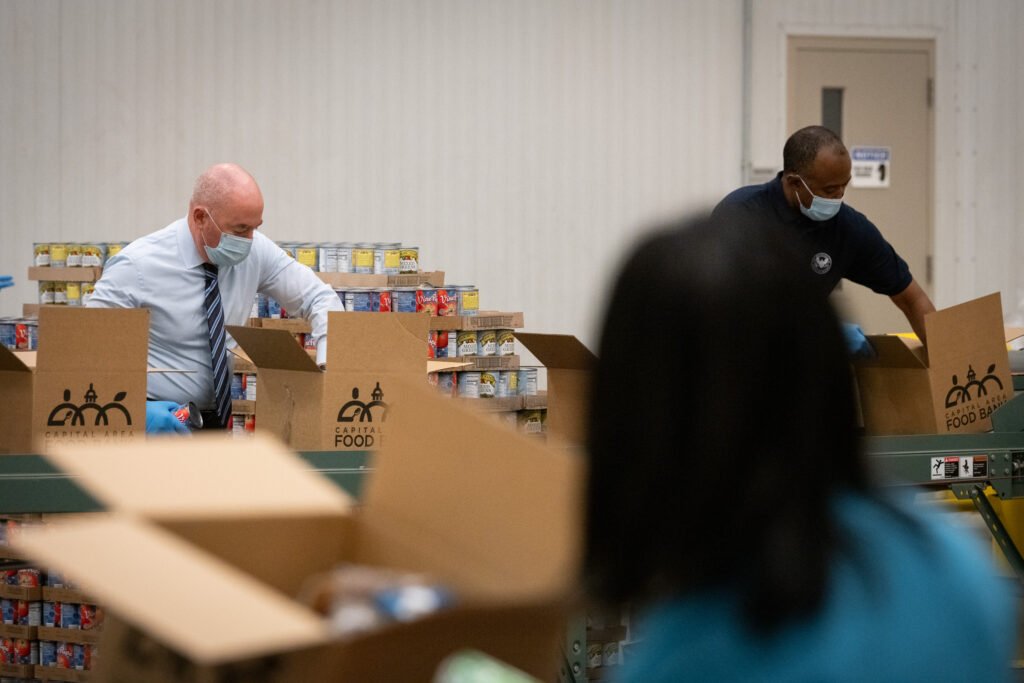
Private charitable giving, including food banks, religious organizations, and community mutual aid networks, supplements the formal government safety net in ways that are difficult to measure comprehensively but that researchers and practitioners widely agree play a meaningful role in catching households who fall through gaps in formal program coverage.
State and local governments sometimes operate supplemental cash assistance programs that fill gaps left by federal safety net programs, particularly for populations such as childless adults who are ineligible for many federal means-tested benefits.
International organizations such as the World Bank and International Labour Organization periodically publish comparative assessments of national safety net coverage, offering benchmarks that individual countries can use to evaluate their own program adequacy.
Some economists have proposed consolidating multiple safety net programs into a smaller number of simplified cash-equivalent benefits, arguing this could reduce administrative cost while preserving the overall level of support provided.
Disaster researchers have observed that households already relying on safety net programs before a natural disaster or economic shock often experience more severe and longer-lasting hardship than households with greater financial reserves beforehand.
Universities and policy schools frequently offer dedicated courses on social safety net design, reflecting sustained academic interest in the comparative study of how different program structures affect poverty and economic security outcomes.
Emergency cash assistance funds, often administered by local governments or charities, provide short-term help for one-time crises that do not fit neatly into the eligibility categories of ongoing safety net programs.
Measuring the full scope of the social safety net requires accounting for tax-based benefits like the earned income tax credit alongside traditional direct-spending programs, since both reduce poverty through different mechanisms.
Key facts
- Array
Quick checkWhat is the social safety net?Show answer
The social safety net is the combination of government programs, such as unemployment insurance, food assistance, and cash aid, that provide a minimum level of support to prevent individuals and families from falling into severe poverty.
Sources
- Array
Editorially reviewed by Specialty Digest Editorial TeamLast reviewed November 4, 2026Researched and drafted with AI assistanceReport an issue