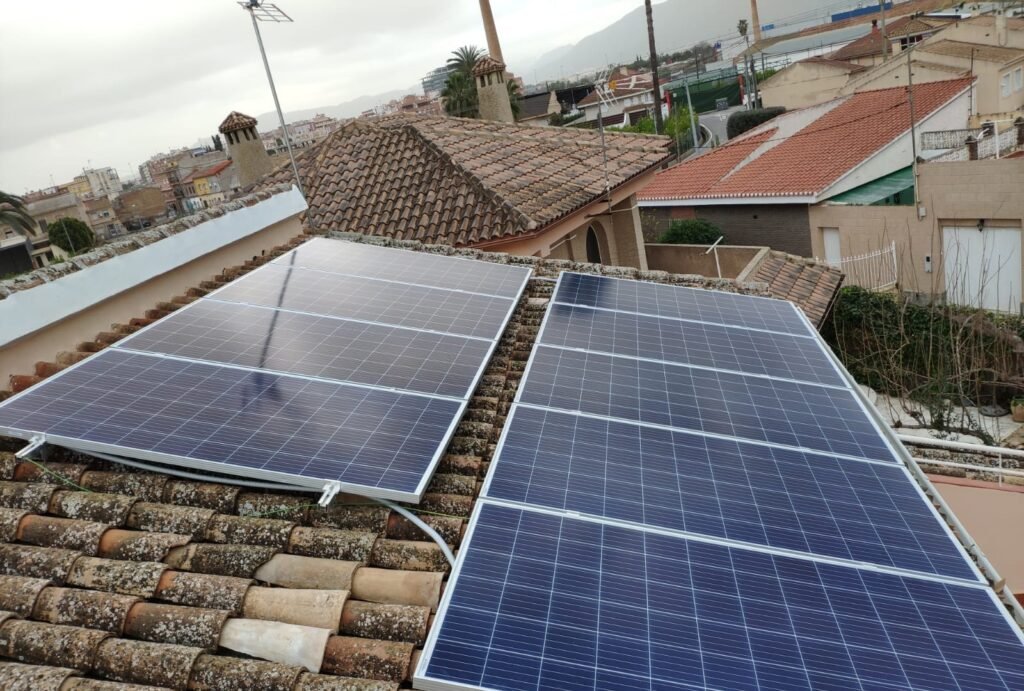
A solar panel is a device that converts sunlight directly into electricity using photovoltaic cells made from semiconductor materials, most commonly silicon. When light strikes a photovoltaic cell, it knocks electrons loose from atoms in the semiconductor, and the cell’s internal structure channels those freed electrons into a usable electric current. Solar panels have become one of the fastest-growing sources of electricity generation worldwide, used in installations ranging from single rooftop systems to utility-scale solar farms covering thousands of acres.
How Photovoltaic Cells Work
Most solar cells are made from silicon treated with small amounts of other elements to create two distinct layers with different electrical properties, forming what is called a p-n junction. When sunlight hits this junction, it generates pairs of free-moving charge carriers, and the built-in electric field at the junction pushes them in opposite directions, creating a flow of current that can be drawn out through metal contacts on the cell’s surface. Many individual cells are wired together and sealed behind glass and a protective backing to form the solar panels seen on rooftops and in solar farms.
Types of Solar Panel Technology
Monocrystalline silicon panels, made from a single continuous crystal structure, offer the highest efficiency and a uniform dark appearance but cost more to manufacture. Polycrystalline panels, made from multiple silicon fragments melted together, are somewhat less efficient but cheaper to produce, making them common in cost-sensitive residential and commercial installations. Thin-film solar panels use much thinner layers of light-absorbing material, sometimes based on cadmium telluride or other compounds rather than silicon, trading some efficiency for flexibility, lighter weight, and better performance in low-light or high-temperature conditions than traditional rigid crystalline panels.
System Components Beyond the Panel
A complete solar installation needs more than panels alone. An inverter converts the direct current electricity that solar cells produce into the alternating current used by most household appliances and the electrical grid. Mounting racks hold panels at an angle optimized for the local latitude and sun path, while in grid-connected systems, a bidirectional meter tracks electricity flowing both from the grid to the home and from excess solar generation back into the grid, often under a policy called net metering that credits the system owner for that surplus power.
Efficiency and Performance Factors
Commercial solar panels today typically convert between fifteen and twenty-three percent of the sunlight that reaches them into usable electricity, a figure called conversion efficiency, with laboratory cells achieving higher rates under controlled conditions that are not yet economical for mass production. Panel output depends heavily on factors beyond the panel itself, including the angle and direction panels face, shading from nearby trees or buildings, temperature, since efficiency actually decreases somewhat as panels get hotter, and dust or dirt accumulation, which is why larger installations are periodically cleaned and monitored for underperforming sections.
Manufacturing and Environmental Considerations
Producing solar panels requires significant energy and raw materials, including purified silicon, glass, and various metals, and manufacturing has an environmental footprint that must be weighed against the clean electricity the panels will generate over their operating lifetime, typically twenty-five to thirty years or more. Most studies find that solar panels pay back the carbon emissions from their manufacturing within a few years of operation, after which they generate electricity with no direct emissions, though end-of-life recycling of panels remains an area of active development as the first large wave of installed panels approaches retirement, prompting new recycling facilities designed specifically to recover glass, aluminum, and silicon from decommissioned panels.
History and Growth of Solar Power
The photovoltaic effect was first observed in the nineteenth century, but practical silicon solar cells were not developed until the 1950s at Bell Labs, initially finding use mainly in spacecraft, where their reliability and lack of moving parts outweighed their high cost. Decades of research, manufacturing scale-up, and steadily falling silicon and manufacturing costs have since driven the price of solar electricity down dramatically, and solar power is now one of the cheapest sources of new electricity generation in much of the world, driving rapid growth in both residential rooftop installations and large utility-scale solar farms.
Solar Power in the Broader Energy Mix
Solar power’s output rises and falls predictably with the day and season but drops to zero at night, which means grid operators pair it with other generation sources, energy storage, or demand flexibility to keep electricity available around the clock. Battery storage paired with solar installations, whether at the household scale or in large grid-connected battery plants, has grown rapidly as a way to shift solar electricity generated during the day to evening hours when demand often peaks but sunlight is no longer available. Community and utility-scale solar projects have also made it possible for people without suitable rooftops to buy into shared solar generation, broadening who can participate in and benefit from solar electricity.
FAQs
Why does solar panel efficiency decrease in hot weather?
Higher temperatures reduce the voltage a solar cell can produce for a given amount of light, lowering its overall electrical output even though more sunlight is often available on hot, clear days.
What is net metering?
Net metering is a billing arrangement that credits a solar system owner for excess electricity sent back to the grid, effectively letting unused daytime generation offset electricity drawn from the grid at other times, though the specific credit rate and rules vary widely between utilities and regions.
Quick checkWhat is net metering?Show answer
Net metering is a billing arrangement that credits a solar system owner for excess electricity sent back to the grid, offsetting electricity drawn from the grid at other times.
Editorially reviewed by Specialty Digest Editorial TeamLast reviewed November 2, 2026Researched and drafted with AI assistanceReport an issue