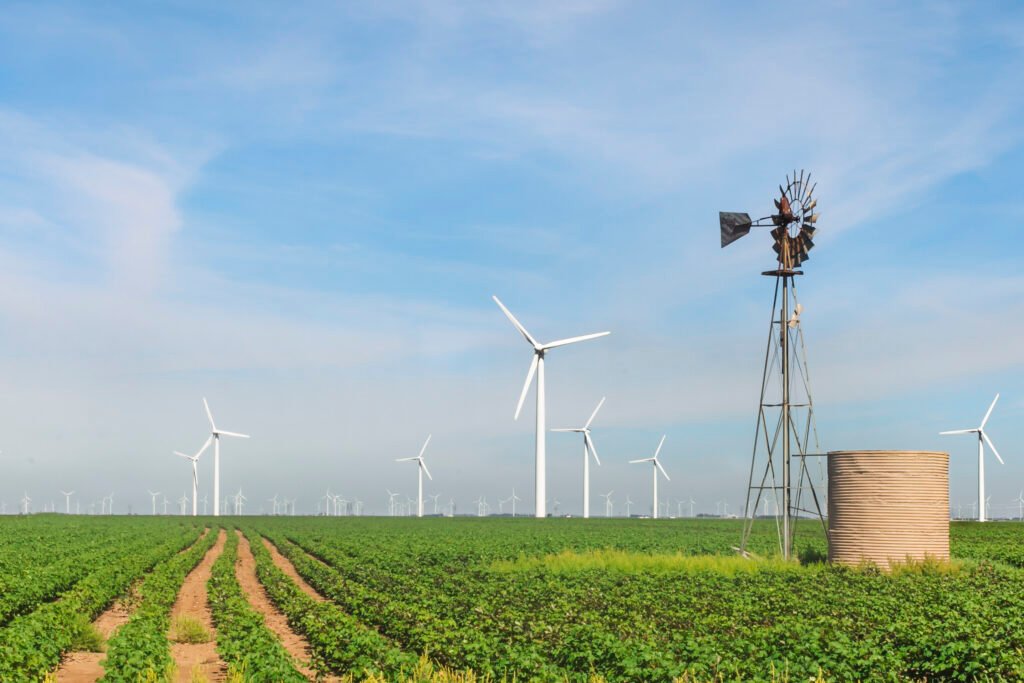
A wind turbine is a machine that converts the kinetic energy of moving air into electricity, using large rotating blades connected to an electrical generator housed at the top of a tall tower. Modern wind turbines range from small units that power a single farm or remote cabin to massive offshore machines with blades longer than a football field and towers taller than most skyscrapers, and together they have become one of the largest sources of new electricity generation capacity added worldwide each year, alongside solar power.
How Wind Turbines Generate Electricity
Wind pushes against the angled blades of a turbine’s rotor, causing it to spin much like an airplane wing generates lift as air flows over it. That rotation drives a main shaft connected, often through a gearbox, to a generator that converts mechanical rotation into electrical current through electromagnetic induction, the same basic principle used in most other forms of electricity generation. A turbine’s control systems continuously adjust the angle of the blades, called pitch, and rotate the entire turbine housing, called the nacelle, to face changing wind directions, maximizing energy capture while protecting the machine from damage during extremely high winds.
Onshore Versus Offshore Wind
Onshore wind turbines are built on land, typically in open plains, hills, or ridgelines where wind is strong and consistent, and benefit from lower construction and connection costs than offshore projects. Offshore wind turbines are installed in bodies of water, usually on the seabed in shallower areas or increasingly on floating platforms in deeper water, taking advantage of stronger and steadier winds over open water at the cost of far more expensive construction, specialized vessels, maintenance, and underwater cabling. Offshore wind has grown rapidly in regions with long coastlines and limited onshore space, such as parts of Europe and East Asia.
Turbine Size and Capacity Factor
Wind turbines have grown dramatically in size over the past few decades, since taller towers and longer blades reach stronger, steadier winds higher above the ground and sweep a larger area to capture more energy. A turbine’s capacity factor, the percentage of its theoretical maximum output it actually produces over a year, typically ranges from about thirty to fifty percent depending on site wind conditions, reflecting the fact that wind speed constantly varies rather than staying at the ideal level needed for maximum output.
Grid Integration and Variability
Like solar power, wind generation varies with weather rather than on demand, requiring grid operators to forecast wind output and pair it with flexible backup generation, energy storage, or demand response to maintain a reliable electricity supply. Wind output at a single turbine or farm can change significantly within minutes, but because wind farms are often spread across wide geographic areas and paired with other generation sources, large grids can typically absorb substantial amounts of wind power without compromising reliability, a conclusion supported by decades of operating experience in regions with high wind penetration, including parts of Europe where wind regularly supplies a large share of electricity on windy days.
Environmental and Siting Considerations
Wind turbines produce no direct emissions while generating electricity, but their development raises other environmental and social considerations, including impacts on birds and bats, noise for nearby residents, and visual effects on landscapes that some communities value for their undeveloped appearance. Careful site selection, turbine design improvements, and operational adjustments such as temporarily slowing turbines during peak bird and bat migration periods have reduced some of these impacts, though debates over where wind farms should and should not be built remain active in many regions pursuing wind development, often playing out at the local permitting level long before a single turbine is installed.
History of Wind Power
Humans have harnessed wind energy for thousands of years, using windmills to grind grain and pump water long before electricity existed, with early windmills documented in regions including Persia and later medieval Europe, where they became a common feature of rural landscapes for centuries. The first wind turbines designed to generate electricity appeared in the late nineteenth century, but wind power remained a minor source of electricity until government incentives, technological improvements, and falling costs beginning in the 1980s and accelerating through the following decades turned wind into a mainstream, cost-competitive source of large-scale electricity generation across most of the world.
Maintenance and Operating Life
Wind turbines operate in demanding conditions, with their moving parts, including gearboxes, bearings, and blades, subject to constant mechanical stress, temperature swings, and, for offshore machines, salt water exposure. Scheduled maintenance, remote condition monitoring that tracks vibration and temperature data, and periodic blade inspections help operators catch developing problems before they cause costly failures or unplanned downtime. A typical land-based wind turbine is designed to operate for roughly twenty to twenty-five years, after which components can sometimes be upgraded or the entire turbine replaced with a larger, more efficient model in a process known as repowering.
FAQs
Why have wind turbines grown so much larger over time?
Taller towers and longer blades reach stronger, steadier winds higher above the ground and sweep a larger area, allowing a single turbine to capture significantly more energy and generate electricity more cost-effectively.
What is a wind turbine’s capacity factor?
Capacity factor is the percentage of a turbine’s theoretical maximum output it actually produces over a year, typically thirty to fifty percent, reflecting how wind speed naturally varies rather than staying at an ideal constant level.
Quick checkWhat is a wind turbine capacity factor?Show answer
Capacity factor is the percentage of a turbine theoretical maximum output it actually produces over a year, typically thirty to fifty percent, reflecting how wind speed naturally varies.
Editorially reviewed by Specialty Digest Editorial TeamLast reviewed November 2, 2026Researched and drafted with AI assistanceReport an issue