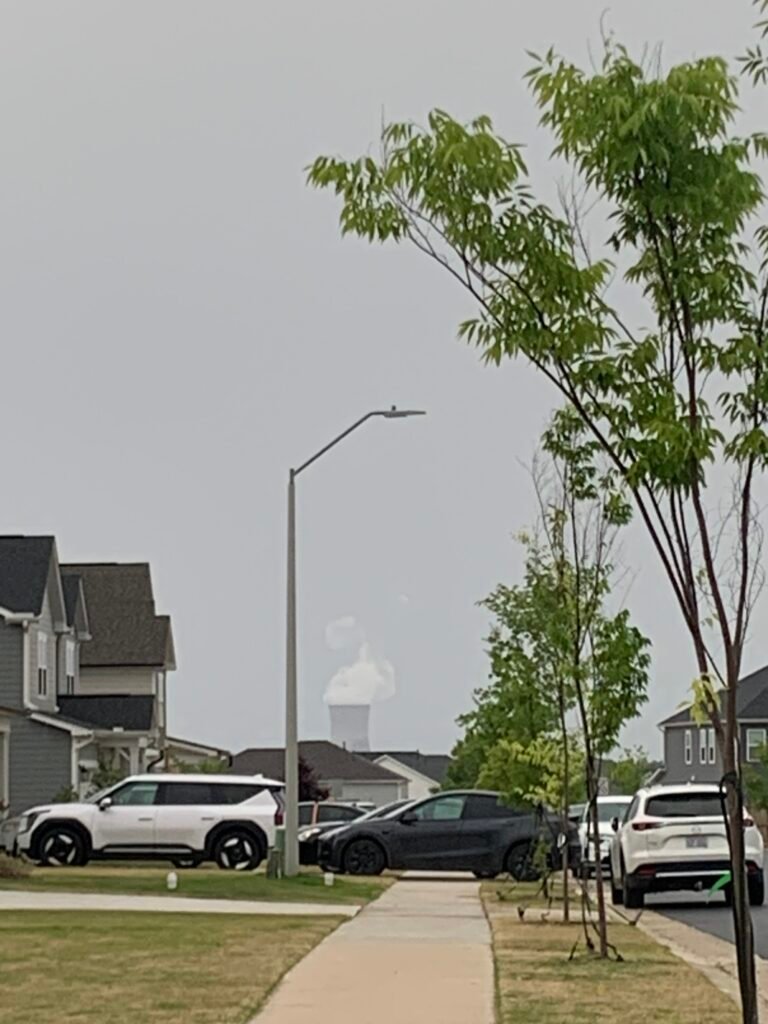
A nuclear reactor is a device that initiates and controls a sustained nuclear fission chain reaction to produce heat, which is then used to generate electricity or, in some designs, to power ships and submarines. Inside a reactor, atoms of a heavy element, most commonly a form of uranium, split apart when struck by neutrons, releasing energy along with additional neutrons that go on to split further atoms, a self-sustaining process that reactors are engineered to keep stable rather than letting it accelerate uncontrollably.
How Fission Produces Usable Energy
When a uranium atom’s nucleus splits, it releases an enormous amount of energy compared to chemical reactions such as burning fuel, mostly in the form of heat and fast-moving particles. Reactors use a coolant, typically water, to absorb this heat from the reactor core, where fuel assemblies are arranged, and carry it to a steam generator or directly to turbines, which spin a generator to produce electricity in much the same way a coal or gas power plant does, except the heat source is nuclear rather than combustion.
Moderators, Control Rods, and Safety Systems
Most commercial reactors use a moderator, often ordinary water or graphite, to slow down the fast neutrons released by fission, since slower neutrons are more likely to trigger further fission in the fuel. Control rods made of materials that readily absorb neutrons, such as boron or cadmium, can be inserted into or withdrawn from the reactor core to speed up, slow down, or stop the chain reaction entirely, giving operators precise control over reactor power output. Multiple independent safety systems, including emergency cooling and automatic shutdown mechanisms, are designed to respond if normal control is lost.
Common Reactor Designs
Pressurized water reactors, the most widely used design worldwide, keep water under high pressure so it can absorb heat from the core without boiling, then transfer that heat through a separate loop to produce steam for the turbines. Boiling water reactors allow water to boil directly within the reactor vessel, simplifying the design but requiring extra precautions since the steam driving the turbines has passed directly through the reactor core. Other designs, including heavy water reactors and high-temperature gas-cooled reactors, use different moderators or coolants suited to particular fuel types or efficiency goals.
Nuclear Fuel and Waste
Reactor fuel typically consists of uranium enriched to increase the concentration of the isotope that fissions most readily, formed into ceramic and sealed inside metal fuel rods. After a period of operation, fuel becomes less efficient and is removed as spent fuel, which remains highly radioactive and generates heat for years, requiring it to be stored in cooling pools and later in secure dry storage casks. Long-term disposal of spent nuclear fuel remains a significant policy and engineering challenge, with most countries still developing permanent deep geological repositories.
Safety Record and Major Accidents
Nuclear power has an unusual safety profile: routine operation causes very few direct casualties compared to most other energy sources, but the small number of major accidents that have occurred, including the Chernobyl disaster in 1986 and the Fukushima Daiichi accident in 2011, caused significant contamination, long-term health and environmental consequences, and lasting public concern about reactor safety. Each major accident has led to substantial design and regulatory changes industry-wide, including stronger containment structures, more robust emergency planning, and more conservative assumptions about combined natural and mechanical failures.
Nuclear Power’s Role in Electricity Generation
Nuclear reactors generate electricity without the direct carbon dioxide emissions associated with burning fossil fuels, and unlike wind and solar power, they can run continuously at high output regardless of weather or time of day, making nuclear an important source of reliable, low-carbon electricity in many countries’ grids. High construction costs and long construction timelines for new large reactors have slowed nuclear expansion in some markets, prompting growing interest in smaller, standardized reactor designs intended to be built faster and more cheaply than traditional large plants.
Reactors Beyond Electricity Generation
Not all reactors exist to generate commercial electricity. Naval reactors power aircraft carriers and submarines, allowing vessels to operate for years without refueling and, for submarines, to remain submerged for extended periods without needing to surface for air to run engines. Research reactors, generally much smaller and operated at lower power than commercial power reactors, produce neutrons for scientific experiments, test how materials behave under radiation, and manufacture medical isotopes used in diagnostic imaging and cancer treatment. These varied applications mean that nuclear technology touches fields well beyond the power sector, even though commercial electricity generation remains by far the largest use of nuclear reactors in terms of total installed capacity.
Regulation and International Oversight
Because of the potential consequences of an accident and the connection between nuclear technology and weapons material, reactors are subject to extensive regulation by national nuclear safety authorities and international bodies such as the International Atomic Energy Agency, which monitors civilian nuclear programs and verifies that fissile material is not diverted toward weapons use. Licensing a new reactor design or building a new plant typically involves years of safety review, environmental assessment, and public hearings, a process intended to ensure that the benefits of nuclear power are weighed carefully against its risks before construction begins.
FAQs
What is the difference between nuclear fission and nuclear fusion?
Fission splits heavy atoms such as uranium to release energy and is the process used in all current commercial reactors, while fusion combines light atoms such as hydrogen and remains largely experimental for power generation despite decades of research.
Why can nuclear power plants run continuously regardless of weather?
Nuclear fuel inside a reactor continues releasing heat through controlled fission at a steady, operator-managed rate, unlike wind or solar generation, which depends directly on whether the wind is blowing or the sun is shining.
Quick checkWhy can nuclear power plants run continuously regardless of weather?Show answer
Nuclear fuel inside a reactor continues releasing heat through controlled fission at a steady, operator-managed rate, unlike wind or solar generation which depends on weather.
Editorially reviewed by Specialty Digest Editorial TeamLast reviewed November 2, 2026Researched and drafted with AI assistanceReport an issue