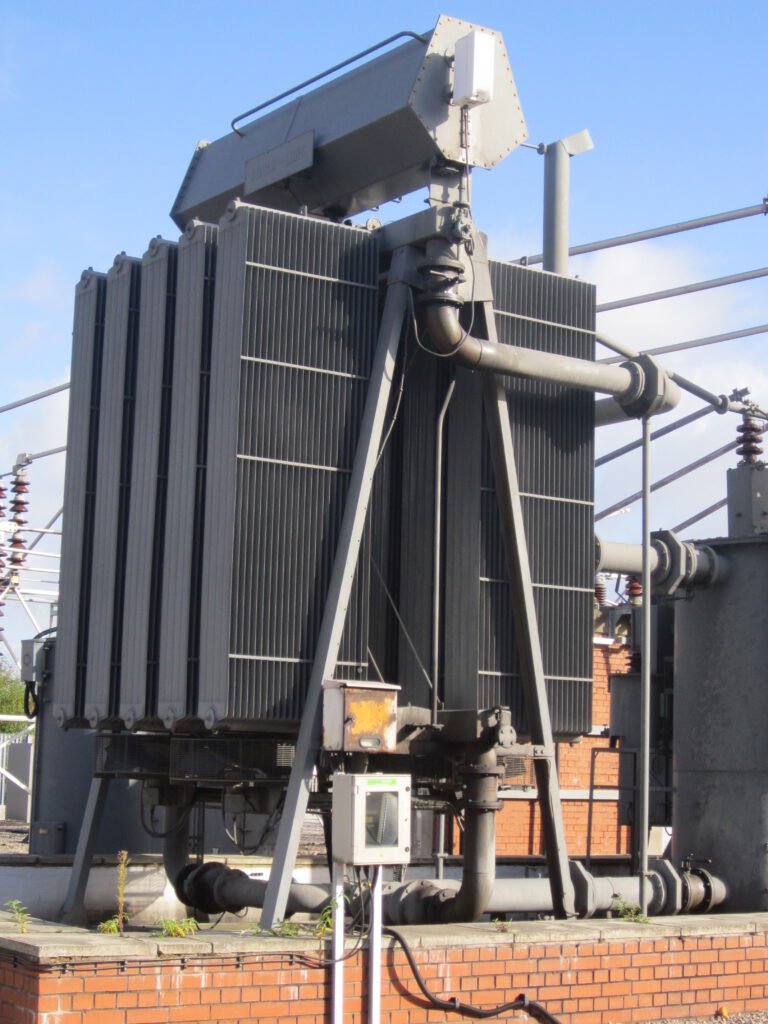
A transformer is an electrical device that transfers energy between two or more circuits through electromagnetic induction, typically used to increase or decrease voltage without changing the frequency of the alternating current passing through it. Transformers are essential throughout electrical power systems, stepping voltage up for efficient long-distance transmission and back down to safe levels before electricity reaches homes and businesses.
How Transformers Work
A basic transformer consists of two coils of wire, called windings, wound around a shared iron core but not electrically connected to each other. When alternating current flows through the primary winding, it creates a constantly changing magnetic field in the core, and that changing field induces a voltage in the secondary winding through electromagnetic induction. The ratio of turns between the primary and secondary windings determines how much the voltage is increased or decreased, with more turns on the secondary winding producing a higher output voltage and fewer turns producing a lower one.
Step-Up and Step-Down Transformers
Step-up transformers increase voltage, commonly used at power plants to raise electricity to very high voltages before it enters long-distance transmission lines, since higher voltage reduces the energy lost as heat over long distances. Step-down transformers reduce voltage at the other end of the system, typically in several stages, bringing transmission-level voltage down to the lower levels used in local distribution networks and ultimately to the voltage used safely inside homes and businesses.
Transformer Efficiency and Losses
Transformers are among the most efficient electrical devices built, often converting more than ninety-eight percent of input energy into usable output energy, but they are not perfectly efficient. Some energy is lost as heat due to electrical resistance in the windings and due to energy dissipated magnetizing and demagnetizing the iron core repeatedly as the current alternates. Engineers minimize these losses through careful core material selection, winding design, and cooling systems, since even small efficiency losses add up to significant wasted energy across an entire power grid handling enormous amounts of electricity.
Types of Transformers
Power transformers handle the large-scale voltage conversion needed at power plants and major substations, often cooled with circulating oil to manage the heat generated by high power loads. Distribution transformers, the smaller units often seen mounted on utility poles or in green boxes near neighborhoods, perform the final step-down conversion before electricity reaches individual buildings. Specialized transformers also exist for isolating circuits for safety, matching impedance between audio equipment, and converting voltage for small electronic devices through compact transformers built into many chargers and power adapters.
Maintenance and Failure Modes
Transformers can fail due to insulation breakdown from age, heat, or moisture intrusion, overloading beyond their rated capacity, or lightning strikes and other sudden voltage surges that exceed their protective design limits. Utilities monitor large power transformers closely, since a major transformer failure can cause widespread outages and take significant time to repair or replace, given that large power transformers are custom-built, expensive, and sometimes require months to manufacture and deliver as replacements.
History of the Transformer
The transformer emerged in the late nineteenth century as engineers developed practical ways to transmit alternating current efficiently over long distances, a development central to the broader shift toward AC power systems during the War of the Currents between alternating current and direct current proponents. Transformers made it practical to generate electricity at centralized power plants and deliver it efficiently across entire regions, fundamentally shaping the centralized power grid structure still used throughout most of the world today.
Transformers in Renewable Energy Systems
The growth of solar and wind power has added new demands on transformer design, since these sources often connect to the grid at varying voltage levels and locations very different from traditional large, centralized power plants. Solar farms and wind installations typically require their own dedicated transformers to step up the relatively low voltage generated by inverters and turbines to levels suitable for grid connection, and the growing number of these smaller, distributed generation sites has significantly increased overall demand for transformers across the power industry in recent years.
Transformer Manufacturing and Supply Challenges
Large power transformers are complex, custom-engineered products built to specific voltage, capacity, and cooling requirements, manufactured in a relatively small number of specialized factories worldwide. Rising electricity demand, aging infrastructure replacement needs, and the rapid growth of renewable energy and electric vehicle charging have all increased global demand for transformers simultaneously, leading to long manufacturing lead times that utilities and grid planners must account for well in advance when planning new substations or major infrastructure upgrades.
Safety Considerations
Transformers handle extremely high voltages and store significant electrical energy, making safety a central concern in their design and placement. Large power transformers are often filled with insulating oil that also helps dissipate heat, but this oil can be flammable, requiring fire suppression systems and careful containment design at substations. Distribution transformers mounted near homes include protective housings and safety features specifically designed to prevent accidental contact with high-voltage components by the public.
FAQs
Why are transformers used to raise voltage before long-distance transmission?
Higher voltage reduces the current needed to deliver the same amount of power, which sharply cuts the energy lost as heat in transmission lines over long distances, making step-up transformers essential for efficient power delivery.
What causes energy losses inside a transformer?
Energy is lost as heat due to electrical resistance in the windings and due to energy dissipated magnetizing and demagnetizing the iron core as alternating current repeatedly changes direction.
In the news
Quick checkWhat causes energy losses inside a transformer?Show answer
Energy is lost as heat due to electrical resistance in the windings and energy dissipated magnetizing and demagnetizing the iron core as current alternates.
Editorially reviewed by Specialty Digest Editorial TeamLast reviewed November 2, 2026Researched and drafted with AI assistanceReport an issue