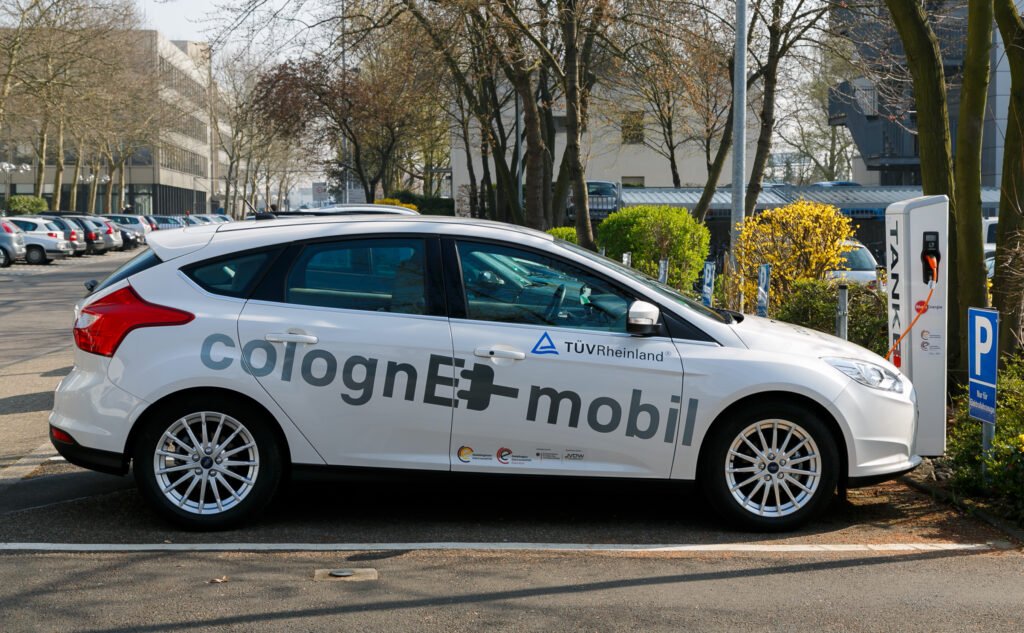
An electric vehicle is a vehicle powered partly or entirely by electricity stored in an onboard battery and delivered to one or more electric motors, rather than relying solely on an internal combustion engine burning gasoline or diesel fuel. Electric vehicles include fully battery-powered cars with no engine at all, as well as hybrid vehicles that combine a battery and electric motor with a traditional combustion engine, and they have grown rapidly from a niche technology into a mainstream segment of the global auto industry.
How Electric Vehicles Work
A battery electric vehicle stores energy in a large rechargeable battery pack, typically using lithium-ion cells similar in basic chemistry to those found in laptops and phones but built at a much larger scale. When the driver presses the accelerator, the vehicle’s power electronics draw electricity from the battery and send it to an electric motor, which converts that electricity into rotational force that drives the wheels, a process that is mechanically simpler than a combustion engine since it involves far fewer moving parts.
Battery Technology and Range
A vehicle’s driving range between charges depends heavily on battery size, measured in kilowatt-hours, as well as the vehicle’s weight, aerodynamics, and efficiency. Lithium-ion batteries have improved steadily in energy density, meaning more stored energy per unit of weight, while also falling significantly in cost per unit of capacity over the past decade, developments that have directly enabled longer vehicle ranges and lower prices. Battery degradation over repeated charge cycles and the materials used in battery manufacturing, including lithium, cobalt, and nickel, remain active areas of research and supply chain concern.
Charging Infrastructure
Electric vehicles can be charged using several different levels of charging equipment. Level one charging uses a standard household outlet and charges very slowly, suitable mainly for overnight charging at home. Level two charging uses dedicated equipment delivering more power, common for home installations and public charging stations, and charges a vehicle significantly faster. Fast charging, sometimes called level three or rapid charging, delivers high power directly as direct current and can add significant range in well under an hour, making it practical for longer trips, though availability and reliability of fast charging networks still vary considerably by region.
Regenerative Braking
Many electric vehicles use regenerative braking, which runs the vehicle’s electric motor in reverse as a generator when the driver slows down, converting some of the vehicle’s kinetic energy back into stored electrical energy rather than wasting it entirely as heat through conventional friction brakes. This recovered energy extends driving range, particularly in stop-and-go city driving, and also reduces wear on conventional brake components, since regenerative braking handles much of the everyday slowing before friction brakes are needed.
Environmental and Economic Considerations
Electric vehicles produce no tailpipe emissions, though their overall environmental impact depends significantly on how the electricity used to charge them is generated, since charging from a grid that relies heavily on fossil fuels reduces, but does not eliminate, the emissions advantage over combustion vehicles. Electric vehicles generally cost less per mile to operate thanks to lower electricity costs compared to gasoline and simpler drivetrains that require less routine maintenance, though higher upfront purchase prices for the vehicle and battery remain a significant barrier for many buyers.
History and Market Growth
Electric vehicles are not new; early electric cars were commercially available and reasonably popular in the late nineteenth and early twentieth centuries before cheaper gasoline, longer driving range, and mass production of combustion vehicles pushed electric vehicles into a niche role for most of the twentieth century. Renewed interest beginning in the 2000s and 2010s, driven by advances in battery technology, growing environmental concerns, and government incentives in many countries, has since fueled rapid growth in electric vehicle sales and a corresponding expansion of charging infrastructure worldwide.
Hybrid and Plug-In Hybrid Vehicles
Not every electrified vehicle runs purely on battery power. Conventional hybrid vehicles use a small battery and electric motor alongside a combustion engine, recovering braking energy and assisting the engine to improve fuel efficiency without ever needing to be plugged in. Plug-in hybrid vehicles carry a larger battery that can be charged from an outlet and allows a limited range of all-electric driving, typically tens of miles, before the combustion engine takes over for longer trips, offering a middle path between conventional and fully electric vehicles for drivers not yet ready to rely entirely on charging infrastructure.
Impact on the Broader Electrical Grid
As electric vehicle adoption grows, utilities and grid planners increasingly consider how widespread vehicle charging will affect overall electricity demand, particularly if many vehicles charge simultaneously during peak evening hours when people return home from work. Smart charging systems that schedule charging during off-peak hours, combined with the potential for electric vehicle batteries to eventually feed power back into the grid during periods of high demand, are being explored as ways to integrate large numbers of electric vehicles without requiring disproportionate investment in new generation and grid capacity.
FAQs
Why do electric vehicles have simpler drivetrains than combustion vehicles?
Electric motors involve far fewer moving parts than internal combustion engines and do not require a complex transmission with multiple gears, reducing mechanical complexity and the routine maintenance combustion vehicles typically need.
How does regenerative braking work?
Regenerative braking runs an electric vehicle’s motor in reverse as a generator when slowing down, converting some kinetic energy back into stored electrical energy instead of wasting it as heat through conventional friction brakes.
In the news
Quick checkHow does regenerative braking work?Show answer
Regenerative braking runs an electric vehicle motor in reverse as a generator when slowing down, converting kinetic energy back into stored electrical energy instead of wasting it as heat.
Editorially reviewed by Specialty Digest Editorial TeamLast reviewed November 2, 2026Researched and drafted with AI assistanceReport an issue