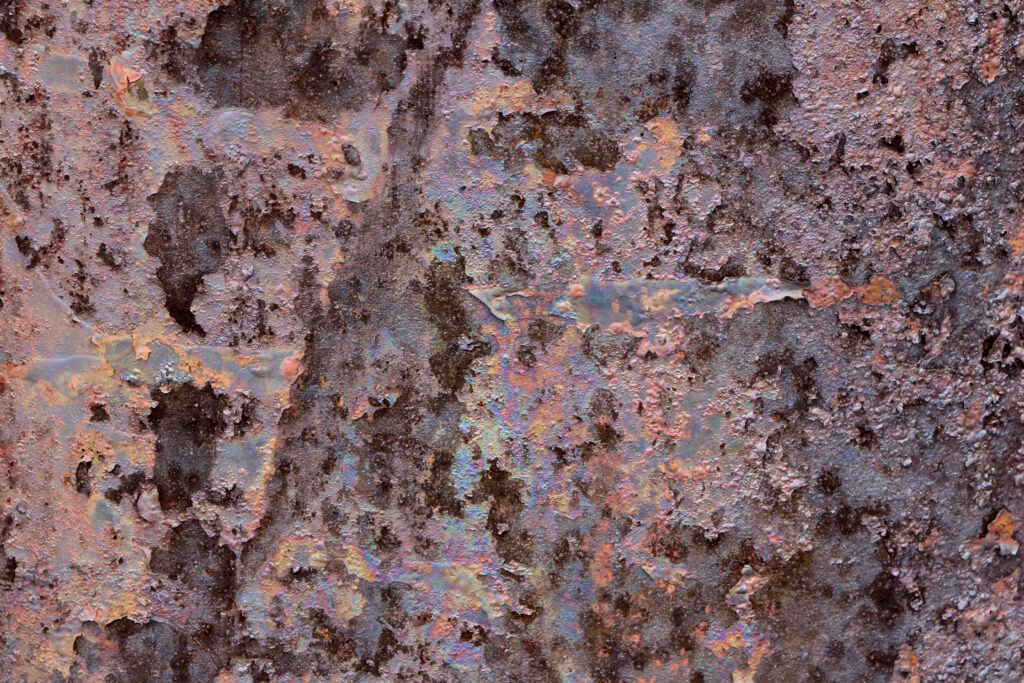
Corrosion is the gradual deterioration of a material, most commonly a metal, through chemical reaction with its surrounding environment, typically oxygen and moisture, that weakens the material over time. The most familiar form, rust on iron and steel, costs economies enormous sums annually in repair, replacement, and prevention, making corrosion control a major and continuing concern across construction, transportation, energy, and manufacturing industries worldwide.
The Chemistry Behind Corrosion
Corrosion occurs through an electrochemical process in which metal atoms lose electrons and react with oxygen or other substances in the environment, forming new compounds, typically oxides, that are weaker and more brittle than the original metal. This process requires both an oxidizing agent, usually oxygen, and an electrolyte, often water containing dissolved salts or other ions, to conduct the small electrical currents involved, which helps explain why metal corrodes far faster in humid, salty coastal environments than it does in dry, arid conditions.
Common Forms of Corrosion
Uniform corrosion spreads evenly across an exposed metal surface, gradually thinning it over time in a relatively predictable way. Pitting corrosion instead concentrates attack at small, localized points, creating deep pits that can weaken a structure disproportionately to the small amount of material actually lost. Galvanic corrosion occurs when two different metals are in electrical contact within an electrolyte, causing the more reactive metal to corrode faster than it would alone, a problem engineers must consider carefully whenever joining dissimilar metals together in any structure, pipeline, or mechanical assembly.
Preventing Corrosion
Protective coatings, including paint, galvanizing with zinc, and specialized polymer, create a physical barrier that keeps moisture and oxygen away from the underlying metal surface. Corrosion-resistant alloys, such as stainless steel, incorporate elements like chromium that form a thin, stable protective oxide layer on their own. Cathodic protection uses a sacrificial piece of more reactive metal, or an externally applied electrical current, to direct the electrochemical corrosion process away from the structure engineers actually want to protect, commonly used to protect buried pipelines, ship hulls, and underground storage tanks from gradual electrochemical attack.
Economic and Safety Impact
Corrosion damage extends well beyond cosmetic rust, since it can weaken load-bearing structures, cause pipeline leaks, and compromise the integrity of bridges, vehicles, and industrial equipment, occasionally contributing to serious accidents and costly unplanned shutdowns when corroded components fail unexpectedly in service. Engineers account for expected corrosion rates when designing infrastructure meant to last decades, often specifying extra material thickness or switching to more corrosion-resistant materials in locations where moisture or chemical exposure is expected to be especially severe over the structure’s intended lifespan.
Monitoring and Inspection
Because corrosion often progresses gradually and can occur in places that are difficult to inspect visually, such as the interior of pipelines or underground structures, engineers rely on specialized inspection techniques including ultrasonic thickness testing, which measures remaining material thickness without cutting into a structure, and corrosion sensors that provide ongoing monitoring data. Regular inspection schedules, especially for critical infrastructure such as bridges, pipelines, and aircraft, aim to catch dangerous, hidden corrosion early, well before it ever progresses far enough to threaten structural safety.
History of Corrosion Science
Humans have struggled with metal corrosion for as long as they have used metal tools and structures, but the modern scientific understanding of corrosion as an electrochemical process developed mainly in the nineteenth and twentieth centuries, as chemists and engineers studied the underlying reactions in detail. This improved understanding enabled the development of effective prevention methods such as cathodic protection and corrosion-resistant alloys that have dramatically extended the practical service life of modern bridges, pipelines, and buildings compared to structures built in earlier eras.
Corrosion in Specific Industries
Different industries face distinct corrosion challenges shaped by their particular operating environments. Marine and offshore structures face constant exposure to salt water, one of the most aggressive corrosive environments, requiring specialized coatings, corrosion-resistant alloys, and frequent inspection regimes. Oil and gas pipelines must resist both external soil corrosion and internal corrosion from the fluids they transport, sometimes requiring internal coatings or corrosion inhibitor chemicals injected directly into the flow. Aircraft structures demand extremely rigorous corrosion control given the severe safety consequences of structural failure at altitude, leading to strict inspection schedules and advanced corrosion-resistant aerospace alloys developed specifically for that demanding environment.
Corrosion-Resistant Material Innovation
Ongoing materials research continues to develop new corrosion-resistant alloys, coatings, and composite materials that can replace traditional steel and iron in demanding environments where corrosion has historically been a persistent and costly problem. Advances in coating technology, including self-healing coatings that can automatically seal small scratches before corrosion can take hold, and a steadily improved understanding of how to design structures that avoid trapping moisture or unintentionally creating galvanic corrosion risks, continue to extend the practical service life of infrastructure built from otherwise corrosion-prone materials. Engineers increasingly rely on predictive corrosion modeling, which combines historical inspection data with environmental monitoring to forecast where and when deterioration is likely to accelerate, allowing maintenance budgets to be directed toward the structures and components most at risk before a failure occurs.
FAQs
Why does metal corrode faster in salty or humid environments?
Corrosion requires an electrolyte to conduct the small electrical currents involved in the reaction, and water containing dissolved salts conducts electricity far more effectively than dry air, accelerating the corrosion process significantly.
How does cathodic protection prevent corrosion?
Cathodic protection directs the electrochemical corrosion process toward a sacrificial piece of more reactive metal or uses an applied electrical current, protecting the main structure by deliberately making it the less reactive, electrically protected side of the overall reaction.
Quick checkHow does cathodic protection prevent corrosion?Show answer
Cathodic protection directs the electrochemical corrosion process toward a sacrificial piece of more reactive metal or an applied electrical current, protecting the main structure.
Editorially reviewed by Specialty Digest Editorial TeamLast reviewed November 2, 2026Researched and drafted with AI assistanceReport an issue