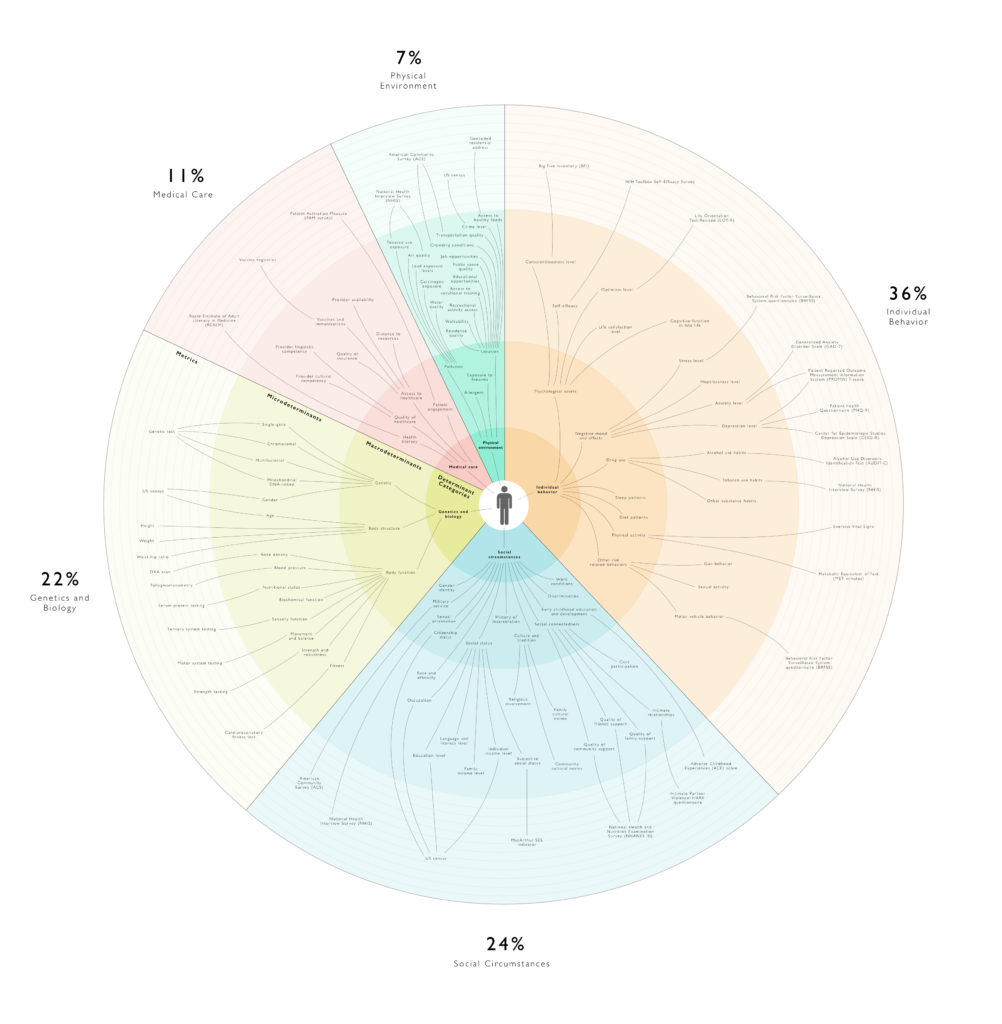
Social determinants of health are the non-medical conditions in which people are born, grow, live, work, and age that significantly shape health outcomes, often having as much or more influence on a population’s overall health than clinical medical care provided by hospitals and clinics. These factors include economic stability, education, the physical neighborhood and built environment, access to nutritious food, and the quality of a person’s social and community relationships, interacting together in complex ways that extend well beyond anything that happens inside a doctor’s office alone.
Economic Stability
Economic circumstances, including employment status, income level, and housing stability, strongly influence health by determining access to nutritious food, safe housing, reliable transportation, and the ability to afford medical care, medications, and preventive health services. Financial stress itself has also been linked to a range of adverse health effects, independent of its influence on access to goods and services, making economic stability one of the most consistently studied and clearly influential social determinants across diverse populations and healthcare settings.
Education Access and Quality
Educational attainment is strongly and consistently associated with health outcomes throughout life, partly because education influences future employment and income opportunities, but also because it shapes health literacy, the ability to understand and act on health information, and decision-making around everyday health behaviors more broadly throughout life. People with more years of formal education also tend to have greater access to jobs that offer health insurance and other benefits, compounding education’s influence on health through multiple interconnected pathways rather than a single direct mechanism. Communities with greater access to quality education at all levels tend to show better population-level health outcomes over time, even after separately accounting for differences in income level and healthcare access.
Neighborhood and Physical Environment
The physical characteristics of where people live, including housing quality, exposure to environmental pollutants, availability of safe places for physical activity, and access to grocery stores offering fresh produce, all substantially shape daily health behaviors and long-term health outcomes. Neighborhoods lacking safe outdoor spaces, reliable public transportation, or nearby sources of nutritious food, sometimes described as food deserts, can make genuinely healthy choices considerably more difficult, regardless of an individual’s personal motivation or stated health intentions.
Social and Community Context
The quality and strength of a person’s relationships and sense of belonging within their community meaningfully influence both mental and physical health, with social isolation and lack of community support associated with worse health outcomes across numerous studied conditions. Discrimination and social exclusion based on factors such as race, disability, or other characteristics also function as recognized social determinants, contributing to persistent health disparities between different population groups that cannot be fully explained by individual behavior or by access to medical care alone.
Healthcare Access and Quality
While often considered separately from the broader social determinants, access to quality healthcare, including having health insurance, nearby healthcare facilities, and providers who can communicate effectively with patients from diverse backgrounds, remains an important factor shaping health outcomes in its own right. Addressing social determinants more broadly, however, is increasingly recognized as necessary alongside improving healthcare access itself, since better healthcare access alone generally cannot fully offset the lasting health effects of poverty, unstable housing, or persistently limited educational opportunity.
Measuring and Addressing Social Determinants
Researchers and public health agencies increasingly use standardized tools to assess social determinants at both the individual and community level, including screening questionnaires that clinicians can use during routine healthcare visits to identify patients facing food insecurity, housing instability, or other unmet social needs, alongside broader community-level indicators such as neighborhood poverty rates and local access to grocery stores and green space. Identifying these needs is only a first step, however, since meaningfully addressing them typically requires connecting patients with resources and services well beyond what a clinical setting alone can provide, such as housing assistance programs, food assistance benefits, or job training services.
Some healthcare systems and insurers have begun directly investing in programs that address social determinants, such as funding transportation to medical appointments, supporting supermarkets in underserved neighborhoods, or partnering with housing organizations, based on growing evidence that addressing these upstream factors can improve health outcomes and, in some cases, reduce overall healthcare costs by preventing the more severe and expensive health consequences that often result when basic social needs go unmet for extended periods.
Policy Approaches
Because many social determinants operate at a structural level well beyond what any individual patient or clinician can directly control, addressing them meaningfully often requires policy interventions, including minimum wage laws, affordable housing initiatives, investments in public education, and urban planning decisions that affect neighborhood walkability and access to parks and fresh food. Public health researchers increasingly argue that durable, lasting improvements in population health depend as much on these broader policy choices as on advances in medical treatment and healthcare delivery itself.
FAQs
Why are social determinants of health considered as important as medical care?
Non-medical factors such as economic stability, education, and neighborhood environment often have as much or more influence on population health outcomes than clinical medical care alone, because they shape daily behaviors and access to resources throughout a person’s life.
What is a food desert and why does it matter for health?
A food desert is a neighborhood lacking convenient access to grocery stores offering fresh, nutritious food, which can make healthy eating considerably more difficult regardless of an individual’s personal motivation.
Quick checkWhy are social determinants of health considered as important as medical care?Show answer
Non-medical factors such as economic stability, education, and neighborhood environment often have as much or more influence on population health outcomes than clinical medical care alone, because they shape daily behaviors and access to resources throughout a person's life.
Editorially reviewed by Specialty Digest Editorial TeamLast reviewed November 2, 2026Researched and drafted with AI assistanceReport an issue