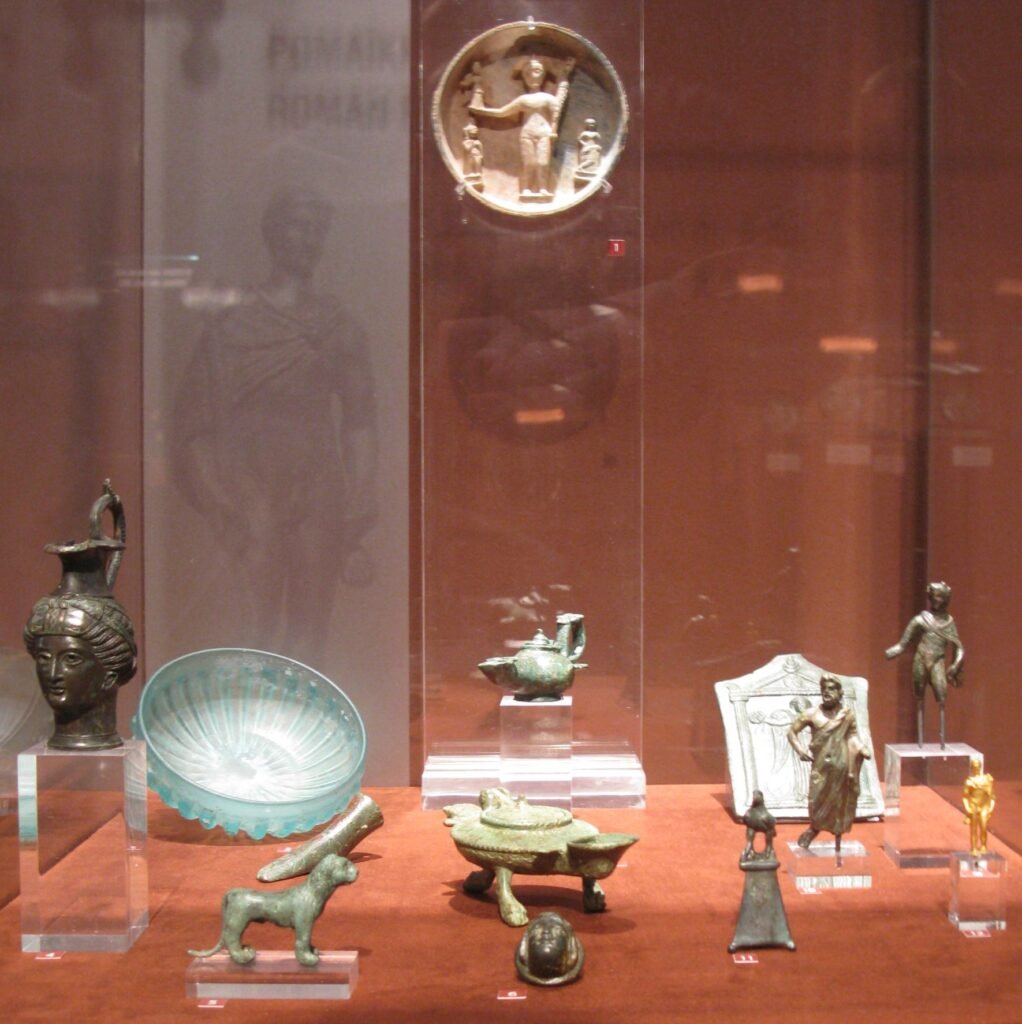
An artifact, in archaeology, is any object that was made, modified, or used by humans and recovered as evidence of past activity. The term covers an enormous range of material, from a roughly flaked stone tool half a million years old to a nineteenth-century coin dropped beneath a city street, but the defining feature is always the same: some degree of human action shaped or altered the object, distinguishing it from material that occurs naturally at a site without human involvement.
Archaeologists draw a careful line between artifacts and two related categories of evidence. An ecofact is an unmodified natural or organic remain, such as a seed, a shell, or an animal bone, that was not made by people but still provides information about past environments, diets, or activities when found in an archaeological context. A feature, by contrast, is a non-portable, human-made element of a site, such as a hearth, a pit, or a wall foundation, which cannot be removed and taken to a lab the way an artifact can. Keeping these categories distinct helps archaeologists describe exactly what kind of evidence a site has produced and how it should be analyzed.
Classifying and Dating Through Typology
Once recovered, artifacts are typically sorted by material, such as stone, ceramic, metal, glass, or organic matter like bone and wood, and then by typology, the study of how particular shapes, decorations, or manufacturing techniques changed over time. Pottery styles, for instance, often shifted in recognizable ways from one generation to the next, which lets archaeologists use the presence of a particular pottery type in a layer to suggest an approximate date range for that context, even without any scientific dating technique. Stone tool typologies work similarly, tracking changes in flaking technique and tool form across hundreds of thousands of years of human prehistory.
This typological approach long predates modern scientific dating methods and remains useful alongside them, since an artifact’s style can sometimes be identified at a glance in the field, while radiocarbon or other scientific dating requires laboratory analysis and is usually reserved for samples that can answer a chronological question typology cannot resolve on its own.
Why Context Matters as Much as the Object
An artifact’s scientific value depends heavily on its context, meaning the exact location, layer, and associations in which it was found. A ceramic vessel recovered from a securely dated, undisturbed burial tells archaeologists far more than an identical vessel bought from a dealer with no record of where it came from. Once an artifact is removed from the ground without documentation of its context, most of the information it could have provided about chronology, trade, ritual, or daily life is permanently lost, even though the object itself survives physically intact.
This is why looting and the trade in unprovenanced artifacts are treated as serious problems within archaeology and heritage law, not merely as matters of ownership. A looted artifact may still be beautiful or valuable as an object, but it can rarely contribute to genuine historical knowledge, because the context that would have made it scientifically meaningful was destroyed or never recorded in the process of its removal. Many museums and researchers now refuse to study or display artifacts lacking a documented, legal excavation history for exactly this reason.
A Word of Caution: Geofacts
Not every unusual-looking stone found at a site is an artifact. A geofact is a naturally occurring object, usually a rock shaped by processes like frost fracturing, river action, or glacial movement, that happens to resemble a deliberately made tool. Distinguishing genuine artifacts from geofacts is a basic skill in lithic analysis, since mistaking natural shapes for human workmanship can lead to false claims about how old or widespread human activity at a site really was.
What Artifacts Can Reveal
Beyond dating a site, artifacts are often the most direct evidence archaeologists have for reconstructing how people actually lived. Wear patterns on a stone blade can suggest whether it was used for cutting meat, scraping hide, or working wood. Trace residues inside a ceramic vessel can indicate what foods or substances it once held. The distribution of a particular style of pottery or metalwork across a wide region can trace ancient trade networks, cultural contact, or migration long before any written records existed to describe them directly. A single well-documented artifact assemblage from one site can therefore support conclusions about economy, technology, social status, and even belief, far beyond simply confirming that people were present.
FAQs
What is the difference between an artifact and an ecofact?
An artifact was made or modified by humans, such as a tool or a pot. An ecofact is an unmodified natural or organic remain, such as a seed or bone, that was not made by people but still provides evidence about the past.
Why is an artifact’s context so important?
Context, meaning the exact find-location and associated layer, provides most of an artifact’s scientific value. An artifact removed without recorded context loses most of the information it could reveal about chronology or past activity.
What is a geofact?
A naturally shaped rock that resembles a human-made tool but was actually formed by natural processes like frost fracturing or river action, rather than by deliberate human manufacture.
How do archaeologists use artifact typology?
By tracking how styles of objects like pottery or stone tools changed over time, archaeologists can estimate the approximate age of a layer based on which recognizable artifact types it contains.
In the news
Quick checkWhat distinguishes an artifact from an ecofact?Show answer
An artifact was made or modified by humans, while an ecofact is an unmodified natural or organic remain, such as a seed or bone, that still provides evidence about the past.
Editorially reviewed by Specialty Digest Editorial TeamLast reviewed November 2, 2026Researched and drafted with AI assistanceReport an issue