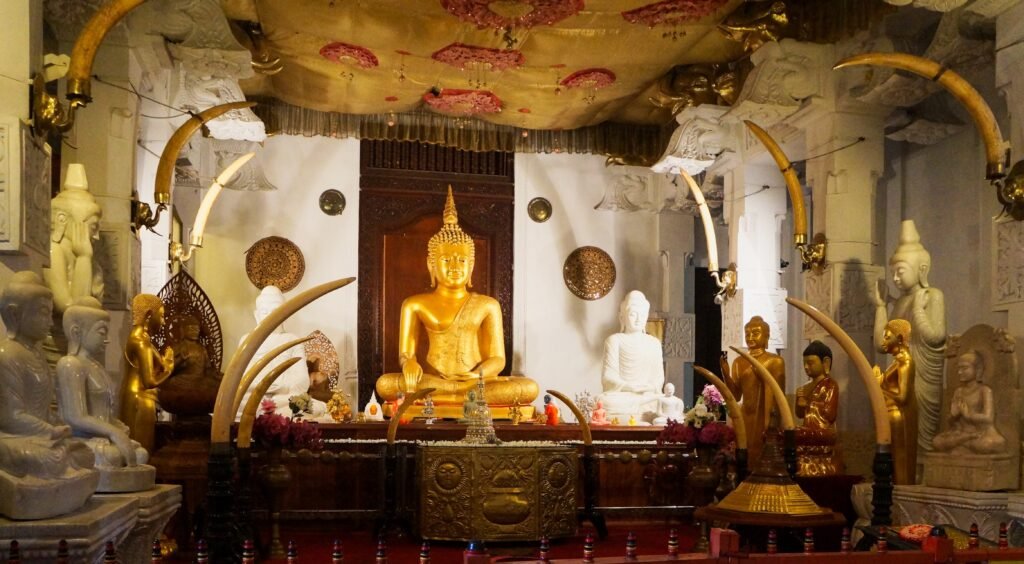
Buddhism is a religion and philosophical tradition founded by Siddhartha Gautama, known as the Buddha, or “the awakened one,” in the region of ancient India around the fifth or sixth century BCE. It centers on understanding and ending suffering through ethical conduct, mental discipline, and the cultivation of wisdom, offering a path toward liberation that does not depend on belief in a creator god, which distinguishes it in an important way from many other major world religious traditions built around a creator deity.
According to traditional accounts, Siddhartha Gautama was born into a wealthy family but became troubled by the universal presence of suffering, aging, and death, eventually leaving his comfortable life to seek a deeper understanding of these conditions. After years of ascetic practice and meditation, he is said to have reached enlightenment, gaining insight into the nature of suffering and the means to overcome it, and spent the remainder of his long life traveling and teaching others what he had come to understand about the causes and cessation of suffering.
The Four Noble Truths
The core of the Buddha’s teaching is traditionally summarized in the Four Noble Truths. The first holds that suffering, or dukkha, is an inherent and pervasive feature of existence, encompassing not just obvious pain but also the subtler dissatisfaction built into impermanent, changing experience. The second identifies the cause of suffering as craving or attachment, the persistent, often unconscious desire for things to be other than they actually are in the present moment. The third holds that suffering can cease, and the fourth describes the path leading to that cessation, known as the Eightfold Path.
The Eightfold Path groups into three broader categories: wisdom, covering right view and right intention; ethical conduct, covering right speech, right action, and right livelihood; and mental discipline, covering right effort, right mindfulness, and right concentration. Rather than a strict linear sequence to be completed one step at a time, these elements are generally understood as mutually reinforcing aspects of a single integrated practice, cultivated together gradually over time.
Core Concepts: Karma, Rebirth, and Non-Self
Buddhism teaches that beings are caught in an ongoing cycle of rebirth, called samsara, driven by karma, the principle that intentional actions generate consequences that shape future circumstances and future rebirths. Liberation from this cycle, known as nirvana, is the tradition’s ultimate goal, representing the complete cessation of craving and suffering. A distinctive and often challenging Buddhist teaching is anatta, or non-self, which holds that there is no permanent, unchanging self or soul underlying a person’s experience, but rather a constantly changing stream of physical and mental processes that conventionally gets labeled, for practical and linguistic convenience, as a single individual self.
Major Branches
Buddhism developed into several major branches as it spread across Asia. Theravada Buddhism, dominant today in countries such as Sri Lanka, Thailand, and Myanmar, emphasizes the authority of its earliest surviving scriptural collection and the monastic path toward individual enlightenment. Mahayana Buddhism, dominant in East Asian countries including China, Japan, and Korea, developed a broader range of texts and practices, including an emphasis on the bodhisattva ideal of seeking enlightenment for the benefit of all beings rather than oneself alone, and it encompasses further traditions such as Zen, which emphasizes direct meditative insight, and Pure Land Buddhism, which emphasizes devotion. Vajrayana Buddhism, prominent in Tibet and the Himalayan region, incorporates additional esoteric practices and ritual elements built on top of broader Mahayana foundations.
Practice and Daily Life
Beyond its philosophical teachings, Buddhism shapes everyday practice for hundreds of millions of adherents across Asia and, increasingly, in communities around the world. Meditation is central to Buddhist practice, used to cultivate the mindfulness and concentration described in the Eightfold Path, though specific techniques vary considerably between traditions, from the structured breath-focused meditation common in Theravada practice to the koan-based contemplative methods associated with Zen. Many Buddhist communities also maintain monastic institutions, where monks and nuns commit to a disciplined life of study, meditation, and teaching, supported by lay communities who in turn receive religious teaching and guidance in return.
Ethical conduct in daily life typically centers on the Five Precepts, commitments followed by many lay Buddhists to abstain from killing, stealing, sexual misconduct, false speech, and intoxication, understood as practical guidelines for reducing the craving and harmful action that the Four Noble Truths identify as the root of suffering. Today, Buddhism has roughly five hundred million adherents worldwide, concentrated heavily in East, South, and Southeast Asia, though its meditative practices in particular have also influenced secular mindfulness programs and psychological therapies adopted well outside any specifically Buddhist religious context.
FAQs
What are the Four Noble Truths’ basic claims?
That suffering exists, it has a cause rooted in craving, it can end, and there is a path, the Eightfold Path, leading to its end.
What is nirvana?
The complete cessation of craving and suffering, and liberation from the cycle of rebirth, representing Buddhism’s ultimate spiritual goal and final release from the suffering described in the first Noble Truth.
What does “non-self,” or anatta, mean in Buddhist teaching?
The teaching that there is no permanent, unchanging self or soul, but rather a constantly changing stream of physical and mental processes conventionally labeled as an individual.
What are the major branches of Buddhism?
Theravada, dominant in Southeast Asia; Mahayana, dominant in East Asia and including traditions like Zen and Pure Land Buddhism; and Vajrayana, prominent in Tibet and the Himalayan region.
In the news
Quick checkWhat are the Four Noble Truths' basic claims?Show answer
That suffering exists, it has a cause rooted in craving, it can end, and there is a path, the Eightfold Path, leading to its end.
Editorially reviewed by Specialty Digest Editorial TeamLast reviewed November 2, 2026Researched and drafted with AI assistanceReport an issue