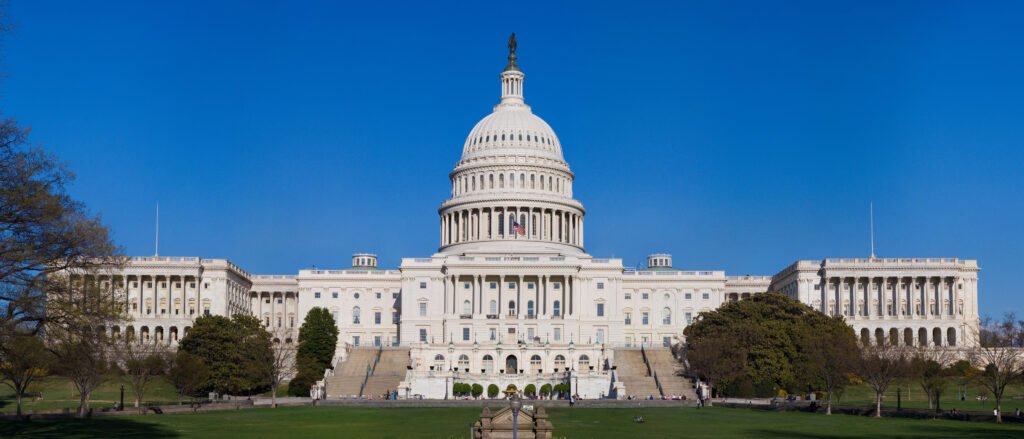
Lobbying is the activity of paid professionals, typically called lobbyists, who work to influence key legislators, executives, and other government officials on behalf of a particular client, industry, or cause. It is generally conducted through private meetings, research and position papers, and sustained relationship-building with officials, distinguishing it from the broader, more general right of ordinary individuals to petition their government, which does not require professional representation.
Origins and early history
Lobbying dates back to the earliest years of the American republic and occurs at every level of government, from city councils to the federal government in Washington. Founding father James Madison viewed political “factions,” organized groups pursuing their own interests, as an inherent and somewhat dangerous feature of free government, but proposed that allowing many competing factions to check one another was preferable to suppressing them outright, a philosophy that has shaped American tolerance for lobbying ever since.
Throughout the nineteenth century, lobbying was conducted mostly at the state level and was often carried out discreetly rather than openly. Many state governments actively criminalized certain lobbying practices during this period, and courts sometimes voided contracts for lobbying services altogether, reasoning that paying someone to influence legislators corrupted the basic right to petition government. The Progressive Era, spanning roughly the late nineteenth and early twentieth centuries, brought a wave of reform-minded criticism blaming lobbyists for corrupting American politics more broadly, pressure that eventually contributed to the first serious efforts at formal lobbying regulation.
Legal status and regulation
American courts have generally protected lobbying as a form of free speech, though they have not definitively settled whether it falls under the First Amendment’s separate Petition Clause, which guarantees the right to petition government for redress of grievances. In the 1953 case Rumely v. United States, the Supreme Court narrowly defined formal “lobbying activities” as direct representations made to Congress itself, while extending First Amendment protection to indirect efforts aimed at influencing public opinion more broadly, a distinction that continues to shape how lobbying disclosure laws are written and interpreted today.
Lobbying in the modern political process
As legislative authority in the United States increasingly concentrated in Washington over the twentieth century, lobbyists’ influence grew correspondingly, and their role expanded well beyond simply making the case for a particular policy position. Lobbyists increasingly began helping lawmakers raise campaign funds directly, often by organizing contributions through political action committees, and they have frequently used earmarks, funding directed to specific causes or projects, often within a particular lawmaker’s home district, as a tool for building legislative support.
The revolving door between government service and lobbying work has become especially pronounced in recent decades. Former congressional staff members routinely move into lobbying careers after leaving public service, and an increasing number of former members of Congress themselves have joined lobbying firms after leaving office, bringing with them detailed personal knowledge of the legislative process and, often, direct personal relationships with sitting lawmakers, advantages a newcomer to the field typically cannot match. Public relations and advertising campaigns have also become closely intertwined with lobbying work, as organizations increasingly try to shape public opinion on an issue at the same time they are working directly to influence the legislators who will ultimately vote on it.
Scale and disclosure
Lobbying has grown dramatically as an industry in the United States, with total reported spending rising from under one hundred million dollars in 1975 to more than two and a half billion dollars by 2006, a scale of growth that reflects both the expanding reach of federal regulation into new areas of the economy and the growing sophistication of organized efforts to influence it. Federal law requires many lobbyists to formally register and periodically disclose their activities and the issues they are working on, transparency measures intended to let the public and journalists track who is attempting to influence government decisions and on whose behalf, even though critics argue that significant influence efforts still take place outside the formal, disclosed lobbying system entirely, through channels that current rules were never designed to capture.
Lobbying beyond the United States
While lobbying is especially visible and heavily studied in the United States, organized efforts to influence government decisions exist in virtually every political system with meaningful legislative or regulatory power. The European Union, for example, has developed its own extensive lobbying ecosystem in Brussels, reflecting the scale of economic regulation the EU’s institutions produce, and many member states maintain their own separate disclosure rules for lobbyists working at the national level. Comparative scholars note that the specific legal structure of lobbying, including how openly it is conducted and how strictly it is regulated, varies considerably across countries, shaped by each system’s particular constitutional traditions, campaign finance rules, and underlying cultural attitudes toward the legitimacy of organized interest representation in government decision-making.
FAQs
- How is lobbying different from an individual’s right to petition the government? Lobbying is typically conducted by paid professionals representing a client or industry, while the right to petition belongs to all individuals and does not require professional representation.
- What did James Madison believe about political factions? Madison viewed factions as an inherent feature of free government and argued that allowing many competing factions to check one another was preferable to suppressing them.
- Is lobbying unique to the United States? No. Organized efforts to influence government exist in most political systems, including the European Union, though the specific legal rules and level of disclosure vary considerably by country.
Key facts
- Dates back to the earliest years of the American republic
- James Madison viewed competing political factions as a natural, manageable feature of free government
- Rumely v. United States (1953) narrowly defined formal lobbying activities
- Lobbying spending in the US grew from under $100 million in 1975 to more than $2.5 billion by 2006
- The 'revolving door' describes lobbyists who are former congressional staff or members
Quick checkHow is lobbying different from an individual's right to petition the government?Show answer
Lobbying is typically conducted by paid professionals representing a client, while petitioning is a general right available to all individuals.
Sources
- Wikipedia, 'History of lobbying in the United States', https://en.wikipedia.org/wiki/History_of_lobbying_in_the_United_States
Editorially reviewed by Specialty Digest Editorial TeamLast reviewed November 2, 2026Researched and drafted with AI assistanceReport an issue