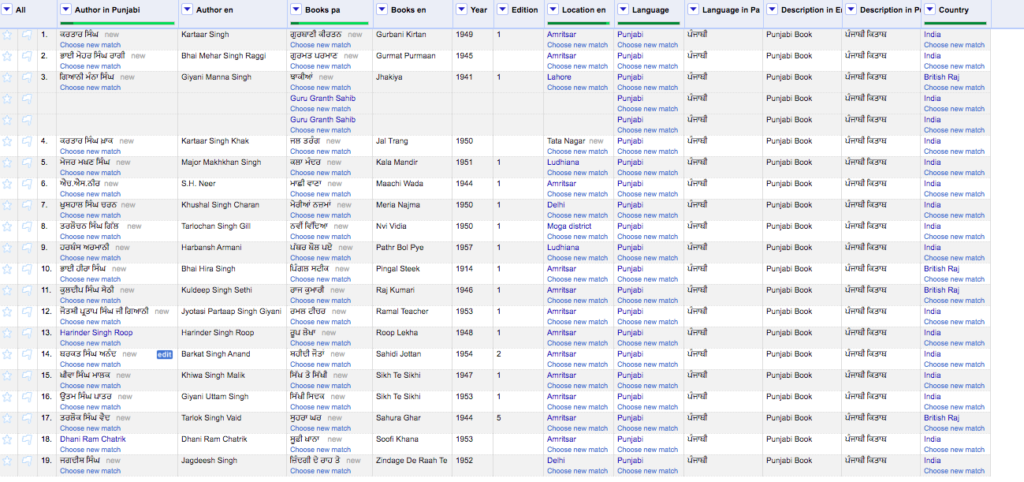
Data cleaning is the process of identifying and correcting or removing errors, inconsistencies, and inaccuracies in a dataset before it is used for analysis, reporting, or training a machine learning model. Raw data collected from real-world sources, including manual entry forms, sensors, and combined records from multiple systems, is rarely perfectly accurate or consistently formatted, and analyzing that data without first addressing these problems can produce misleading conclusions or a poorly performing model, no matter how sophisticated the analysis technique applied to it afterward happens to be. Experienced data professionals often describe data cleaning as unglamorous but essential work, frequently consuming far more time in a typical project than the analysis step that follows it.
Common Problems Data Cleaning Addresses
Missing values are among the most common issues, occurring when a record simply lacks a value for a field, whether because the information was never collected, was lost during data transfer, or was deliberately left blank by whoever originally entered the data. Analysts typically address missing values either by removing the affected records entirely, when missing data is rare enough that doing so will not meaningfully bias the remaining analysis, or by imputing a reasonable substitute value based on other, similar records, when removing data outright would discard too much useful information.
Duplicate records, where the same real-world entity, such as a single customer, appears multiple times under slightly different spellings or formatting, can inflate counts and distort analysis if left unaddressed, and identifying them often requires more than a simple exact-match comparison, since the same entity can appear with inconsistent capitalization, abbreviations, or minor typos across different records. Inconsistent formatting, such as dates recorded in different formats across different source systems or the same category described using different wording in different places, must similarly be standardized into a single consistent format before meaningful analysis is possible. Outliers, values that fall far outside the range most of the data occupies, require careful judgment, since an outlier might represent a genuine, important data error worth correcting, or it might represent a real, unusual, but entirely legitimate observation worth keeping and even highlighting rather than removing.
A Structured but Iterative Process
Effective data cleaning typically begins with a thorough exploration of the dataset to understand its overall structure and identify where problems are most likely to exist, often using basic summary statistics and visualizations to spot missing values, unexpected patterns, or values that look implausible for a given field. Specific cleaning steps then address the particular problems found, which might include standardizing text formatting, correcting clearly identifiable data entry errors, removing or flagging duplicate records, and deciding how to handle any missing values appropriately given the specific context of the analysis being performed.
Data cleaning is rarely a single, one-time pass completed at the very start of a project and then forgotten; new problems often surface once deeper analysis begins to reveal patterns that the earlier, more surface-level cleaning missed, which is why experienced analysts generally treat it as an iterative, ongoing part of working with data rather than a single finished checklist item. Increasingly, organizations also invest in preventing data quality problems at their original source, such as adding validation rules to data entry forms, specifically because cleaning data after the fact is almost always more time-consuming and costly than preventing avoidable errors from entering a system in the first place.
Tools That Support the Process
Analysts clean small to moderately sized datasets using spreadsheet software or programming languages such as Python and R, which offer extensive libraries specifically built for identifying and fixing common data quality problems efficiently and repeatably rather than manually editing individual cells by hand. For very large datasets, dedicated data preparation tools and the transformation stage of ETL pipelines used to populate data warehouses often automate much of the cleaning process, applying consistent, repeatable rules across millions of records at a time rather than relying on manual inspection of individual values.
Writing cleaning steps as repeatable code, rather than performing one-off manual edits directly in a spreadsheet, has become standard practice in professional data work, since repeatable code can be reviewed, tested, reapplied automatically whenever new data arrives, and easily adjusted if a mistake in the original cleaning logic is later discovered. This approach also creates a clear, traceable record of exactly what changes were made to the original raw data and why, which matters considerably when an analysis or a trained model’s results are later questioned or need to be reproduced by someone other than the original analyst.
Frequently Asked Questions
Why does data cleaning often take longer than the actual data analysis? Real-world data typically contains a wide range of errors, inconsistencies, and missing values accumulated across different collection methods and systems, and identifying and correcting all of these problems thoroughly enough to trust the resulting analysis is often a far more time-consuming task than applying a statistical or machine learning technique to already-clean data.
Should missing values always simply be removed from a dataset? Not necessarily. Removing records with missing values is reasonable when missing data is rare, but if a meaningful portion of the dataset has missing values, removing all of those records outright could discard too much useful information or introduce bias, which is why analysts often instead estimate, or impute, a reasonable substitute value based on other similar records.
How can organizations reduce the amount of data cleaning needed in the future? Preventing data quality problems at their source, for example by adding validation rules to data entry forms, standardizing formats across systems from the start, and training staff on consistent data entry practices, is generally far more efficient than repeatedly cleaning up the same recurring kinds of errors after they have already entered a system.
Key facts
- Data cleaning addresses missing values, duplicates, inconsistent formatting, and outliers.
- Missing values are handled by removal or by imputing reasonable substitute values.
- Outliers require judgment, since some reflect errors while others are legitimate.
- Data cleaning is typically iterative rather than a single one-time step.
- Preventing errors at the data entry source reduces future cleaning work.
Quick checkWhy is data cleaning often described as the most time-consuming part of a data project?Show answer
Real-world data accumulates errors, inconsistencies, and missing values from many sources, and thoroughly identifying and correcting these problems so an analysis can be trusted typically takes far longer than applying an analytical technique to already-clean data.
Sources
- Data Quality: The Accuracy Dimension (Olson); Principles of Data Wrangling (Rattenbury et al.)
Editorially reviewed by Specialty Digest Editorial TeamLast reviewed November 2, 2026Researched and drafted with AI assistanceReport an issue