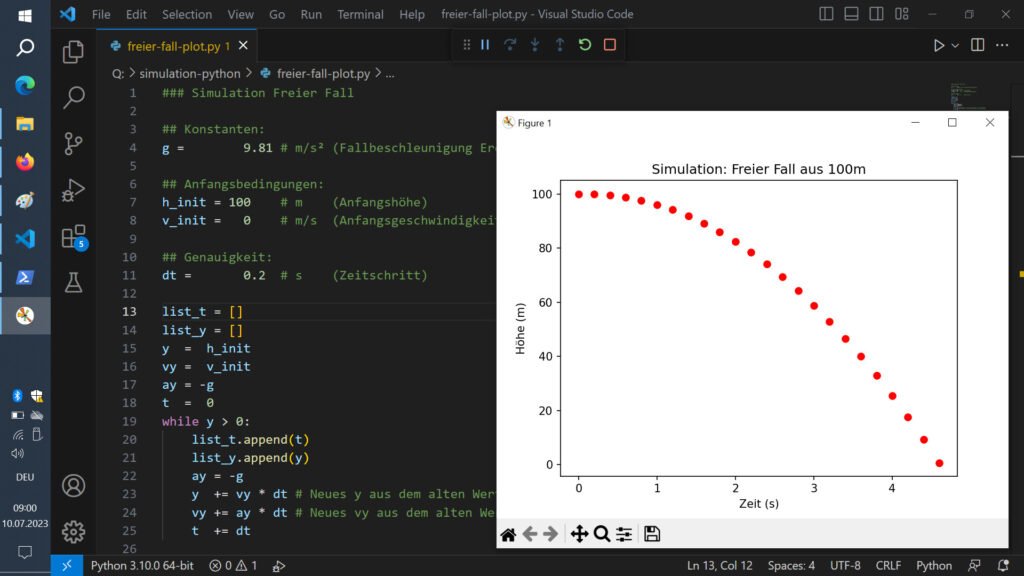
A programming language is a formal system of words, symbols, and rules that lets a person write instructions a computer can carry out. Unlike natural human languages, a programming language has a strict grammar, called syntax, and a precise meaning for every valid statement, called semantics, so that a program’s behavior is unambiguous and repeatable. Thousands of programming languages exist, each reflecting different design choices about how closely the language should mirror the way humans think about a problem versus how directly it maps onto the way computer hardware actually works.
Levels of Abstraction
Programming languages are often described on a spectrum from low-level to high-level. Machine code, the sequence of raw binary instructions a processor executes directly, sits at the lowest level and is essentially unreadable to humans. Assembly language sits just above it, giving each machine instruction a short human-readable name, called a mnemonic, while still mapping almost one-to-one onto the hardware. High-level languages, including Python, Java, and JavaScript, abstract away hardware details entirely, letting a programmer describe what should happen, such as sorting a list or sending a message over a network, without specifying exactly how the processor should accomplish it. This abstraction makes high-level languages far faster to write and easier to read, at some cost in the fine control a programmer has over performance.
Languages are also grouped by how they handle types, the categories of data a program works with, such as numbers or text. Statically typed languages, such as Java, Rust, and C++, require a variable’s type to be known before the program runs and catch many kinds of mistakes automatically during compilation. Dynamically typed languages, such as Python and JavaScript, check types while the program is running instead, which generally speeds up writing and experimenting with code but can let certain errors slip through until the exact moment the flawed code actually executes.
Paradigms and Design Philosophy
A programming paradigm is a broad style of structuring and thinking about code. Imperative programming, the oldest and most common paradigm, describes a program as a sequence of explicit steps that change the program’s state, much like a recipe. Object-oriented programming organizes code around objects that bundle data with the operations that act on it. Functional programming, used heavily in languages such as Haskell and increasingly borrowed by mainstream languages, treats computation as the evaluation of mathematical functions and tries to avoid changing stored data at all. Many modern languages, including Python, JavaScript, and Scala, are intentionally multi-paradigm, letting a programmer mix these styles within a single program depending on which fits a given problem best.
No single programming language dominates every task. Python’s readable syntax and enormous ecosystem of libraries have made it a default choice for data science and machine learning. JavaScript remains the only language that runs natively inside every major web browser, making it essential for interactive websites. C and C++ remain the backbone of operating systems, game engines, and other software where direct control over memory and hardware performance is critical, while languages such as Rust have gained rapid adoption by offering many of the same performance guarantees with stronger built-in protection against a class of memory-related bugs that have historically caused serious security vulnerabilities.
A Brief History
Early programmers in the 1940s wrote instructions directly in machine code or assembly language, a slow and error-prone process. FORTRAN, released in 1957, is widely considered the first successful high-level language, letting scientists express mathematical formulas almost as they would write them on paper, and COBOL followed soon after aimed at business data processing. The following decades introduced ideas that still shape language design today, including structured programming in the 1970s, which pushed languages such as C toward clear, organized control flow, and object-oriented programming, popularized through Smalltalk and later C++ and Java, which reorganized code around reusable objects. The 1990s and 2000s brought a wave of languages, including Python, Ruby, and JavaScript, that prioritized programmer productivity and readability over raw execution speed, reflecting how much cheaper computing power had become relative to programmer time.
Frequently Asked Questions
How many programming languages are there? Estimates vary, but thousands of programming languages have been documented, though only a few dozen see widespread, active use in industry at any given time. New languages continue to appear as computing needs change, while many older ones remain in long-term use for maintaining existing software.
Do I need to learn multiple programming languages? Most professional software developers learn several languages over a career, because different languages and ecosystems fit different jobs, such as building a website, analyzing data, or writing firmware for a small device. Many of the underlying concepts, including variables, loops, and functions, transfer easily between languages once they are learned once.
Is a markup language like HTML a programming language? Not in the traditional sense. HTML describes the structure of a document rather than a sequence of computational steps, and it lacks constructs such as loops and conditional logic that define true programming languages, though it is often used alongside real programming languages such as JavaScript to build interactive web pages.
What makes a programming language popular? Popularity usually reflects a mix of factors beyond pure technical merit, including how easy a language is to learn, the size and usefulness of its library ecosystem, how well it is supported by employers and educational programs, and sheer momentum once a large community and body of existing code has built up around it. A technically elegant language with few libraries and little community support often struggles to gain adoption compared with a less elegant one backed by a large, active ecosystem.
Key facts
- Programming languages range from low-level machine code to high-level languages like Python.
- Static typing checks variable types before running; dynamic typing checks while running.
- Common paradigms include imperative, object-oriented, and functional programming.
- Many modern languages are multi-paradigm.
- Different languages suit different tasks, from web pages to operating systems.
Quick checkWhat is the difference between a low-level and a high-level programming language?Show answer
A low-level language maps closely onto how computer hardware works and gives fine control but is harder to write, while a high-level language abstracts hardware details away, making code easier to write and read at some cost in direct control.
Sources
- Structure and Interpretation of Computer Programs (Abelson & Sussman); TIOBE Programming Community Index
Editorially reviewed by Specialty Digest Editorial TeamLast reviewed November 2, 2026Researched and drafted with AI assistanceReport an issue