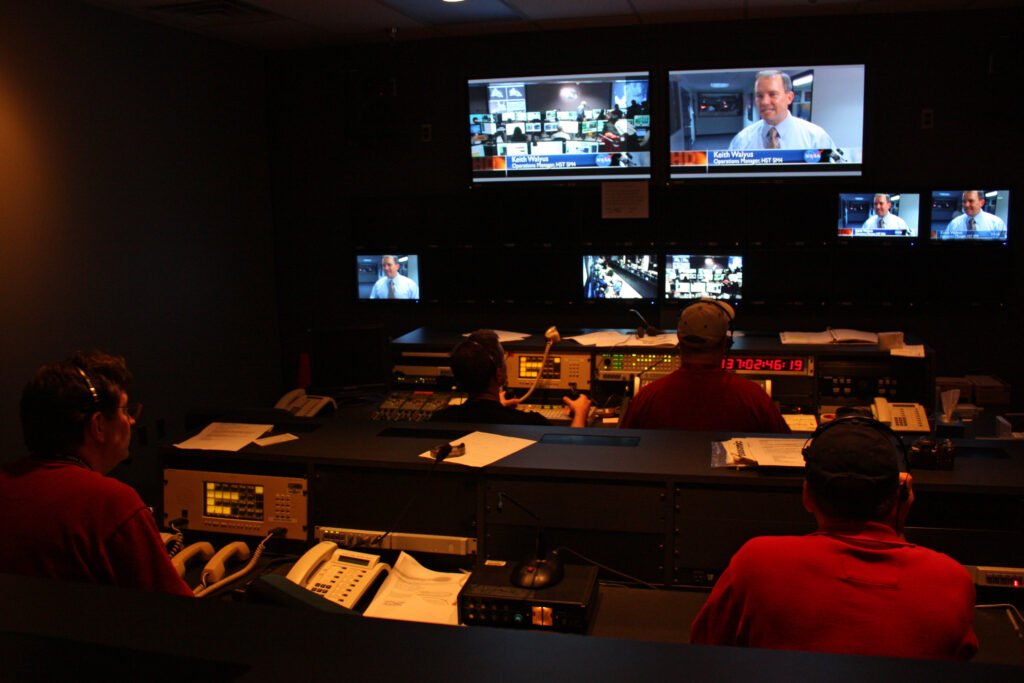
Media regulation shapes how outlets operate, who may own them, and what standards they must meet when broadcasting to the public.
Licensing the Airwaves
Because spectrum is a shared and finite resource, broadcasters typically operate under a government license tied to conditions such as public interest obligations and technical standards.
Ownership and Content Rules
Regulators often cap how many outlets a single owner may control in one market, aiming to prevent any one voice from dominating local news coverage.
Who Regulates What
Authority over media is typically split among several bodies. A national communications regulator usually oversees broadcast licensing and technical standards, a competition authority reviews ownership mergers for market concentration, and in some countries a press council or voluntary standards body handles complaints about print and online content without any formal legal power. The resulting patchwork means a single news organization can face oversight from several directions depending on which platform it uses to reach an audience.
Ownership Diversity Rules
Many regulators impose limits on how many outlets a single company may own within one local market, a policy meant to prevent any one owner from controlling the flow of local news and opinion. These caps have loosened in several countries over recent decades as outlets argued that online competition from global platforms justified relaxed local ownership limits, a shift that remains debated among media scholars and press advocates.
Content Standards for Broadcasters
Because broadcast licenses are tied to the public interest, many regulators impose content obligations that print and online outlets never face, including rules against indecency during certain hours, requirements for balanced coverage of controversial issues, and mandated access for political candidates during election periods. Violations can lead to fines or, in rare and serious cases, the loss of a broadcast license entirely.
Regulation in the Digital Era
The rise of online platforms has pushed regulators to consider rules that extend beyond traditional broadcast and print categories, including disclosure requirements for sponsored content and scrutiny of how algorithms distribute news. Because online publishing crosses national borders easily, regulators increasingly coordinate across jurisdictions even though each still enforces its own distinct set of rules.
Economic Considerations
Regulatory compliance imposes real costs on media companies, from licensing fees to the staff needed to track changing rules across multiple jurisdictions, and smaller outlets sometimes argue these costs favor large incumbents who can absorb compliance expense more easily than a new entrant. Regulators periodically review rules with this concern in mind, weighing market diversity against the administrative burden placed on participants.
Looking Ahead
Global streaming and social platforms increasingly compete with traditionally regulated broadcasters for audience attention, prompting calls to either extend some broadcast-style rules to these platforms or relax rules on traditional broadcasters to keep the playing field level. How regulators resolve this question will likely shape media ownership and content rules for years to come.
International Perspectives
Some countries maintain state-owned or heavily subsidized broadcasters alongside private outlets, creating a regulatory environment quite different from markets dominated entirely by private ownership, and the degree of political independence granted to these public broadcasters varies enormously from one country to the next. International bodies occasionally publish comparative studies ranking countries by regulatory independence and media pluralism, which press freedom advocates use to track whether a given market is moving toward greater openness or greater central control over time.
Related Specialties
Media regulation intersects closely with telecommunications policy, competition law, and broader questions of democratic governance, since control over who may broadcast and under what conditions ultimately shapes which voices reach a mass audience at all.
Practical Guidance for Outlets
Smaller broadcasters often rely on industry associations to track regulatory changes and compliance deadlines, since a dedicated legal and policy team is a luxury only larger organizations can typically afford to maintain in house. Keeping accurate records of licensing obligations, content review decisions, and public interest programming helps an outlet demonstrate compliance if a regulator ever raises a question, and proactive compliance tends to be far less costly than responding to a formal complaint after the fact. Many outlets now designate a specific staff member responsible for tracking regulatory filings and deadlines as part of routine business operations.
Comparing regulatory regimes across borders can be complicated by differing definitions of basic terms such as what counts as a broadcaster at all, since a streaming service offering live programming may or may not fall under the same rules as a traditional television station depending on how a particular jurisdiction has chosen to classify it. These definitional disputes often become the opening battleground whenever a regulator attempts to extend oversight to a newer category of media service.
A regulator decision to approve or block a proposed media merger can reshape a local market for a generation, which is one reason these decisions typically draw extensive public comment and scrutiny well beyond the companies directly involved in the transaction.
A regulator willingness to act quickly on a consumer complaint, rather than letting it sit unresolved for months, shapes public confidence in the entire regulatory system far more than the formal rules alone ever could.
A market with too few independent owners can leave local communities with a narrower range of perspectives on the news they receive, a concern regulators weigh carefully whenever a major ownership transaction is proposed.
A regulator that publishes its reasoning clearly, rather than issuing a bare decision with no explanation, helps the public and the industry understand how future cases are likely to be judged.
Key facts
- Array
Quick checkWhy does broadcast media face more direct regulation than print media?Show answer
Broadcasters use a finite public resource, the airwave spectrum, which regulators license and allocate, while print and online publishing require no such license.
Sources
- Array
Editorially reviewed by Specialty Digest Editorial TeamLast reviewed November 3, 2026Researched and drafted with AI assistanceReport an issue