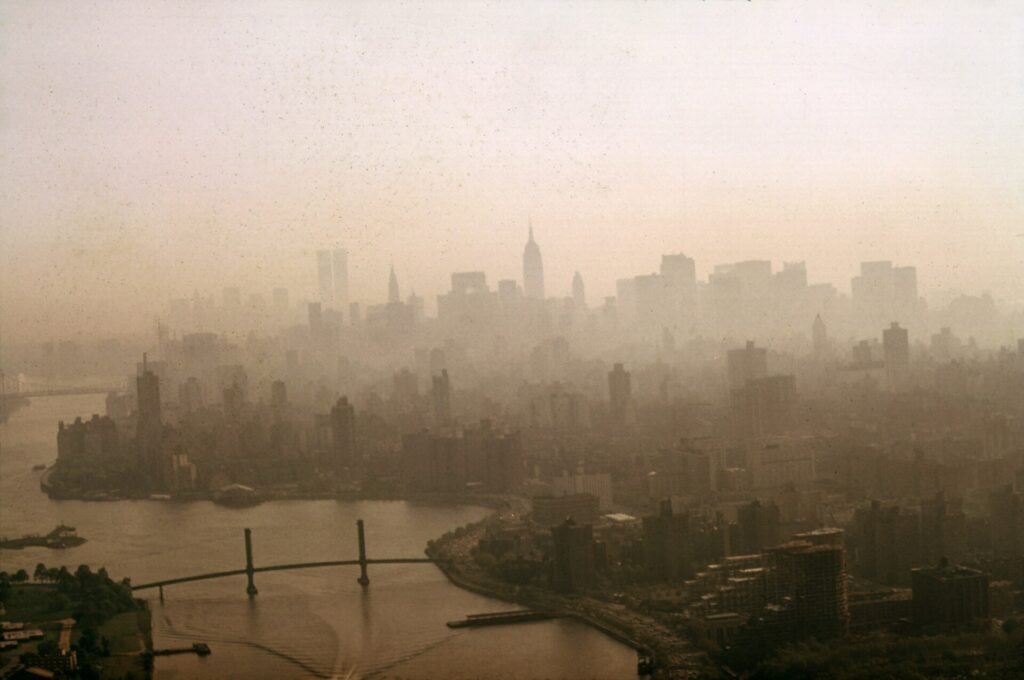
Almost everyone on Earth breathes air that fails international health benchmarks. The World Health Organization (WHO) tracks the problem city by city, and its numbers show both how widespread air pollution is and how much better it is now measured than a decade ago.
What is air pollution?
Air pollution is the presence in the air of substances at levels that can harm people and the environment. Outdoor, or ambient, pollution comes from sources such as traffic, industry and power generation, much of it from burning fossil fuels. Household air pollution comes from burning fuels indoors, for example in stoves used for cooking and heating.
Which pollutants do scientists track?
The WHO database described in its 2022 update focuses on a few key indicators:
- PM2.5 and PM10: fine particulate matter, meaning tiny airborne particles small enough to be breathed in
- Nitrogen dioxide (NO2): a gas the WHO calls a proxy indicator for traffic, often released by vehicles such as those with an internal combustion engine
- Ozone: mentioned by the WHO as a product of NO2 and particulate matter
What is particulate matter?
PM10 and PM2.5 refer to airborne particles with diameters of 10 and 2.5 micrometers or smaller. For scale, a human hair is roughly 50 to 70 micrometers wide. The particles come from combustion, road traffic, industry and other sources, and the numbers in the name tell you the largest size included. Scientists track them because their concentration can be measured consistently from city to city.
How many people breathe polluted air?
According to WHO, 99 percent of the world’s population lives in places where air pollution levels exceed WHO guideline limits. The WHO Global Health Observatory repeats the same figure. Low- and middle-income countries have greater exposure to unhealthy particulate matter levels than the global average. For nitrogen dioxide the gap between richer and poorer countries is smaller, and most cities do not meet the WHO air quality guidelines.
How many deaths does air pollution cause?
In its 2022 release, the WHO reported two figures: 4.2 million deaths per year from outdoor air pollution and 3.8 million deaths linked to household smoke from dirty stoves and fuels. These are model-based estimates, not counts of death certificates, and they change as methods and data improve. The WHO Global Health Observatory now lists burden-of-disease indicators for the year 2021, including attributable deaths from ambient air pollution, so readers who need the latest numbers should check the Observatory directly.
How is air quality measured?
Monitoring has expanded fast. WHO reports that more than 6,000 cities in 117 countries now monitor air quality, up from 1,100 cities in 91 countries a decade earlier. The 2022 database included about 2,000 more cities recording ground data for PM10, PM2.5 or both than the previous update, and reporting has risen almost six-fold since the database launched in 2011. Its modeling draws on data from 80 percent of the world’s urban areas. More monitoring does not mean more pollution. It means the picture is clearer than before.
What do the WHO guidelines say?
The revised WHO air quality guidelines lowered the recommended particulate matter levels by a factor of two and nitrogen dioxide levels by a factor of four, compared with the previous update about 15 years earlier. Stricter guidelines are one reason the share of people living above the limits is so high: the bar moved down as research on harm improved. Guideline values are not legal limits. They are health-based targets that governments can use when they write their own standards through environmental policy.
Outdoor vs. household air pollution
The two problems overlap but have different causes and different fixes. Outdoor pollution is tied to cities, transport, industry and energy supply, and cleaner air depends on changes at that scale. Household pollution is tied to the fuels and stoves families use, so progress there relies on access to cleaner ways to cook and heat. The WHO figures count them separately, which is why the two death totals should not be added without care.
What the headline number does not tell you
The 99 percent figure counts people living where pollution exceeds the guideline levels. It does not mean every place is equally polluted, since levels vary widely between cities, regions and seasons, and exposure is higher in low- and middle-income countries. Anyone who wants to know about their own area should check the local air quality index published by their national or city environment agency.
Why this data matters
The WHO links ambient air pollution to the Sustainable Development Goals, specifically targets 3.9 and 11.6, covering health and sustainable cities. The PM2.5 concentration indicator under SDG 11.6.2 lets countries compare progress over time on the same measure. The World Health Organization has added cities and data to this effort over time, which gives researchers and journalists a common reference.
Frequently asked questions
What share of people breathe air above WHO limits?
99 percent, according to the WHO.
How many deaths are linked to air pollution?
WHO reported 4.2 million deaths per year from outdoor air pollution and 3.8 million linked to household smoke in its 2022 update. Newer burden-of-disease figures are available from the WHO Global Health Observatory.
Does 99 percent mean everyone is equally exposed?
No. It means almost everyone lives where levels exceed the guidelines. How far above varies by place, and low- and middle-income countries have higher exposures.
What are PM2.5 and PM10?
Two size classes of fine particles in the air that WHO monitors in cities around the world.
Is air quality getting worse?
The sources used here do not show a trend in pollution levels. They show that monitoring has expanded sharply, so more cities now report data.