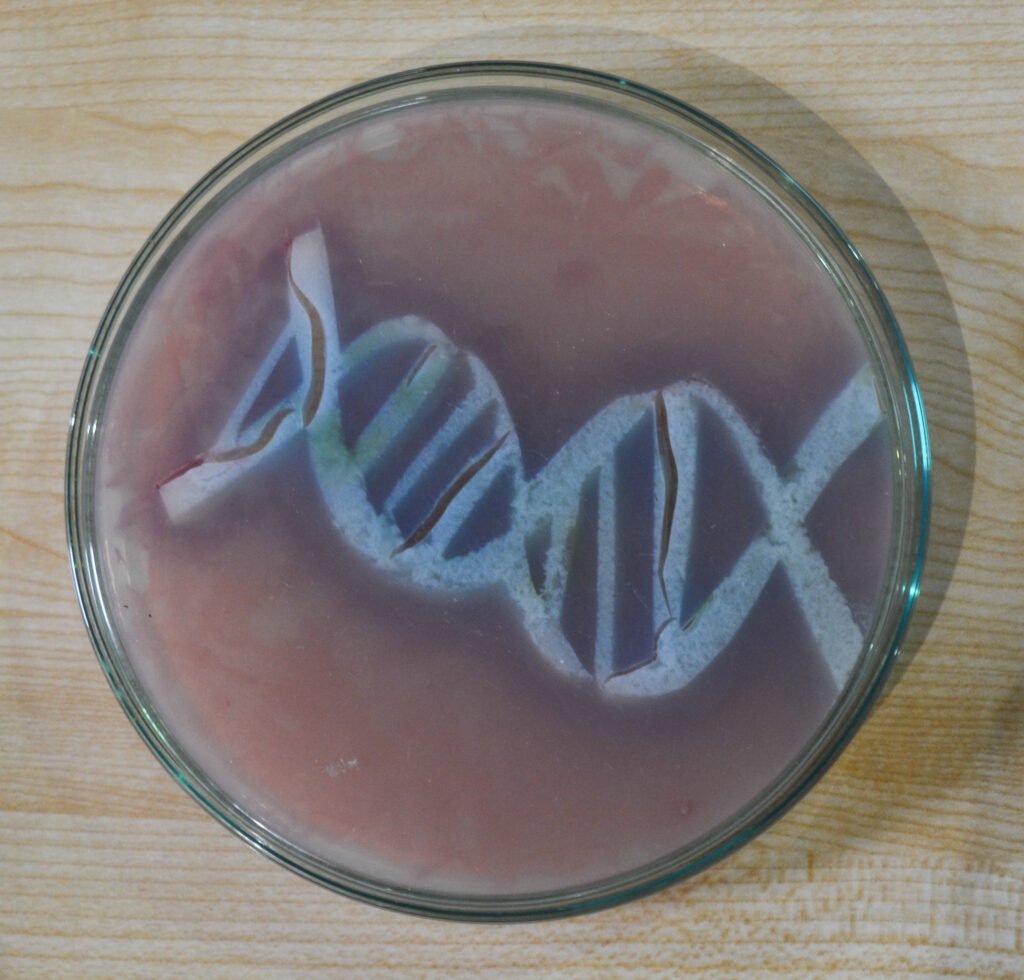
Antibiotic resistance occurs when bacteria evolve the ability to survive exposure to antibiotics that would previously have killed them or stopped their growth, rendering those drugs partially or completely ineffective against the resistant strain. It is a natural evolutionary process accelerated dramatically by widespread antibiotic use, and the World Health Organization and major public health bodies worldwide now consider it one of the most urgent threats to global health, since it steadily narrows the pool of effective treatments available for common bacterial infections.
How Resistance Develops
Bacteria reproduce extremely quickly and occasionally undergo random genetic mutations, some of which happen to confer resistance to a particular antibiotic’s mechanism of action; when that antibiotic is present, susceptible bacteria die off while any resistant mutants survive and multiply, a process called selective pressure. Bacteria can also acquire resistance genes directly from other bacteria, even across different species, through a process called horizontal gene transfer, which allows resistance to spread far faster through a bacterial population than mutation and reproduction alone would allow.
Mechanisms of Resistance
Resistant bacteria employ several distinct strategies, including producing enzymes that chemically break down or inactivate an antibiotic before it can act, altering the specific cellular target the antibiotic normally binds to so the drug can no longer attach effectively, pumping the antibiotic back out of the cell before it reaches a harmful concentration, and modifying their outer membrane to prevent the antibiotic from entering the cell in the first place. A single bacterial strain can sometimes combine several of these mechanisms simultaneously, producing resistance to multiple different classes of antibiotics at once, a pattern known as multidrug resistance.
Drivers of Resistance
Overuse and misuse of antibiotics in human medicine, including prescribing them for viral infections they cannot treat or patients not completing a full prescribed course, substantially accelerates the development and spread of resistance by exposing bacterial populations to selective pressure without clinical benefit. Extensive antibiotic use in agriculture, historically including routine use to promote growth in livestock rather than only to treat diagnosed infections, has also been identified as a major contributor, since resistant bacteria that develop in farm animals can spread to humans through food, water, and direct contact.
Consequences for Treatment
Infections caused by multidrug-resistant bacteria, sometimes informally called superbugs, often require treatment with older, more toxic antibiotics, longer hospital stays, or combinations of multiple drugs, all of which increase cost, side effects, and risk of treatment failure compared to infections that respond to standard first-line antibiotics. Some resistant infections, particularly in hospital settings among already vulnerable patients, have become resistant to nearly all available antibiotics, leaving clinicians with extremely limited treatment options and contributing directly to increased mortality from infections that would have been readily treatable decades earlier.
Slowing the Spread
Antibiotic stewardship programs, which promote prescribing antibiotics only when clinically necessary and selecting the narrowest effective drug rather than broad-spectrum options by default, have become standard practice in many hospitals and are increasingly promoted in outpatient care as well. Development of new antibiotic classes has slowed considerably in recent decades compared to the mid-twentieth century, partly due to the scientific difficulty of finding genuinely new mechanisms and partly due to limited financial incentive for drug companies, since new antibiotics are typically used sparingly and for short treatment courses rather than generating the sustained revenue of drugs for chronic conditions.
Global Surveillance and Response
Tracking antibiotic resistance across countries and healthcare systems is essential to understanding how quickly it is spreading and which specific resistant strains pose the greatest emerging threat, which is why organizations including the World Health Organization maintain ongoing global surveillance networks that collect resistance data from participating laboratories and hospitals worldwide. This data helps public health officials identify resistance patterns early, issue updated treatment guidelines reflecting local resistance rates, which can vary considerably between regions and even between hospitals in the same city, and prioritize which pathogens most urgently need new drug development.
Resistant bacteria do not respect international borders, and global travel and trade have been clearly documented spreading specific resistant strains between countries and continents far faster than would occur through purely local transmission, which is part of why international cooperation on surveillance, data sharing, and coordinated stewardship policy has become a major focus of global health organizations over the past two decades. Lower-income countries often face a particularly difficult combination of higher infectious disease burden, less consistent access to diagnostic testing that could guide more targeted prescribing, and weaker regulatory oversight of antibiotic sales, all of which can accelerate local resistance development even as these same countries often have the least capacity to respond to it.
Alongside stewardship and surveillance, researchers are pursuing alternative and complementary approaches to fighting resistant infections, including bacteriophage therapy, which uses viruses that specifically infect and kill bacteria, monoclonal antibodies engineered to target specific bacterial pathogens, and vaccines designed to prevent certain bacterial infections from occurring in the first place rather than relying solely on treating them after infection develops. None of these approaches has yet replaced antibiotics as the primary treatment for most bacterial infections, but they represent an increasingly important part of a broader strategy to manage resistance as a long-term, multi-pronged public health challenge rather than a problem any single new drug could solve on its own.
FAQs
Why does not finishing a full course of antibiotics contribute to resistance?
Stopping early can leave behind partially resistant or less susceptible bacteria that survived the shortened treatment, giving them a better chance to multiply and pass resistance on compared to a fully completed course.
Can a bacterium become resistant to an antibiotic it has never directly encountered?
Yes, through horizontal gene transfer, bacteria can acquire resistance genes directly from other bacteria that have been exposed, spreading resistance far faster than mutation alone.
Quick checkWhat is horizontal gene transfer and why does it matter for antibiotic resistance?Show answer
It lets bacteria acquire resistance genes directly from other bacteria, even across species, which spreads resistance through a population far faster than mutation and reproduction alone.
Editorially reviewed by Specialty Digest Editorial TeamLast reviewed November 2, 2026Researched and drafted with AI assistanceReport an issue