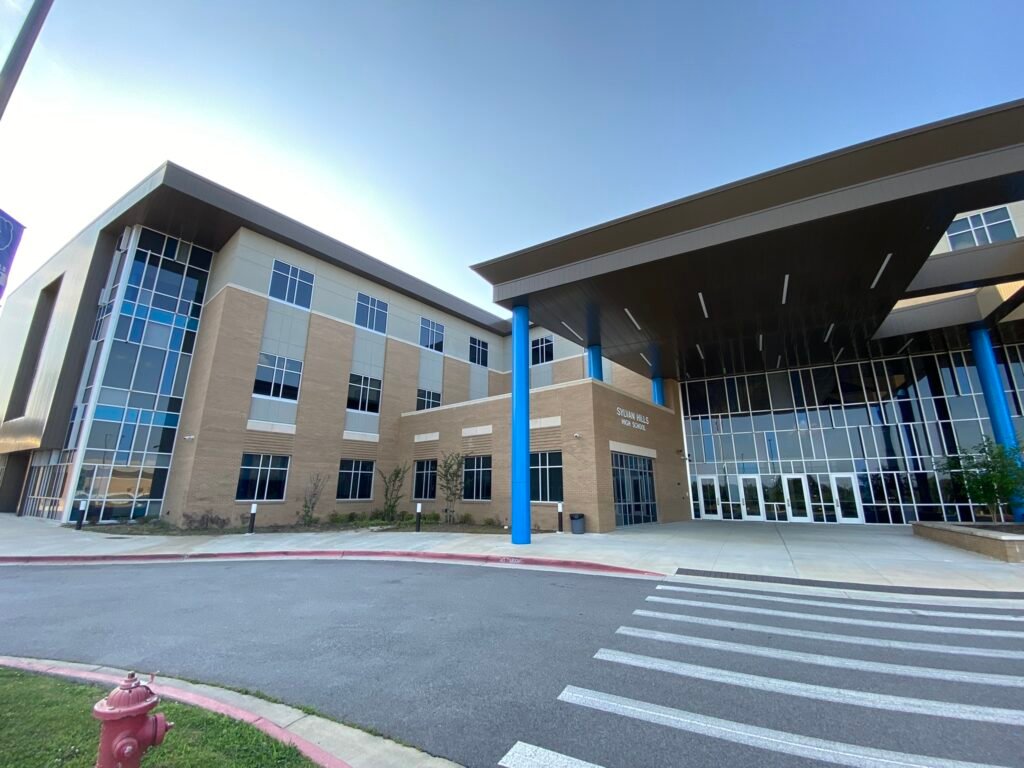
A charter school is a publicly funded school that operates independently of many of the rules governing traditional public schools, in exchange for meeting specific performance goals set out in a charter agreement with an authorizing body, such as a school district, state agency, or university.
The first charter school
The modern charter school movement began in Minnesota, which passed the first state charter school law in 1991. City Academy High School in St. Paul, Minnesota opened on September 7, 1992, and is widely recognized as the first charter school to actually open in the United States, even though it was technically the third school approved under the new law.
The autonomy-for-accountability tradeoff
Charter schools are built around a core tradeoff: they receive greater independence than traditional public schools over curriculum, staffing, budgeting, and schedule, but in exchange must meet the specific academic and operational goals outlined in their charter, and can be closed by their authorizer if they consistently fail to meet those goals, a level of direct accountability most traditional public schools do not face in the same form.
Growth since 1992
Following Minnesota’s 1991 law, charter school legislation spread rapidly to other states throughout the 1990s and 2000s, and the number of charter schools and students enrolled in them grew substantially over the following decades, making charter schools a significant and durable feature of the US public education landscape rather than a short-lived experiment.
Ongoing debates
Charter schools remain a persistently debated topic in education policy. Supporters argue they expand parental school choice and allow innovative approaches that can be difficult to implement within traditional public school bureaucracies. Critics argue that charter schools can draw funding and the most engaged families away from traditional public schools, and that academic outcomes vary considerably from one charter school to another, making charter status alone a poor predictor of school quality.
Charter authorizers
Charter schools operate under an authorizer, an entity, often a school district, state education agency, or university, that approves a school’s charter, monitors its performance against the goals in that charter, and holds the power to renew, revise, or revoke it. The specific rules governing who may serve as an authorizer, and how strictly charters are enforced, vary considerably from state to state, which is part of why charter school quality and oversight differ substantially across the country.
Funding mechanics
Charter schools are publicly funded, typically receiving a per-student allocation similar in principle to funding a traditional public school would receive for the same student, though the exact funding formulas and whether charter schools receive access to the same facilities funding as district schools vary by state and are frequently a point of policy dispute between charter advocates and traditional public school districts.
Growth trajectory since the 1990s
Following Minnesota’s 1991 law and City Academy’s 1992 opening, most US states passed their own charter school legislation over the following two decades, and the total number of charter schools and enrolled students grew substantially through the 2000s and 2010s, though the pace of growth and the political reception charter schools receive continues to vary significantly by state and over time.
Charter schools and specialized missions
Many charter schools organize around a specific pedagogical approach or mission that distinguishes them from a typical district school, such as a STEM focus, a classical education curriculum, bilingual immersion, or a project-based learning model, since charter status often grants the flexibility needed to build a full school program around such a focused approach. This mission-driven variety is part of what charter advocates point to as evidence of the model’s value, while critics note that mission quality and execution vary considerably from one school to the next.
Research on charter school outcomes
Large-scale research comparing charter and traditional public school outcomes has generally found highly mixed results depending on the specific charter network, city, and student population studied, with some charter networks substantially outperforming nearby district schools on standardized measures and others performing no better or worse. This mixed evidence base is frequently cited by both supporters and critics of charter school expansion, each emphasizing the studies most favorable to their position.
Policymakers evaluating charter expansion in a specific city or state therefore tend to focus on the track record of particular operators rather than treating charter status itself as a reliable proxy for quality.
That operator-level evaluation has become the standard practice recommended by most education researchers studying school choice policy today.
Families researching school options are generally advised to apply the same scrutiny, reviewing a specific school’s actual results and mission fit rather than relying on charter status alone as a quality signal.
That emphasis on evidence over labels reflects the broader lesson researchers have drawn from more than three decades of charter school expansion since Minnesota’s original 1991 law.
Few single education policy changes from that era remain as actively studied and debated today as the charter school model does.
FAQs
Which school is considered the first charter school to open in the United States? City Academy High School in St. Paul, Minnesota, which opened in September 1992.
What is the core tradeoff charter schools are built around? Greater operating independence than traditional public schools, in exchange for meeting specific performance goals set out in a charter agreement.
Key facts
- Minnesota passed the first state charter school law in 1991.
- City Academy High School in St. Paul, Minnesota, opened in September 1992, is considered the first charter school to open in the US.
- Charter schools trade greater operating independence for direct accountability to specific performance goals.
Related concepts
Quick checkWhich state passed the first charter school law, and in what year?Show answer
Minnesota, in 1991.
Sources
- Wikipedia: City Academy High School
Editorially reviewed by Specialty Digest Editorial TeamLast reviewed November 2, 2026Researched and drafted with AI assistanceReport an issue