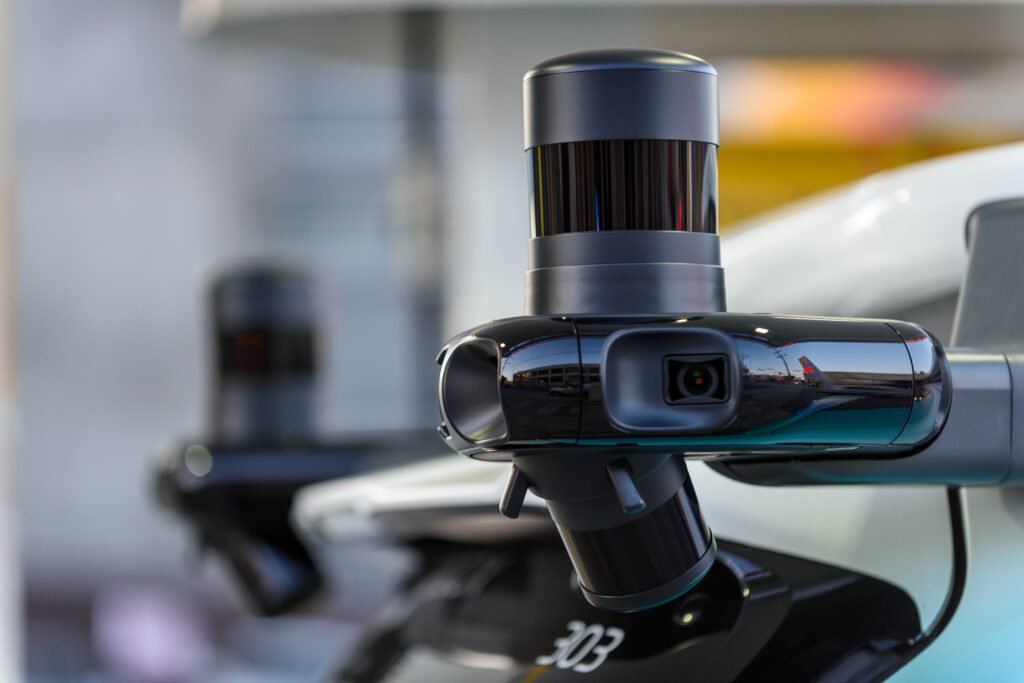
Computer vision is the field of artificial intelligence focused on enabling computers to interpret and understand visual information from the world, including photographs, video, and live camera feeds. The goal is to replicate, and in some narrow tasks exceed, the remarkable ease with which human vision identifies objects, judges distances, and makes sense of a visual scene in a fraction of a second. Computer vision powers an enormous range of modern technology, including facial recognition on smartphones, the self-driving systems in modern vehicles, medical imaging tools that flag potential tumors, and the automated quality inspection systems used on factory production lines.
From Pixels to Understanding
A digital image is, at its most basic level, nothing more than a grid of numbers, with each number representing the brightness and color of one tiny picture element, or pixel. Early computer vision systems tried to recognize objects by hand-designing mathematical filters that detected simple visual features, such as edges, corners, and textures, and then combining those detected features using carefully engineered rules. This approach worked reasonably well for narrow, controlled tasks but struggled badly with the enormous natural variation in real-world images, where the same object can appear in different lighting, from different angles, partly hidden behind other objects, or at wildly different scales.
The field changed dramatically with the rise of convolutional neural networks, a type of deep learning architecture specifically designed to process grid-like data such as images. Rather than relying on hand-designed features, a convolutional network learns its own filters directly from large amounts of labeled training data, automatically discovering which visual patterns are most useful for a given task. Stacking many such layers lets the network build up a hierarchy of visual understanding, starting with simple edges and textures in early layers and progressing to recognition of complete objects, scenes, and even fine-grained categories in later layers, all learned automatically rather than designed by hand.
Core Tasks and Applications
Image classification, the task of assigning a single label to an entire image, such as recognizing that a photo contains a dog, was the task that first demonstrated deep learning’s dramatic advantage over earlier computer vision methods. Object detection goes further, identifying not just what objects are present but exactly where each one is located within the image, typically by drawing a bounding box around it, a capability essential to self-driving cars that must track the position of every pedestrian, vehicle, and obstacle around them in real time. Semantic segmentation pushes precision even further, labeling every individual pixel in an image according to what object or surface it belongs to, which supports applications such as medical scans that need to trace the exact boundary of an organ or tumor rather than simply flagging its rough location.
Facial recognition, a specialized and often controversial application of computer vision, identifies or verifies a person’s identity by analyzing distinctive patterns in their facial features, and it has become common in smartphone unlocking, airport security, and photo organization apps, while also raising significant privacy and surveillance concerns that have led some cities and countries to restrict its use. Computer vision also underlies optical character recognition, which converts printed or handwritten text in an image into machine-readable text, and augmented reality applications, which must understand a camera’s surroundings in real time well enough to realistically overlay virtual objects onto the live video feed.
Benchmarks and Remaining Challenges
Progress in computer vision has long been measured through large, publicly shared benchmark datasets that let different research teams compare approaches on identical images and scoring rules. ImageNet, a dataset of millions of labeled photographs spanning thousands of categories, became the benchmark that catalyzed the deep learning boom in computer vision after a convolutional network dramatically outperformed prior approaches on it in 2012, and similar large benchmark datasets now exist for object detection, segmentation, and more specialized tasks such as recognizing human poses or tracking objects across video frames.
Despite remarkable progress, computer vision systems still struggle in situations that differ meaningfully from their training data, such as unusual weather conditions for a self-driving car, rare medical conditions underrepresented in a diagnostic dataset, or deliberately disguised objects. Systems can also inherit biases present in their training images, performing less reliably on groups of people or types of scenes that were underrepresented when the system was built, which has pushed researchers and companies to pay close attention to how training datasets are assembled and tested before a vision system is deployed in a high-stakes setting such as healthcare or law enforcement.
Frequently Asked Questions
How is computer vision different from image processing? Image processing covers techniques that transform an image, such as adjusting brightness or removing noise, without necessarily understanding what the image contains. Computer vision goes further, aiming to extract meaning from an image, such as identifying objects or understanding a scene, often using image processing techniques as an early preparatory step.
Why do computer vision systems sometimes make mistakes humans would never make? A computer vision model learns patterns statistically from its training data rather than understanding a scene the way a human does, so it can be fooled by unusual lighting, strange camera angles, or deliberately crafted adversarial images designed to exploit the specific numerical patterns the model relies on, even when the image looks completely normal to a human observer.
What industries rely most heavily on computer vision? Automotive companies use it for self-driving and driver-assistance systems, healthcare providers use it to analyze medical scans, retailers use it for automated checkout and inventory tracking, manufacturers use it for automated quality inspection, and security and agriculture both increasingly rely on it for surveillance and crop monitoring respectively.
Key facts
- Computer vision aims to extract meaning from images and video, not just transform them.
- Convolutional neural networks learn visual features automatically from labeled data.
- Core tasks include image classification, object detection, and semantic segmentation.
- Facial recognition raises notable privacy and surveillance concerns.
- Computer vision powers self-driving cars, medical imaging, and factory inspection systems.
Quick checkWhat changed computer vision most dramatically over the past decade?Show answer
The rise of convolutional neural networks let systems learn their own visual features directly from large amounts of labeled data, replacing hand-designed filters and producing major accuracy gains across image classification, object detection, and related tasks.
Sources
- Computer Vision: Algorithms and Applications (Szeliski); Stanford CS231n course notes
Editorially reviewed by Specialty Digest Editorial TeamLast reviewed November 2, 2026Researched and drafted with AI assistanceReport an issue