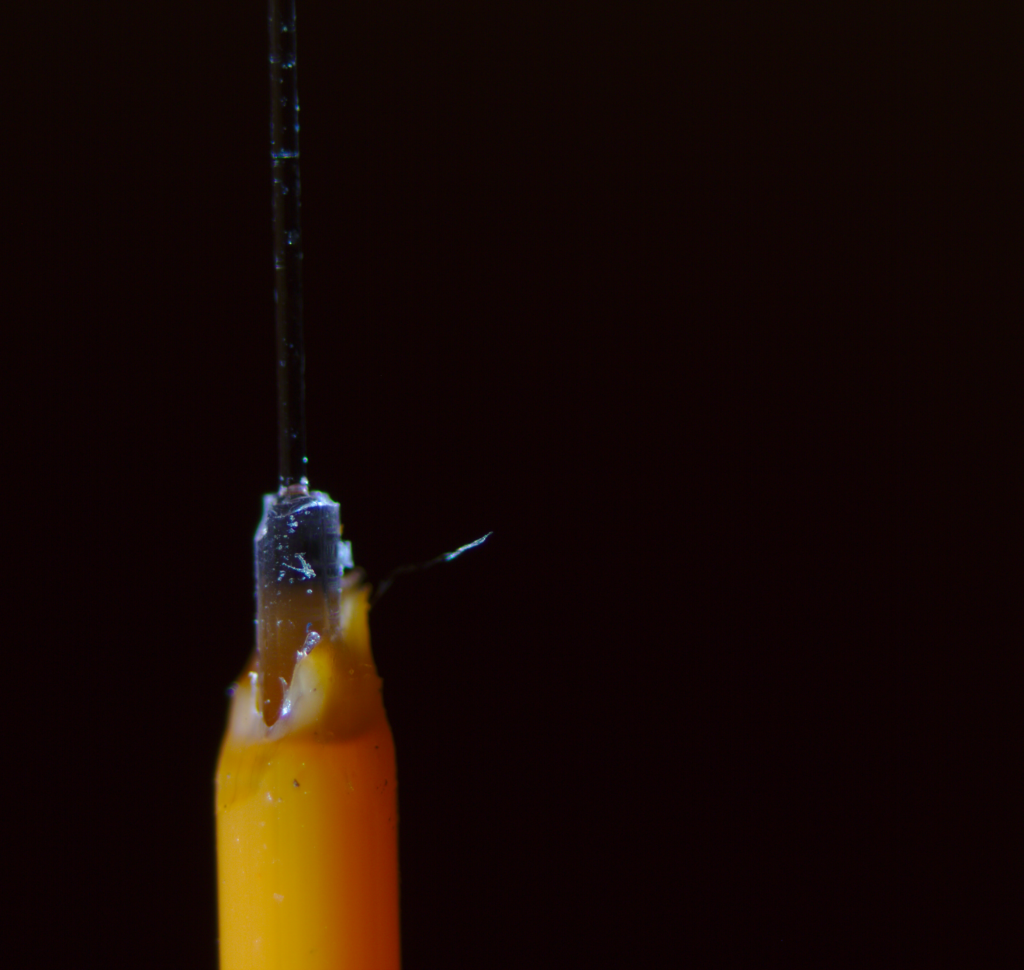
Fiber-optic communication transmits information as pulses of light through thin strands of extremely pure glass or plastic, called optical fibers, rather than as electrical signals through copper wire. Because light can carry far more information than an electrical signal and loses much less strength over long distances, fiber-optic cables form the backbone of the modern internet, carrying the vast majority of long-distance data traffic between cities, countries, and continents, including the undersea cables that connect the world’s landmasses together, while also increasingly reaching directly into homes and businesses for local internet service.
How Light Travels Through Glass
An optical fiber works through a principle called total internal reflection. Each fiber consists of a core, the thin strand of glass that actually carries the light signal, surrounded by a layer called the cladding that has a slightly different optical property than the core. When light traveling through the core hits the boundary with the cladding at a shallow enough angle, it reflects back into the core entirely rather than escaping, allowing the light to bounce along the length of the fiber, even around gentle bends, over distances of many kilometers while losing only a small fraction of its original strength. A laser or a light-emitting diode at one end of the fiber converts electrical data into pulses of light representing that data, and a sensitive detector at the other end converts the arriving light pulses back into an electrical signal a computer or networking device can process.
Fiber-optic systems come in two broad types. Single-mode fiber uses an extremely narrow core that allows light to travel along essentially one straight path, minimizing signal distortion and supporting the longest distances and highest speeds, which makes it the standard choice for long-haul and undersea cables. Multi-mode fiber uses a wider core that allows light to travel along multiple paths simultaneously, which is cheaper to produce and work with but suffers more signal distortion over distance, making it better suited to shorter connections within a single building or data center rather than long-distance transmission.
Why Fiber Outperforms Copper
Compared with traditional copper cabling, fiber-optic cable offers dramatically higher bandwidth, meaning it can carry far more data at once, and it suffers much less signal loss over distance, allowing data to travel many kilometers between amplification points instead of the much shorter distances electrical signals can travel through copper before needing to be boosted. Fiber is also immune to electromagnetic interference, since it carries information as light rather than electrical current, making it unaffected by nearby power lines, motors, or radio transmissions that can degrade a copper connection’s signal quality.
These advantages have made fiber-optic cable the preferred medium for internet backbone infrastructure, data center connections, and increasingly for last-mile connections directly into homes and offices, a deployment approach often called fiber to the home. Extending fiber all the way to individual buildings is more expensive to install than reusing existing copper telephone or cable television lines, which is why many fiber rollouts have proceeded gradually, city by city and neighborhood by neighborhood, but the resulting connections typically offer dramatically higher and more symmetric upload and download speeds than older copper-based broadband technologies can match.
Building the Global Backbone
Practical fiber-optic communication became possible in the 1970s once researchers developed glass fibers pure enough that light could travel useful distances without fading too quickly to be detected, a breakthrough that built on decades of earlier theoretical work on guiding light through glass. The first commercial fiber-optic telephone systems began operating in the late 1970s and early 1980s, and the technology expanded rapidly through the following decades as demand for long-distance telephone and, later, internet capacity grew far beyond what copper cabling could reasonably support.
Since then, an enormous global network of undersea fiber-optic cables, laid along ocean floors by specialized cable-laying ships, has come to carry the overwhelming majority of international internet and telephone traffic between continents, a far more practical approach than the satellite links that were once expected to dominate long-distance communication. On land, fiber networks now reach deep into cities and increasingly into individual neighborhoods and homes, with many national governments and private companies continuing to invest heavily in extending fiber connections to areas still served only by older copper infrastructure.
Frequently Asked Questions
Why can fiber-optic cable carry more data than copper wire? Light has a much higher frequency than the electrical signals used in copper wire, which allows far more distinct data patterns to be encoded onto it every second, and fiber loses much less signal strength over distance, letting that higher capacity be maintained across long stretches without frequent amplification.
What is the difference between single-mode and multi-mode fiber? Single-mode fiber has a narrow core that carries light along one path, supporting the longest distances and highest speeds with minimal distortion, while multi-mode fiber has a wider core that carries light along multiple paths at once, which is less expensive but suffers more signal distortion, making it better suited to shorter connections.
Does fiber-optic internet ever reach its final destination over copper instead of fiber the whole way? Often, yes. Many internet connections marketed as fiber run fiber cable to a neighborhood or building and then switch to existing copper wiring for the final short stretch into an individual home, a configuration generally slower than a true fiber-to-the-home connection that runs fiber cable all the way to the customer’s equipment.
Key facts
- Fiber-optic cables transmit data as light pulses using total internal reflection.
- Single-mode fiber supports longer distances; multi-mode fiber suits shorter connections.
- Fiber offers higher bandwidth and less signal loss than copper wire.
- Fiber is immune to electromagnetic interference.
- Fiber-optic cables, including undersea cables, carry most long-distance internet traffic.
Quick checkWhy do fiber-optic cables lose much less signal strength than copper wires over distance?Show answer
Light traveling through a fiber reflects almost entirely within the core through total internal reflection and encounters far less resistance than an electrical signal in copper, letting data travel much farther before it needs to be boosted or regenerated.
Sources
- Optical Fiber Communications (Gerd Keiser); ITU-T fiber-optic standards documentation
Editorially reviewed by Specialty Digest Editorial TeamLast reviewed November 2, 2026Researched and drafted with AI assistanceReport an issue