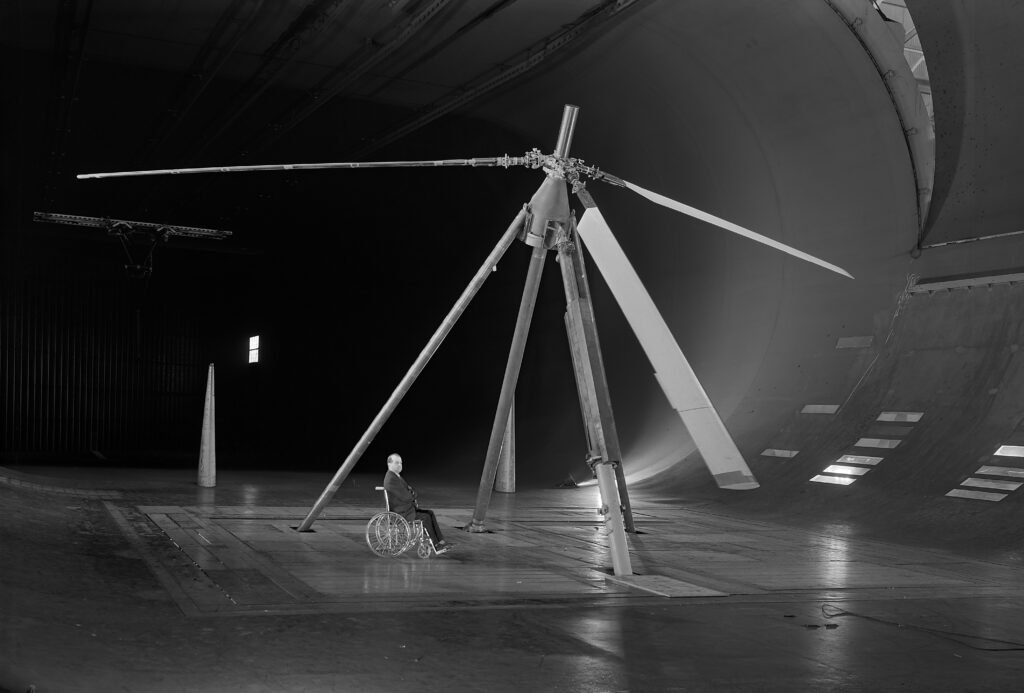
Fluid mechanics is the branch of mechanical engineering and physics that studies how liquids and gases behave when at rest or in motion, and how they interact with solid objects and boundaries around them. It underlies the design of aircraft wings, ship hulls, pipelines, pumps, and weather prediction models, making it one of the most broadly applicable subjects in engineering, since fluids in motion shape so much of both natural and engineered systems.
Fluid Statics Versus Fluid Dynamics
Fluid mechanics divides into fluid statics, which studies fluids at rest and explains phenomena such as the pressure exerted by water on a dam or the buoyant force that keeps a ship afloat, and fluid dynamics, which studies fluids in motion and addresses far more complex behavior, since moving fluids can form swirling eddies, shock waves, and turbulence that are difficult to predict precisely. Engineers use fluid statics principles for tasks such as designing storage tanks and hydraulic lifts, while fluid dynamics informs the design of anything that moves through or is moved by a fluid.
Viscosity and Flow Behavior
Viscosity describes a fluid’s internal resistance to flow, with thick fluids such as honey having high viscosity and thin fluids such as water having comparatively low viscosity. This property strongly influences how a fluid behaves as it flows through a pipe or past an object, affecting everything from how much pump power is needed to move oil through a pipeline to how efficiently blood flows through blood vessels in the human body, a problem biomedical engineers study using the same fluid mechanics principles applied to industrial systems.
Laminar and Turbulent Flow
Fluid flow generally falls into one of two broad regimes. Laminar flow moves in smooth, orderly layers with little mixing between them, typical of slow-moving fluids or flow through narrow channels. Turbulent flow, by contrast, is chaotic and irregular, with swirling eddies that mix fluid rapidly, typical of fast-moving fluids or flow around complex shapes. Engineers often prefer laminar flow for efficiency in pipelines, since turbulence wastes energy as unwanted mixing, but turbulence can also be useful, for example in improving heat transfer or mixing in industrial processes where rapid blending is the goal.
Aerodynamics and Lift
Aerodynamics, a specialized branch of fluid dynamics dealing specifically with air, explains how aircraft wings generate lift as air flows over and under a curved wing surface, creating a pressure difference that pushes the wing upward. The same underlying principles explain why car designs are shaped to reduce drag, the resistance a vehicle experiences moving through air, and why wind turbine blades are precisely curved to extract maximum energy from passing wind, demonstrating how the same fundamental fluid mechanics principles apply across seemingly unrelated engineering problems.
Computational Fluid Dynamics
Because the equations governing fluid motion are extremely difficult to solve exactly for anything beyond the simplest shapes and conditions, engineers increasingly rely on computational fluid dynamics, which uses powerful computers to simulate how a fluid will behave around a complex shape such as an aircraft fuselage or a car body. These simulations let engineers test and refine designs extensively before building physical prototypes, dramatically reducing the cost and time needed for wind tunnel testing, though physical testing remains important for validating that computer predictions match real-world behavior.
History of the Field
Early fluid mechanics principles trace back to ancient observations about buoyancy by Archimedes, while the mathematical foundations of modern fluid dynamics were developed in the eighteenth and nineteenth centuries by scientists including Daniel Bernoulli, Claude-Louis Navier, and George Stokes, whose combined work produced the Navier-Stokes equations that still describe fluid motion today. The twentieth century brought both the practical urgency of aircraft and rocket design and, later, the computational power needed to solve these notoriously difficult equations for complex real-world shapes.
Fluid Mechanics in Everyday Infrastructure
Beyond aircraft and racecars, fluid mechanics quietly shapes everyday infrastructure that most people never think about. Water utilities apply fluid mechanics principles to size pipes and pumps correctly, balancing the cost of larger pipes against the pumping energy needed to overcome friction losses that grow sharply as flow speed increases. Heating and cooling systems in buildings rely on fluid mechanics to move air and water efficiently through ductwork and piping, while the design of storm drains and flood control channels depends on predicting how fast-moving water will behave during heavy rainfall, directly affecting public safety during severe weather events.
Boundary Layers and Drag Reduction
A thin region near any solid surface moving through a fluid, called the boundary layer, behaves differently from the fluid farther away and plays an outsized role in determining drag and heat transfer. Engineers manipulate boundary layer behavior deliberately, for instance by adding small surface features called vortex generators to aircraft wings or by applying specific surface coatings and textures, including patterns inspired by shark skin, to reduce drag on vehicles, ships, and even competitive swimwear, illustrating how subtle, small-scale fluid mechanics effects can produce meaningful real-world efficiency gains.
FAQs
What is the difference between laminar and turbulent flow?
Laminar flow moves in smooth, orderly layers with little mixing, while turbulent flow is chaotic and irregular with swirling eddies that mix fluid rapidly, typically occurring at higher speeds or around complex shapes.
Why do engineers use computational fluid dynamics instead of only physical testing?
Computational fluid dynamics lets engineers simulate and refine designs extensively on a computer before building physical prototypes, dramatically reducing the cost and time needed for wind tunnel testing, though physical validation remains important.
Quick checkWhat is the difference between laminar and turbulent flow?Show answer
Laminar flow moves in smooth, orderly layers with little mixing, while turbulent flow is chaotic and irregular with swirling eddies that mix fluid rapidly.
Editorially reviewed by Specialty Digest Editorial TeamLast reviewed November 2, 2026Researched and drafted with AI assistanceReport an issue