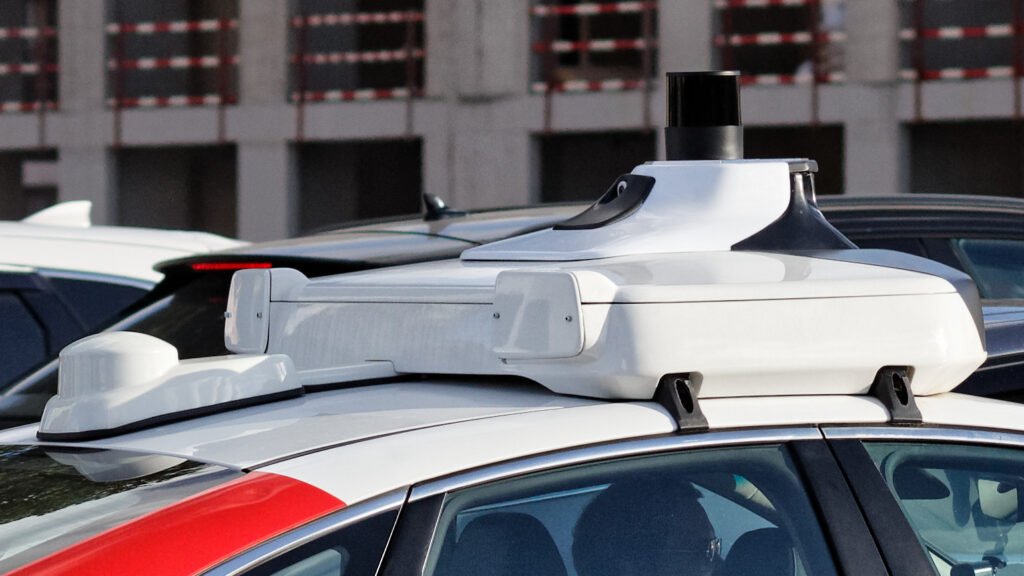
An autonomous vehicle is a car, truck, or other vehicle equipped with sensors, software, and control systems that allow it to perceive its surroundings and drive with reduced or no human input. Autonomous vehicles today range from ordinary cars with driver-assistance features that handle specific tasks like highway lane-keeping to fully self-driving systems designed to operate without a human driver at all, and the technology has become one of the most closely watched and debated developments in modern transportation engineering.
Levels of Vehicle Automation
The automotive industry generally classifies automation into six levels, ranging from level zero, with no automation, through levels that provide driver assistance for specific tasks such as adaptive cruise control or lane centering, up to level four and level five systems capable of handling all driving tasks within a defined area or anywhere a human could drive, without requiring driver intervention. Most vehicles sold today offer only lower-level automation features, while fully autonomous level four and five systems remain largely confined to limited pilot programs and specific operating areas.
Sensors and Perception Systems
Autonomous vehicles build an understanding of their surroundings using a combination of sensors. Cameras capture visual information useful for recognizing lane markings, traffic signs, and other vehicles. Radar detects the distance and speed of nearby objects using radio waves and performs reliably in poor weather and low light. Lidar, which measures distances using pulses of laser light, creates detailed three-dimensional maps of the vehicle’s surroundings with high precision. Combining data from multiple sensor types, a process called sensor fusion, helps compensate for the individual weaknesses of each sensor technology.
Decision-Making Software
Once sensors capture data about the vehicle’s surroundings, software must interpret that data, predict how other road users such as pedestrians and vehicles are likely to behave, and decide how the vehicle itself should respond, all within fractions of a second and under conditions that can change unpredictably. Machine learning plays a central role in modern autonomous driving software, trained on enormous volumes of real-world and simulated driving data to recognize objects, anticipate behavior, and handle the countless unusual situations that can arise on real roads.
Safety Challenges and Public Trust
Developing autonomous vehicles that are demonstrably safer than human drivers across the full range of real-world conditions, including rare and unpredictable situations, has proven more difficult than many early predictions suggested. High-profile crashes involving autonomous or partially autonomous vehicles have drawn intense scrutiny and shaped public perception, even though overall safety statistics remain a subject of ongoing study and debate. Building lasting public trust requires not only continued technical safety improvements but also clear, honest communication about what a given system can and cannot reliably do under real conditions.
Regulation and Deployment
Rules governing the testing and deployment of autonomous vehicles vary significantly between countries and even between states or regions within the same country, reflecting differing views on how to balance innovation with public safety. Some jurisdictions have permitted limited commercial robotaxi services operating without a safety driver in specific cities, while others require continued human oversight for any public road testing, and regulators worldwide continue developing new frameworks to address questions of liability, testing standards, and data recording that fully autonomous vehicles inevitably raise.
History and Development
Research into self-driving vehicles dates back to experimental projects in the mid-twentieth century, but practical progress accelerated dramatically starting in the 2000s and 2010s as advances in computing power, sensor technology, and machine learning converged. Government-sponsored competitions, most notably a series of challenges organized by a United States defense research agency in the mid-2000s, helped spur rapid development by bringing together university and industry teams to compete on demonstrating autonomous driving capability across difficult real-world desert and urban conditions.
Beyond Passenger Cars
Autonomous technology is advancing not only in passenger cars but across a range of other vehicle types, including long-haul trucks operating on highways, delivery robots navigating sidewalks, agricultural equipment that can till or harvest fields with minimal supervision, and mining vehicles operating in enclosed, controlled environments where safety risks and regulatory hurdles are often lower than on public roads. Industrial and off-road environments have frequently served as early proving grounds for autonomous technology, since more predictable and controlled surroundings reduce the range of unusual situations a system must handle correctly.
Ethical and Legal Considerations
Autonomous vehicles raise distinctive ethical and legal questions that human-driven vehicles do not present in the same way, including how a vehicle’s software should prioritize different outcomes in an unavoidable collision scenario, and who bears legal responsibility when a crash involves a vehicle driving itself rather than a human. These questions have prompted ongoing debate among engineers, ethicists, insurers, and lawmakers, since most existing liability and traffic laws were written decades ago with the underlying assumption that a human driver, rather than software, bears primary responsibility for a vehicle’s actions on the road.
FAQs
What is the difference between driver-assistance features and full autonomy?
Driver-assistance features handle specific tasks, such as maintaining lane position, while a fully autonomous vehicle can handle all driving tasks within its operating conditions without requiring a human driver to intervene.
Why do autonomous vehicles use multiple types of sensors?
Combining cameras, radar, and lidar through sensor fusion compensates for each technology’s individual weaknesses, such as cameras struggling in poor light or radar lacking fine visual detail, producing a more reliable overall picture of surroundings than any single sensor could provide alone.
Quick checkWhy do autonomous vehicles use multiple types of sensors?Show answer
Combining cameras, radar, and lidar through sensor fusion compensates for each technology individual weaknesses, producing a more reliable overall picture of the vehicle surroundings.
Editorially reviewed by Specialty Digest Editorial TeamLast reviewed November 2, 2026Researched and drafted with AI assistanceReport an issue