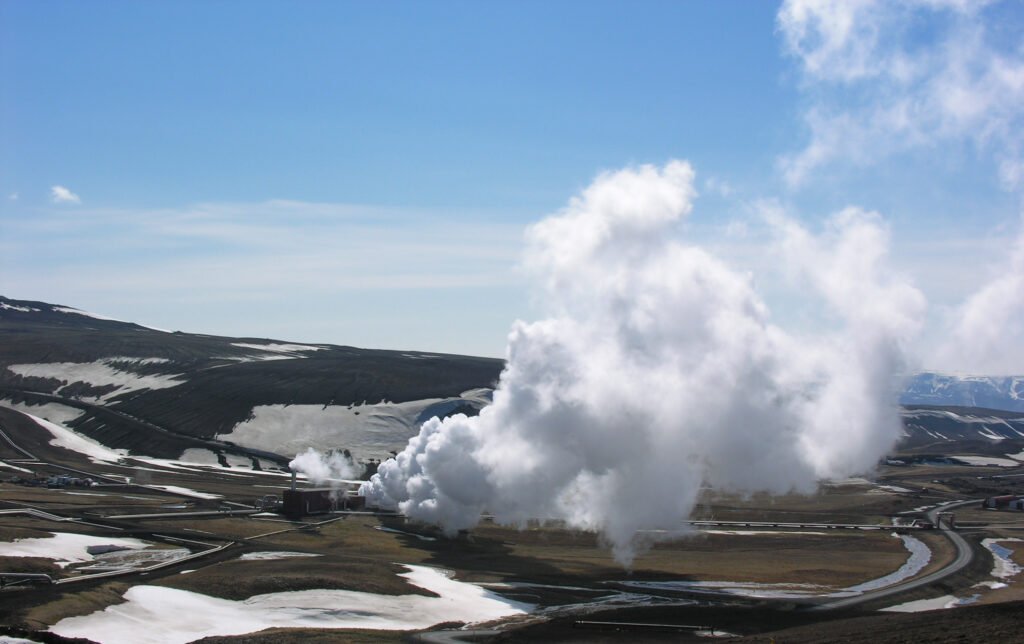
Geothermal energy is heat drawn from within the earth and used to generate electricity or provide direct heating, taking advantage of the fact that temperatures increase with depth beneath the surface due to heat left over from the planet’s formation and ongoing radioactive decay deep underground. Unlike solar and wind power, geothermal energy is available continuously regardless of weather or time of day, making it a notably steady and predictable source of renewable energy wherever suitable underground conditions happen to exist.
How Geothermal Power Plants Work
Geothermal power plants tap into naturally occurring underground reservoirs of hot water or steam, drilling wells to bring that heat to the surface where it drives turbines connected to electricity generators, much like a conventional power plant except the heat source is the earth itself rather than burned fuel. After passing through the turbine, the cooled water is typically injected back underground, both disposing of the water responsibly and helping sustain pressure and heat within the underground reservoir for continued long-term use.
Types of Geothermal Systems
Dry steam plants, the oldest commercial design, use naturally occurring steam directly from underground reservoirs to spin turbines. Flash steam plants draw up very hot, high-pressure water and allow it to rapidly vaporize, or flash, into steam as pressure drops, a design well suited to many of the world’s most productive geothermal fields today. Binary cycle plants use moderately hot water to heat a separate working fluid with a lower boiling point, allowing practical geothermal power generation even at sites with somewhat lower underground temperatures that would be unsuitable for steam-based designs.
Direct Use and Geothermal Heat Pumps
Beyond electricity generation, geothermal heat is used directly for purposes such as heating buildings, greenhouses, and fish farms, and for industrial processes that need a steady, moderate heat source. Geothermal heat pumps, a very different and far more widely applicable technology, use the earth’s relatively stable shallow temperature just a few meters underground to efficiently heat buildings in winter and cool them in summer, a system that works almost anywhere on earth, unlike power-generating geothermal plants that require specific underground geology.
Where Geothermal Resources Exist
The best sites for large-scale geothermal power generation are typically found along tectonic plate boundaries and volcanic regions, where heat from within the earth reaches closer to the surface, including areas such as Iceland, parts of the western United States, and volcanically active regions of East Africa and Southeast Asia. Ongoing advances in drilling technology continue to expand which locations can realistically support geothermal power generation, including enhanced geothermal systems that create artificial underground reservoirs in hot rock that lacks sufficient natural water or permeability on its own.
Environmental Considerations
Geothermal power generates electricity with very low direct greenhouse gas emissions compared to fossil fuels, though some geothermal systems release small amounts of naturally occurring gases from underground, and poorly managed projects can occasionally trigger minor, localized seismic activity by altering underground fluid pressure. Geothermal plants also require careful water management, since geothermal fluids often contain dissolved minerals that must be handled properly to avoid environmental contamination or damage to plant equipment over time.
History of Geothermal Use
Humans have used geothermal hot springs for bathing and therapeutic purposes for thousands of years, long before the technology existed anywhere to convert that same underground heat into usable electricity. The first geothermal power plant began operating in Italy in the early twentieth century, and the technology has since expanded gradually to many countries with suitable underground heat resources available, remaining a comparatively small but notably steady and reliable contributor to the world overall renewable electricity generation mix.
Challenges and Limitations
Despite its reliability, geothermal power faces significant barriers to wider adoption. Finding and confirming a productive underground reservoir requires expensive exploratory drilling that may ultimately fail to locate a commercially viable resource, making early-stage geothermal development financially risky compared to equivalent solar or wind energy projects where the resource, sunlight or wind, is far easier to measure in advance. Geothermal plants are also geographically constrained to regions with suitable underground conditions, meaning many countries and regions simply lack access to resources strong enough for large-scale power generation, even though geothermal heat pumps remain broadly usable almost everywhere.
Growth Potential and Enhanced Geothermal Systems
Interest in expanding geothermal power has grown alongside broader efforts to decarbonize electricity grids, since geothermal can provide the steady, always-available power that intermittent renewables like wind and solar cannot supply on their own. Enhanced geothermal systems, which use techniques adapted from the oil and gas industry to create artificial reservoirs in hot, dry rock, could potentially unlock geothermal power across a much wider range of locations than traditional systems allow, though the approach remains in earlier stages of commercial deployment compared to conventional geothermal technology, with cost, drilling efficiency, and long-term reliability all still being proven at a larger commercial scale.
FAQs
Why is geothermal energy considered more reliable than solar or wind power?
Geothermal energy draws on a continuous underground heat source that does not depend on weather or time of day, allowing geothermal plants to generate electricity at a steady output around the clock.
What is the difference between a geothermal power plant and a geothermal heat pump?
A geothermal power plant generates electricity from deep, very hot underground resources found only in specific locations, while a geothermal heat pump uses shallow, stable ground temperature almost anywhere to heat and cool buildings directly.
Quick checkWhy is geothermal energy considered more reliable than solar or wind power?Show answer
Geothermal energy draws on a continuous underground heat source that does not depend on weather or time of day, allowing steady electricity output around the clock.
Editorially reviewed by Specialty Digest Editorial TeamLast reviewed November 2, 2026Researched and drafted with AI assistanceReport an issue