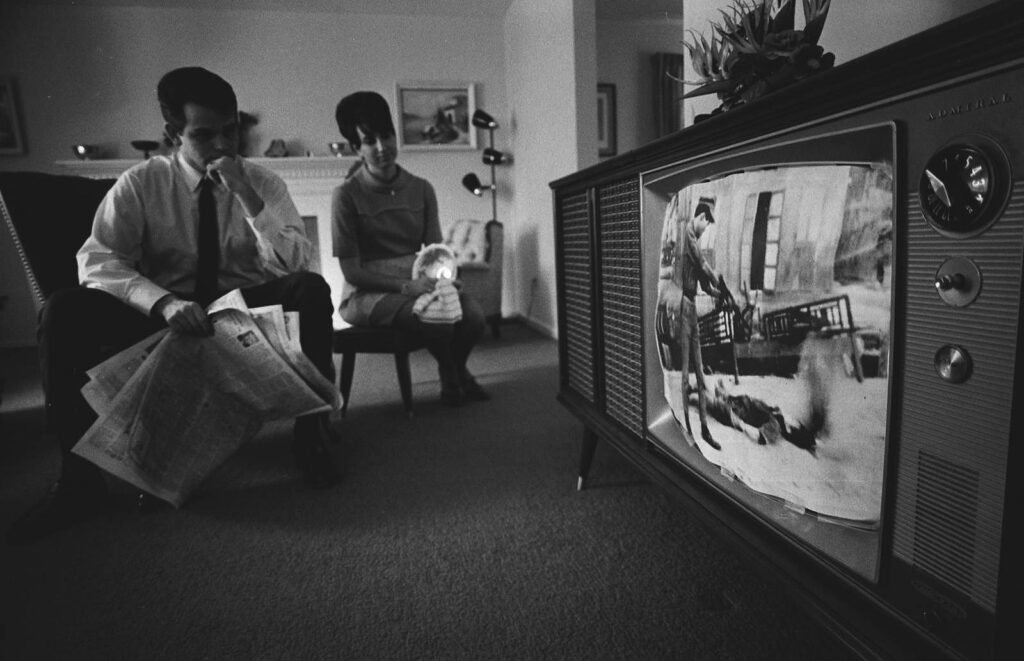
Media framing recognizes that presenting the same underlying facts through a different interpretive lens can meaningfully change how an audience understands an issue.
Common Frame Types
Researchers studying political and social coverage have identified recurring frame types, including a conflict frame emphasizing disagreement between parties, an economic frame emphasizing financial consequence, and a human interest frame emphasizing individual stories over broader structural context.
Why Framing Matters
Because framing operates below the level of outright factual error, two outlets can report the same event accurately while leaving audiences with meaningfully different impressions of its significance, which is part of why framing has become a central concern in media criticism.
Framing and Political Coverage
Political reporting offers some of the most studied examples of framing, where the same policy debate might be presented through a conflict frame emphasizing partisan disagreement, a process frame emphasizing legislative procedure, or a consequence frame emphasizing how the policy would affect ordinary people, each leaving an audience with a meaningfully different sense of what the story is actually about.
Recognizing Frames as a Reader
Media literacy education increasingly teaches audiences to notice framing choices actively, asking what alternative frame could have been applied to the same facts and what that alternative frame might have emphasized instead, a habit that helps readers see coverage as one interpretation among several possible ones rather than a neutral, unmediated account of events.
Economic Considerations
Framing choices are not always deliberate manipulation; commercial pressure to produce engaging, easily digestible stories can push coverage toward frames that generate audience attention, such as conflict, even when a more complex frame might better serve public understanding of a genuinely nuanced issue.
Looking Ahead
As short-form video and social content become a primary way many audiences encounter news, researchers are examining how framing operates differently in these highly compressed formats, where there is often even less space to provide the context that might otherwise balance a dominant frame.
Related Specialties
Media framing connects closely with agenda setting theory, audience reception theory, and media literacy, since how an issue is framed, how an audience actively interprets that frame, and how critically a reader evaluates the framing choice are all deeply interconnected processes.
International Perspectives
Framing conventions differ across media cultures, with some traditions favoring a more detached, process-oriented style of coverage and others more comfortable with an openly interpretive or advocacy-oriented frame, meaning the same global event can be framed quite differently depending on which country media tradition is covering it.
Practical Guidance for Readers
Comparing how multiple outlets frame the same story side by side is one of the most effective practical exercises for noticing framing choices, since a difference in emphasis or word choice becomes far more visible in direct comparison than when reading only a single account in isolation.
Visual elements, including photo selection and video editing choices, carry their own framing power independent of the written text accompanying them, since the same event described identically in words can feel very different depending on which specific image or footage accompanies the story.
Researchers studying framing effects experimentally have found that even subtle changes in a single key word, such as describing a policy as a tax versus a fee, can shift audience support for that policy measurably, illustrating how sensitive framing effects can be to seemingly minor language choices.
Media critics often distinguish between framing that emerges from genuine editorial judgment about what matters most in a story and framing that appears deliberately chosen to support a particular predetermined conclusion, though drawing that line in practice can be genuinely difficult even for experienced analysts.
A classic example used in framing research involves describing an identical crime statistic either as a percentage increase or as a raw number change, demonstrating how the exact same underlying data can produce very different impressions of severity depending purely on presentation choice.
Editors making real-time decisions under deadline pressure rarely sit down to deliberately choose a frame in the abstract, which means many framing patterns emerge gradually through habit and convention within a newsroom rather than through any single explicit editorial decision.
Advocacy organizations on multiple sides of a contested issue often deliberately promote the specific frame most favorable to their position, meaning a savvy reader benefits from recognizing when a frame originated from an interested party rather than emerging neutrally from a journalist own independent analysis of a story.
Academic framing researchers distinguish between frames that are essentially factual emphasis choices and frames that introduce genuinely misleading implications, a distinction that matters considerably for evaluating whether a given piece of framing crosses from legitimate editorial judgment into something closer to manipulation.
A reader who notices a recurring frame across many stories from the same outlet over time has identified something closer to an editorial pattern than a one-time choice, which can be a more reliable signal of outlet perspective than any single article alone.
A short annotated comparison showing the same event covered under two different frames, placed side by side for a classroom or training session, makes the abstract concept of framing immediately concrete for learners encountering it for the first time.
A newsroom ombudsperson reviewing reader complaints about framing often finds that perceived bias says as much about the reader own prior views as it does about any genuine imbalance in the reporting itself.
A brief glossary note distinguishing framing from outright spin clarifies that framing is a normal, unavoidable part of storytelling, while spin specifically implies a deliberate attempt to deceive rather than simply emphasize.
Key facts
- Array
Quick checkWhy can the same underlying facts lead different audiences to different conclusions?Show answer
Because framing emphasizes certain details, context, and interpretive angles over others, shaping how an audience understands the significance of the same underlying facts.
Sources
- Array
Editorially reviewed by Specialty Digest Editorial TeamLast reviewed November 3, 2026Researched and drafted with AI assistanceReport an issue