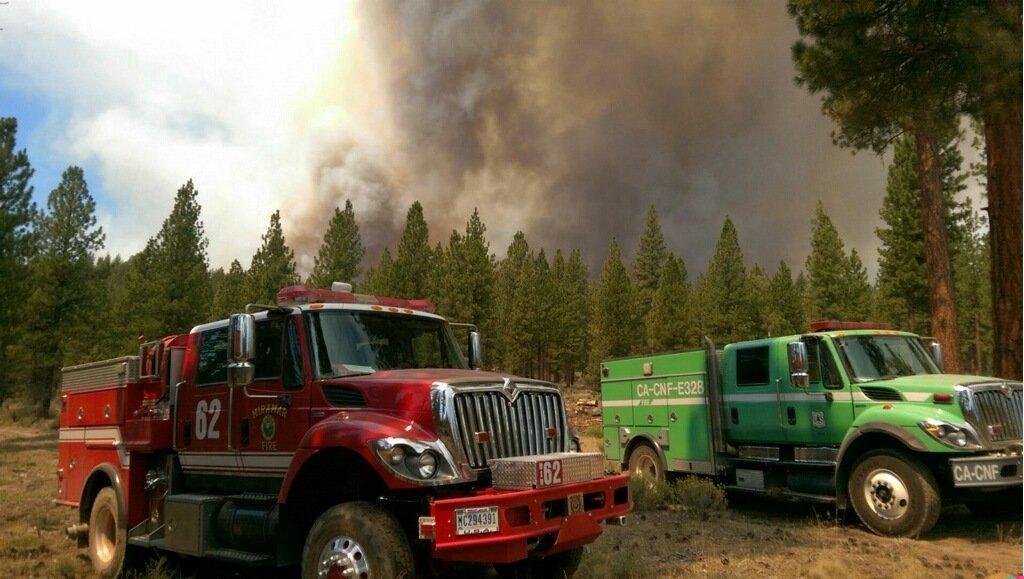
A mutual aid agreement is a formal, pre-arranged agreement among jurisdictions, agencies, or organizations to provide resources, personnel, and equipment to one another during emergencies that exceed any single party own response capacity. These agreements recognize that disasters do not respect jurisdictional boundaries and that pooling resources across a wider area often provides a more effective and efficient response than each jurisdiction struggling independently.
n
Common Provisions
n
Mutual aid agreements typically address several key issues in advance, including the process for requesting and activating assistance, which party retains command authority over resources once they are deployed, how costs and reimbursement will be handled, and liability protections for personnel operating outside their home jurisdiction. Clearly addressing these issues beforehand removes significant friction that could otherwise delay a response during an actual emergency.
n
Scale and Scope
n
Mutual aid arrangements exist at multiple scales, ranging from informal agreements between neighboring fire departments to formal statewide mutual aid systems and interstate compacts that allow resources to move across state lines during major disasters. Larger-scale agreements often incorporate standardized systems, such as resource typing and credentialing, that allow responders and equipment from distant jurisdictions to integrate smoothly into an unfamiliar incident command structure upon arrival.
n
Activation Process
n
Mutual aid agreements typically specify a formal activation process, including who within a requesting jurisdiction has authority to request assistance, how that request is communicated to partner jurisdictions, and what information must be provided to allow the responding jurisdiction to determine what resources it can actually spare without compromising its own ongoing operations. Having this process clearly defined in advance prevents confusion and delay at the exact moment when a rapid response matters most.
n
Credentialing and Resource Typing
n
Larger mutual aid systems often incorporate standardized resource typing, which categorizes personnel and equipment according to consistent definitions of capability, and credentialing systems that verify a responder qualifications before they are deployed to an unfamiliar jurisdiction. These standardization efforts allow a requesting jurisdiction to specify exactly what type of resource it needs, confident that a Type 1 engine company or a credentialed paramedic from a distant jurisdiction will meet the same baseline capability regardless of its agency of origin.
n
Liability and Legal Protections
n
Mutual aid agreements typically include provisions addressing legal liability for responders operating outside their home jurisdiction, often extending workers compensation coverage and legal immunity protections to visiting personnel in a manner similar to what they would receive at home. These protections remove a significant potential barrier to providing assistance, since responding agencies and their personnel need confidence that helping a neighboring jurisdiction will not expose them to unexpected legal or financial risk.
n
Statewide and Interstate Systems
n
Beyond local agreements between neighboring jurisdictions, many regions have developed statewide mutual aid systems that pre-establish procedures for requesting and deploying resources across an entire state, while interstate compacts extend similar arrangements across state lines for major disasters that exceed any single state own response capacity. These larger systems often incorporate standardized request forms, resource tracking, and reimbursement procedures developed specifically to handle the added complexity of coordinating assistance across greater distances and multiple layers of government.
n
Limitations and Gaps
n
Despite their value, mutual aid agreements have practical limitations, since a widespread regional disaster can simultaneously affect all potential mutual aid partners, leaving none with surplus capacity to share precisely when demand for assistance is highest. This limitation underscores why mutual aid serves as one component within a broader preparedness strategy rather than a complete solution on its own, with state and federal assistance mechanisms typically designed to activate once local and regional mutual aid capacity has been exhausted.
n
Looking Ahead
n
As disasters increasingly cross jurisdictional and even national boundaries, mutual aid frameworks continue to expand in scope, with growing attention to international mutual assistance arrangements that allow specialized resources to be shared across borders during the largest-scale catastrophic events. This expansion reflects a broader recognition that effective disaster response increasingly depends on cooperation at a scale well beyond what any single local or even national system can provide alone.
n
Summary of Protective Role
n
Ultimately, the value of mutual aid lies in transforming isolated jurisdictions into a connected network capable of surging resources exactly where and when they are needed most, a capability that becomes indispensable the moment any single jurisdiction own resources prove insufficient on their own.
n
Maintaining Agreements Over Time
n
Mutual aid agreements require periodic review and renewal to remain effective, since changes in personnel, organizational structure, or resource capacity among participating jurisdictions can gradually render an agreement outdated if it is not actively maintained, potentially creating a false sense of available support that would not materialize as expected during an actual emergency.
n
Building Trust Between Partner Agencies
n
Beyond the written terms of any agreement, successful mutual aid relationships depend on genuine working trust built through joint training, shared exercises, and personal relationships among personnel across participating agencies, since written agreements alone cannot guarantee the kind of seamless cooperation that trust developed well before an actual emergency reliably provides.
n
Investing in that relationship building deserves just as much attention as the legal and administrative details captured in the written agreement itself.
n
Final Considerations
n
Jurisdictions that treat these agreements as living partnerships, not just signed documents, consistently see smoother cooperation when an actual emergency puts them to the test.
n
Few arrangements offer so much protective value relative to the modest effort required to establish them.
n
The modest upfront effort pays dividends many times over.
n
It remains one of the smartest investments a jurisdiction can make.
Key facts
- Array
Sources
- Array
Editorially reviewed by Specialty Digest Editorial TeamLast reviewed November 3, 2026Researched and drafted with AI assistanceReport an issue