Property law is the body of legal rules that determines who owns a thing, how that ownership can be acquired, transferred, or lost, and what rights an owner holds against everyone else. It covers land and buildings as well as movable objects, and it sits alongside contract law and tort law as one of the oldest branches of private law.
Real property and personal property
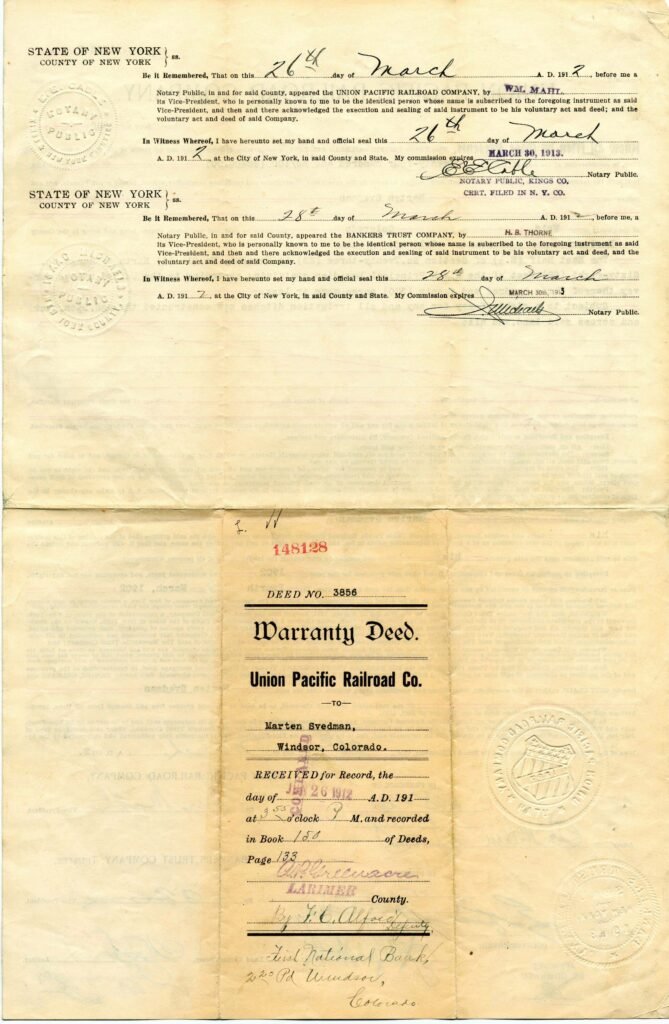
Most legal systems divide property into two broad categories. Real property covers land and anything permanently attached to it, such as buildings, fences, and growing crops. Personal property covers everything else a person can own, from a car to a bank account to a copyright. Common law systems further split personal property into tangible goods, called chattels, and intangible rights, such as shares of stock or a patent. The distinction matters because real property is usually transferred through formal deeds and recorded in public registries, while personal property typically changes hands through simple delivery or a bill of sale.
Ownership and possession
Ownership is the most complete bundle of rights a person can hold in a thing, including the right to use it, exclude others from it, and transfer it. Possession is a narrower, factual state of having control over an object, and the two do not always coincide. A tenant possesses a rented apartment without owning it, while an owner who has lent out a car owns it without possessing it. Legal systems generally protect whoever is in peaceable possession, presuming that person to be the rightful owner until someone else proves a superior claim, which keeps everyday transactions workable without constant proof of a perfect chain of title.
Historical development
Roman law supplied much of the vocabulary still used today, including dominium for full ownership and usufructus for a right to use and enjoy another person’s property. Roman jurists tended to concentrate every right in a single owner, which made it awkward to create lesser interests such as life estates. In medieval England, land ownership grew out of the feudal system, in which the Crown technically held all land and granted estates to tenants in exchange for service. Over centuries, devices such as the entail, the trust, and the Statute of Uses reshaped how English landowners could divide and pass down their interests, and these common law foundations were later carried to the United States, Canada, Australia, and other common law jurisdictions.
Acquiring and limiting property rights
Property can be acquired in several ways: by purchase, by gift, by inheritance, by creating something new, or by adverse possession, in which long, open, and continuous use of land without the owner’s permission can eventually ripen into ownership. Ownership is never absolute. Governments can take private property for public use through eminent domain, provided they pay just compensation, and zoning laws restrict how land may be used even when no taking occurs. Nuisance law prevents an owner from using property in ways that unreasonably harm neighbors, and many jurisdictions recognize easements, which let one person use part of another’s land for a specific purpose such as a shared driveway or utility line.
Property law today
Modern property law increasingly deals with intangible and shared forms of ownership. Intellectual property, including patents, copyrights, and trademarks, extends property-like protection to ideas and creative works. Condominium and cooperative ownership let many people hold interests in a single building. Digital assets, from domain names to data, are testing how far traditional property concepts can stretch. Natural resource rights add another layer of complexity: in many jurisdictions, mineral rights and water rights can be owned separately from the surface land above them, so a farmer may own the soil while a mining company owns what lies beneath it. Across all these forms, property law continues to balance the interests of individual owners against the needs of neighbors, creditors, and the broader public.
Civil law and common law approaches
Common law jurisdictions such as England, the United States, and Australia built property law case by case through court decisions, which produced a flexible but sometimes unpredictable patchwork of estates and interests, including the fee simple, the life estate, and the leasehold. Civil law jurisdictions, following the model of the French Napoleonic Code of 1804 and the German Civil Code of 1900, instead codified property rules in a single comprehensive statute, favoring a more unified concept of ownership with fewer recognized variations. Both traditions converge on similar practical outcomes, such as requiring written deeds for land transfers and public registries to record who owns what, but they differ in how much flexibility courts retain to recognize new forms of property interest, and in how readily each tradition absorbs novel assets such as cryptocurrency or carbon credits into its existing legal categories.
FAQs
What is the difference between real property and personal property?
Real property is land and anything permanently attached to it, while personal property is everything else a person can own, whether tangible or intangible.
Can the government take private property?
Yes, through eminent domain, but only for a public purpose and only if the owner receives just compensation.
What is adverse possession?
A legal doctrine that allows someone who openly and continuously uses land without permission for a set statutory period to eventually gain legal title to it.
Can ideas be property?
Yes. Intellectual property law extends ownership-like protection to patents, copyrights, and trademarks, even though these creations have no physical form.
Key facts
- Divides into real property (land) and personal property (movable things)
- Roman law concepts like dominium and usufructus still shape modern terminology
- Eminent domain lets governments take property for public use with just compensation
- Adverse possession can transfer title through long, open, unauthorized use of land
Quick checkWhat is the difference between real property and personal property?Show answer
Real property is land and anything attached to it; personal property is everything else a person can own.
Sources
- Britannica: Property Law; Cornell Legal Information Institute: Property
Editorially reviewed by Specialty Digest Editorial TeamLast reviewed November 2, 2026Researched and drafted with AI assistanceReport an issue