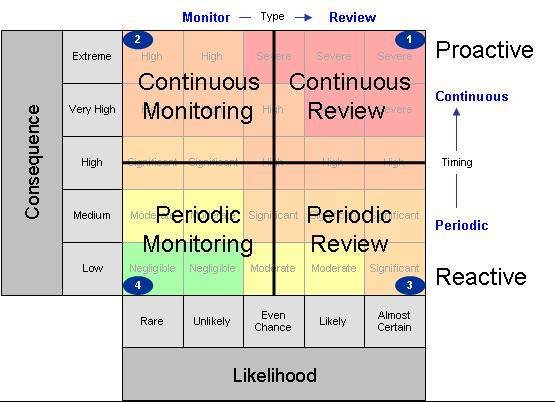
A risk register is a structured, centralized document that records identified hazards along with their assessed risk levels, assigned responsibility, and the status of measures taken to control them. Serving as both a planning tool and an accountability mechanism, the risk register helps ensure that identified hazards are tracked through to resolution rather than being noted once and then forgotten amid competing organizational priorities.
n
Core Components
n
A well-constructed risk register typically includes a clear description of each hazard, an assessment of its likelihood and severity often derived from a risk assessment matrix, a designated owner responsible for ensuring appropriate action is taken, specific control measures either planned or already in place, and a current status indicator showing progress toward full mitigation. Many registers also include target completion dates and space for notes documenting any changes in circumstances that affect the original risk assessment.
n
Maintenance and Review Cycles
n
A risk register provides ongoing value only if it is actively maintained, requiring regular review cycles where existing entries are updated to reflect progress, new hazards are added as they are identified, and resolved risks are formally closed out with documentation of the final control measures implemented. Organizations that treat the register as a static document created once and rarely revisited lose much of its practical value as a living tool for ongoing risk management.
n
Ownership and Accountability
n
Assigning clear ownership for each entry in a risk register is essential to its effectiveness, since a risk without a designated responsible party can easily languish without anyone feeling direct accountability for ensuring appropriate action is actually taken. Many organizations review register ownership assignments periodically, ensuring that responsibility transfers appropriately when personnel change roles rather than leaving an entry assigned to someone no longer positioned to act on it.
n
Scaling Across Organizational Levels
n
Larger organizations often maintain risk registers at multiple levels, with individual departments or projects keeping detailed registers covering their specific operational risks while a consolidated organizational register tracks only the highest-priority risks that warrant senior leadership attention. This tiered approach allows detailed tracking at the operational level while still giving leadership visibility into the risks that matter most without overwhelming them with every minor hazard tracked throughout the organization.
n
Technology and Register Management
n
While a risk register can be maintained as a simple spreadsheet, many organizations increasingly use dedicated software platforms that offer features such as automated reminders for upcoming review dates, dashboard visualizations of overall risk status, and integration with other safety management tools such as inspection and incident reporting systems. These technology platforms can significantly reduce the administrative burden of keeping a register current while also improving visibility into risk status for managers who need summary-level information without reviewing every individual entry.
n
Common Pitfalls in Register Maintenance
n
A frequent pitfall in risk register management is allowing the document to grow stale, with closed or resolved risks never formally removed and new risks added inconsistently depending on who happens to notice them, gradually eroding the register value as an accurate current picture of organizational risk. Establishing clear processes and responsibilities for regular register maintenance, rather than leaving updates to occur only sporadically, helps prevent this gradual decline in usefulness over time.
n
Summary of Protective Role
n
Ultimately, a well-maintained risk register transforms scattered knowledge about organizational hazards into a structured, trackable system of accountability, ensuring that identified risks receive sustained attention through to resolution rather than fading from view once the initial concern that prompted their documentation has passed.
n
Supporting Organizational Memory
n
Beyond its immediate operational value, a well-maintained risk register also serves as a form of organizational memory, preserving knowledge about past hazards and the reasoning behind control decisions even as individual employees who originally identified or addressed those risks eventually move on or change roles. This continuity helps prevent organizations from inadvertently reintroducing previously addressed hazards or losing institutional knowledge about why certain controls were originally put in place.
n
Maintained diligently, the register becomes far more than a compliance document, functioning as a genuine working tool that actively drives ongoing safety improvement.
n
Final Considerations
n
Few documents carry this much practical weight relative to the modest effort required to keep them current and genuinely useful.
n
Organizations that invest that modest effort consistently find the register pays for itself many times over when a tracked risk is addressed before it causes harm.
n
That return on a modest investment of ongoing attention is difficult to match with almost any other safety management tool.
n
That consistency of practice is ultimately what separates organizations with mature risk management from those still operating reactively.
n
Closing Perspective
n
As organizations grow more complex and face a widening range of operational risks, a disciplined register becomes an increasingly valuable anchor for coherent, organization-wide risk management.
n
Few tools offer this much structure for such a modest and sustainable ongoing commitment of time.
n
Organizations that sustain that discipline see it repay itself many times over across every risk it helps resolve.
n
The strength of a risk register lies less in its format and more in the discipline behind it. A register that is reviewed on a regular schedule, with clear owners for each entry, becomes a genuine management tool rather than a static list that quietly goes stale. Teams that treat updates as routine business tend to catch emerging problems long before they escalate into costly incidents or near misses that could have been avoided with earlier attention.
n
Even a well-built register loses value if nobody checks whether the recorded likelihood and severity still match reality.
Key facts
- Array
Sources
- Array
Editorially reviewed by Specialty Digest Editorial TeamLast reviewed November 3, 2026Researched and drafted with AI assistanceReport an issue