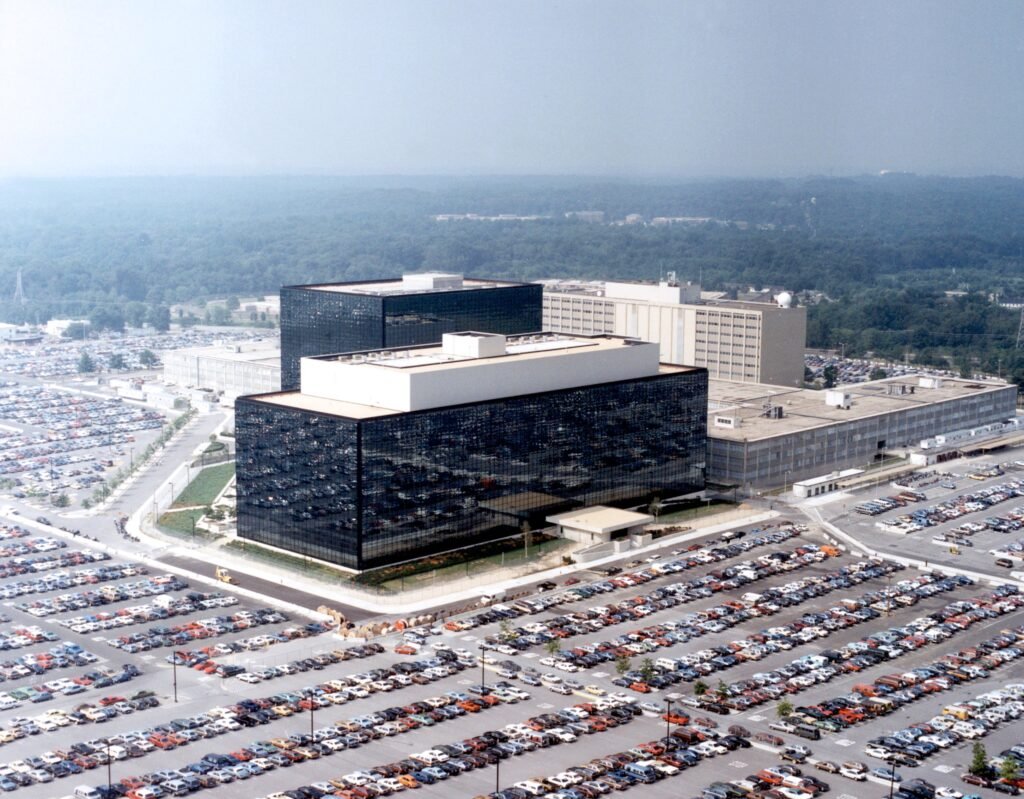
Overview
Signals intelligence, commonly abbreviated SIGINT, is the practice of intercepting electronic transmissions to extract information of military, diplomatic, or economic value. It sits alongside human intelligence and imagery intelligence as one of the primary disciplines used by national security agencies to understand adversaries and allies alike.
Branches of SIGINT
Communications intelligence, or COMINT, focuses on intercepted conversations and messages, whether spoken, typed, or transmitted through radio and satellite links. Electronic intelligence, or ELINT, instead targets non-communication emissions such as radar pulses, which can reveal the location and capability of weapons systems. A related branch, foreign instrumentation signals intelligence, monitors telemetry from missile tests and other technical trials to assess a rivals progress.
Historical Development
Signals intelligence matured rapidly during the twentieth century as radio communication became central to military coordination. Codebreaking efforts during the Second World War, including the Allied effort against German and Japanese military codes, demonstrated how decisively SIGINT could shape the outcome of a conflict when an adversarys plans could be read in near-real time. These successes convinced postwar governments to build permanent, well-funded signals intelligence agencies rather than treating codebreaking as a wartime improvisation.
Modern Collection Platforms
Todays SIGINT collection draws on a wide range of platforms. Geostationary and low-orbit satellites intercept signals across vast swaths of territory, while ground stations positioned near borders or embassies capture more localized transmissions. Specialized reconnaissance aircraft and naval vessels extend coverage into contested or hard-to-reach areas, and undersea cables have become an additional target as global communications increasingly travel through fiber-optic infrastructure rather than open radio broadcast.
Legal and Ethical Questions
Because SIGINT often sweeps up communications involving ordinary citizens alongside legitimate targets, it raises persistent legal and ethical questions about privacy and oversight. Many democracies have enacted specific statutes governing when intelligence agencies may target domestic communications, and disclosures by former intelligence employees have periodically triggered public debate over whether existing safeguards keep pace with the scale of modern collection capability.
Encryption and the SIGINT Contest
The relationship between SIGINT collectors and encryption technology has always been adversarial. As encryption has grown stronger and more widely available, intelligence agencies have had to invest heavily in cryptanalysis, computing power, and sometimes in finding weaknesses in how encryption is implemented rather than breaking the underlying mathematics directly. The spread of strong commercial encryption to ordinary consumer devices has made bulk SIGINT collection against general populations considerably harder than it was in earlier decades, shifting emphasis toward more targeted collection against specific individuals or networks.
International Cooperation
Several allied nations share SIGINT product through long-standing intelligence-sharing arrangements, pooling collection coverage and analytic resources in ways that extend each partners effective reach well beyond what any single country could achieve alone. These partnerships require significant mutual trust, since sharing raw signals intelligence can reveal sensitive details about a nations own collection capabilities and methods to its partners.
SIGINT and Military Operations
Signals intelligence plays a direct operational role in modern warfare beyond its strategic and diplomatic uses. Intercepted battlefield communications can reveal enemy troop positions, intentions, and morale in close to real time, while electronic intelligence on air defense radars allows pilots to identify and avoid or suppress threats before entering contested airspace. This operational SIGINT often flows through much shorter, more compressed reporting chains than strategic intelligence intended for senior policymakers, since battlefield commanders need actionable information within minutes rather than days.
Protecting Ones Own Signals
Because every nation that collects SIGINT also worries about having its own signals intercepted, communications security, often called COMSEC, forms an essential counterpart discipline. Military and diplomatic communications rely on encryption, frequency management, and strict procedural discipline to reduce the chance that an adversary can exploit the same techniques being used against them, creating a continuous arms race between collection and protection capabilities on both sides.
SIGINT and Diplomacy
Intercepted diplomatic communications have repeatedly given governments early insight into a counterparts negotiating position before formal talks begin, a form of advantage valuable enough that diplomatic missions themselves employ considerable countermeasures, including encrypted communications and physical security sweeps of embassy buildings for hidden listening devices, reflecting mutual awareness that embassies are prime SIGINT targets for host and rival nations alike.
Space-Based Collection
Satellites dedicated to signals intelligence orbit in both geostationary positions, allowing continuous coverage of a fixed region, and lower orbits that pass over different areas as the earth rotates beneath them, giving broader but more intermittent coverage. Building and launching these platforms requires substantial investment, meaning only a small number of nations field extensive independent satellite SIGINT capability, while others rely on intelligence-sharing arrangements to access comparable coverage.
Commercial Signals Monitoring
Private companies now offer commercial signals monitoring services, tracking radio and satellite emissions for purposes ranging from maritime shipping analysis to spectrum management, a development that has partially democratized a capability once reserved almost exclusively for well-funded government agencies, though the most sensitive and highest-fidelity SIGINT collection remains firmly within state hands.
Balancing Collection and Privacy
As SIGINT capabilities have grown more powerful, democratic societies continue debating how to balance the genuine security value of broad collection against the privacy interests of ordinary citizens whose communications may be swept up incidentally, a debate unlikely to be settled permanently given how quickly both communications technology and collection capability keep changing.
Looking ahead, the proliferation of low-cost satellites and software-defined radios is giving smaller nations and even well-resourced non-state actors a degree of signals collection capability once limited to a handful of major powers, gradually reshaping the balance of SIGINT advantage worldwide.
Key facts
- Array
Quick checkWhat does SIGINT stand for and cover?Show answer
Signals intelligence, covering intercepted communications and electronic emissions.
Sources
- Array
Editorially reviewed by Specialty Digest Editorial TeamLast reviewed November 4, 2026Researched and drafted with AI assistanceReport an issue