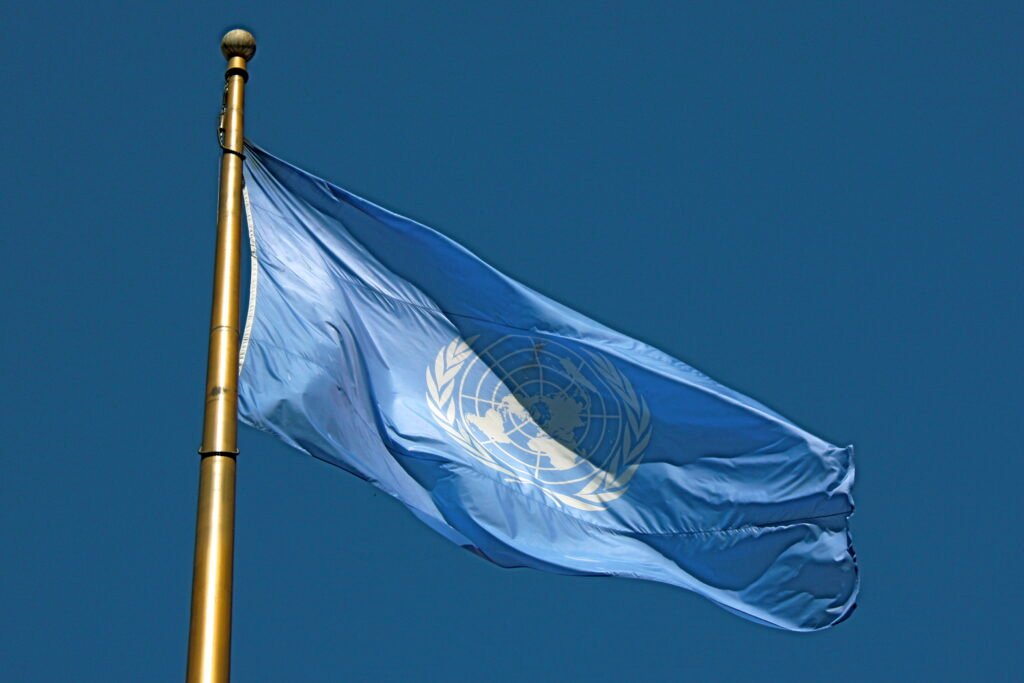
Sovereignty is the supreme authority a state holds over its own territory and population, free from outside control. It is the organizing principle of the modern international system: every recognized state is treated as the final legal authority within its own borders, equal in legal status to every other state regardless of size or power, and in principle immune from interference by outside governments in its internal affairs. Sovereignty is as much a claim and a working assumption as it is a fact on the ground, since many states exercise far less real control over their territory than the principle implies, and the concept has always coexisted uneasily with the realities of unequal power among nations.
Origins in the Peace of Westphalia
Scholars conventionally trace the modern sovereignty principle to the Peace of Westphalia, the set of treaties that ended the Thirty Years’ War and the Eighty Years’ War in 1648. The settlement left Europe without a single overarching religious or imperial authority capable of ruling over all its states, and the participating powers agreed, in effect, to stop interfering in one another’s internal religious and political arrangements. Historians dispute how explicit this principle actually was in the text of the treaties themselves, and some argue the settlement mainly limited sovereignty within the Holy Roman Empire rather than establishing a general rule, but the Swiss jurist Emer de Vattel developed non-interference into a more systematic legal doctrine roughly a century later, and the phrase Westphalian sovereignty became the standard shorthand for the resulting system.
Core principles
Three ideas sit at the heart of Westphalian sovereignty. Territorial integrity holds that a state exercises exclusive control over everything within its recognized borders. Non-intervention holds that outside powers should not interfere in a state’s domestic affairs, including its choice of government, religion, or economic system. Equality of states holds that every sovereign state, from a small island nation to a global power, carries the same formal legal status under international law, even though their actual influence over world events differs enormously. The United Nations Charter embeds all three ideas, barring the UN itself from intervening in matters essentially within a state’s domestic jurisdiction and generally prohibiting the use of force against another state’s territorial integrity or political independence.
Popular sovereignty and internal authority
Sovereignty also has an internal dimension, concerned with where ultimate authority lies inside a state rather than how that state relates to its neighbors. Popular sovereignty holds that political authority ultimately derives from the consent of the governed rather than from a monarch’s personal right to rule, an idea that animated the American and French Revolutions and underpins nearly every modern constitution’s claim to legitimacy. Parliamentary sovereignty, the doctrine most closely associated with the United Kingdom, holds that the elected legislature is the supreme lawmaking authority, with no court or earlier parliament able to permanently bind a later one. These internal questions about where sovereignty resides within a state are logically distinct from, but often intertwined with, the external question of how much control outside powers can exert over that state.
Challenges from humanitarian intervention and globalization
The strict non-intervention principle has faced sustained pressure since the end of the Cold War. Advocates of humanitarian intervention argue that severe human rights abuses, including genocide and mass atrocities, can justify international action even without the consent of the state where they occur, a position captured in the doctrine of the responsibility to protect. Critics, including China and Russia, counter that loosening non-intervention invites selective and politically motivated interference dressed up as humanitarianism, and both countries have used their Security Council veto to block interventions they regard as violations of sovereignty, as in Syria. Economic globalization adds a further complication, since multinational corporations, international financial markets, and global supply chains can shape a country’s internal conditions in ways no government fully controls, prompting some leaders to argue that a strictly Westphalian conception of sovereignty no longer matches how the world actually works.
Shared and limited sovereignty today
The European Union offers the clearest institutional example of states voluntarily sharing sovereignty, since member states accept EU law, courts, and regulatory bodies that can override domestic rules in areas where authority has been pooled, something that would have been unthinkable under a strict Westphalian reading of state independence. Some scholars argue that fragile or failed states, unable to maintain order or provide basic services within their own borders, effectively forfeit part of their practical claim to sovereignty, which can be invoked to justify international trusteeship or intervention. Despite all these pressures and qualifications, sovereignty remains the default legal framework of the international system, and most states, including major powers such as China and Russia, continue to actively defend a relatively strict version of it in international forums even as the world grows more interconnected.
FAQs
What is Westphalian sovereignty?
The principle that each state holds exclusive authority within its own borders and that all states are legally equal, traced conventionally to the 1648 Peace of Westphalia.
What is the difference between sovereignty and popular sovereignty?
Sovereignty generally describes a state’s supreme authority over its territory, while popular sovereignty specifically holds that this authority ultimately derives from the consent of the governed rather than a ruler’s personal right.
Does the United Nations Charter protect state sovereignty?
Yes. It bars the UN from intervening in matters essentially within a state’s domestic jurisdiction and generally prohibits the use of force against another state’s territorial integrity.
How does the European Union challenge traditional sovereignty?
Member states voluntarily accept EU law and institutions that can override domestic rules in pooled policy areas, a form of shared sovereignty that departs from strict Westphalian independence.
Key facts
- Traced conventionally to the 1648 Peace of Westphalia ending the Thirty Years' War
- Rests on territorial integrity, non-intervention, and legal equality of states
- Popular sovereignty and parliamentary sovereignty address where authority lies inside a state
- Challenged today by humanitarian intervention, globalization, and EU shared sovereignty
In the news
Quick checkWhat is Westphalian sovereignty?Show answer
The principle that each state holds exclusive authority within its borders and that all states are legally equal, traced to the 1648 Peace of Westphalia.
Sources
- Wikipedia: Westphalian System
Editorially reviewed by Specialty Digest Editorial TeamLast reviewed November 2, 2026Researched and drafted with AI assistanceReport an issue