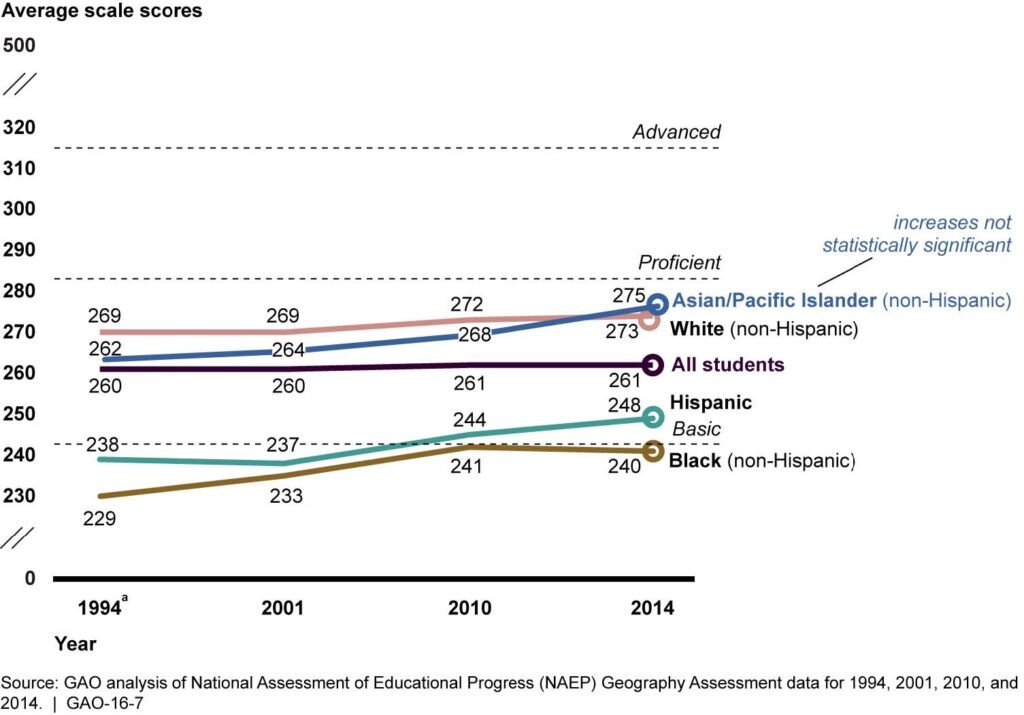
The achievement gap refers to persistent, measurable differences in academic performance, measured through indicators such as standardized test scores, graduation rates, or college enrollment, between different groups of students, most commonly grouped by race, ethnicity, family income, or disability status. How the gap is measured Researchers and policymakers typically document achievement gaps by comparing average
Achievement gap Read More »
Persistent, measurable differences in academic performance between student groups defined by race, income, or disability status.
A charter school is a publicly funded school that operates independently of many of the rules governing traditional public schools, in exchange for meeting specific performance goals set out in a charter agreement with an authorizing body, such as a school district, state agency, or university. The first charter school The modern charter school movement
Charter school Read More »
A publicly funded school that operates with greater independence than traditional public schools, under a performance-based charter agreement.
Common Core, formally the Common Core State Standards Initiative, is a set of academic standards in mathematics and English language arts describing what K-12 students in the United States are expected to know at each grade level, intended to create more consistency across states that choose to adopt it. Development and release The standards were
Common Core Read More »
A set of K-12 academic standards in math and English language arts intended to create consistent expectations across adopting US states.
Compulsory education refers to laws requiring children within a specified age range to attend school, whether a public school, a private school, or in some jurisdictions an approved homeschooling program, with the specific age range and enforcement mechanisms varying considerably by country and, within the United States, by state. Massachusetts passed the first compulsory education
Compulsory education Read More »
Laws requiring children within a specified age range to attend school, dating in the US to an 1852 Massachusetts law.
Homeschooling is the practice of educating children at home or in settings other than a traditional public or private school, typically led by a parent or guardian rather than a certified classroom teacher, though specific legal requirements for homeschooling families vary considerably from one country or state to another. In the United States, homeschooling is
Homeschooling Read More »
The practice of educating children at home rather than in a traditional school, legal in all fifty US states with varying requirements.
An Individualized Education Program, usually called an IEP, is a legal document developed for a public school student with a disability in the United States, outlining the specific special education services, accommodations, and annual goals designed to meet that student’s unique needs. The requirement for an IEP comes from the Individuals with Disabilities Education Act,
Individualized Education Program Read More »
A legal document outlining special education services and goals for a public school student with a disability, required under federal law.
In simple terms The literacy rate is the share of a population who can read and write. The standard international version counts people aged 15 and over who can, with understanding, both read and write a short simple statement about their everyday life. [1][2] That definition sets a deliberately low bar. It measures basic literacy,
Literacy rate Read More »
The literacy rate is the share of a population, usually aged 15 and over, able to read and write a simple everyday statement.
The No Child Left Behind Act was a United States federal law signed in January 2002 that reauthorized the Elementary and Secondary Education Act and required states to test students annually in reading and math in grades three through eight and once in high school. The law tied federal funding to a requirement that schools
No Child Left Behind Act Read More »
A 2002 federal law that tied school funding to annual standardized testing and progress targets, later replaced by the Every Student Succeeds Act.
School choice refers to education policies that let families select a school for their children other than the single public school they would otherwise be assigned to based on home address, including charter schools, vouchers, tax-credit scholarships, magnet schools, and open enrollment within or across public school districts. Early intellectual roots Economist Milton Friedman is
School choice Read More »
Education policies letting families choose a school other than their default assigned public school, including vouchers and charter schools.
In simple terms A school voucher is public funding given directly to a family, rather than to a public school, so the family can use it to pay tuition at a private school instead. [1] The core idea is to let the public money attached to a child follow that child to whichever school the
School voucher Read More »
A school voucher is public funding given to a family to pay tuition at a private school instead of, or alongside, enrolling their child in a public school.