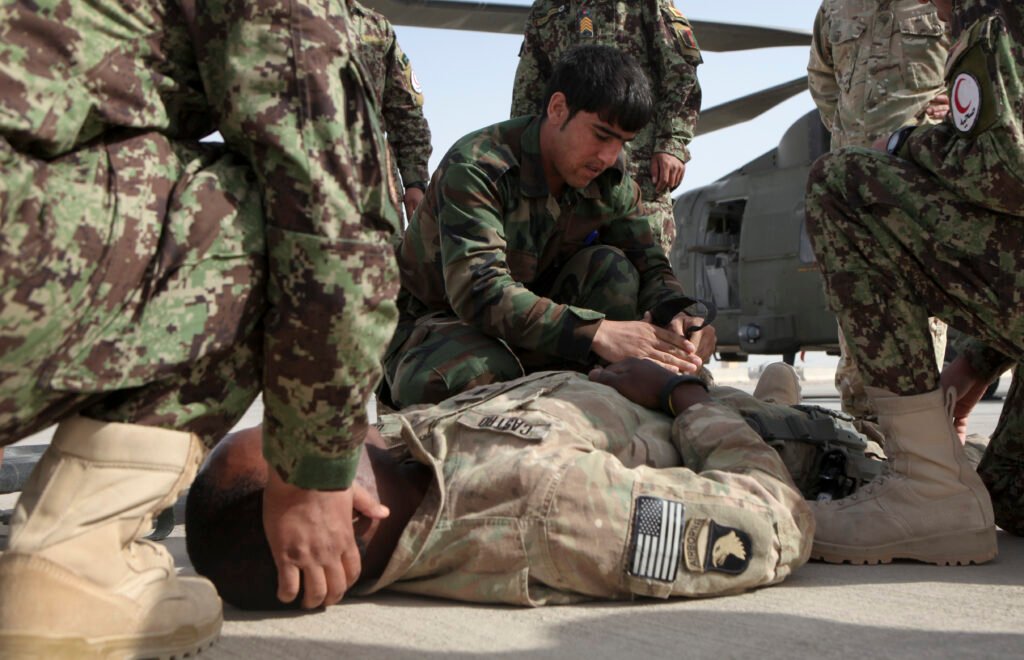
Triage is the systematic process of sorting patients based on the urgency and severity of their medical needs, allowing limited medical resources and personnel to be allocated where they will do the most good. Though most closely associated with mass casualty incidents and battlefield medicine, triage principles apply across virtually all emergency medical settings, including routine emergency department operations.
n
Common Classification Systems
n
Many triage systems use color-coded categories to communicate patient priority quickly among responders who may not have time for lengthy verbal handoffs. A typical scheme designates immediate life-threatening injuries requiring urgent intervention as red, serious but not immediately life-threatening injuries as yellow, minor injuries that can wait for care as green, and in mass casualty situations, a black category for those who have died or whose injuries are deemed unsurvivable given available resources. These simple visual categories allow rapid, consistent communication across a chaotic scene involving many responders.
n
Triage Under Resource Scarcity
n
The most ethically challenging aspect of triage emerges during mass casualty incidents or disasters where patient needs overwhelm available resources, forcing a shift from individual-focused medical ethics toward population-level decision making aimed at saving the greatest number of lives possible. This shift can require deprioritizing patients who would normally receive immediate intervention under ordinary circumstances, a difficult but necessary adjustment that triage training specifically prepares responders to make under extreme time pressure and emotional strain.
n
Continuous Reassessment
n
Triage is rarely a single, one-time decision, since a patient initial category can change as their condition evolves, either improving with treatment or deteriorating despite it, which means effective triage systems build in processes for ongoing reassessment rather than treating the initial sorting as final. Experienced providers understand that a patient classified as lower priority at first assessment may require urgent reclassification minutes later, making continuous observation an essential companion to the initial sorting process.
n
Training and Decision Making Under Pressure
n
Because triage decisions must often be made within seconds using limited information and under significant emotional and time pressure, training emphasizes developing rapid, standardized assessment skills that reduce reliance on slower deliberate reasoning that a chaotic scene may not allow time for. Simulation-based training, using mock scenarios and sometimes live actors portraying patients, helps providers build the pattern recognition and decisiveness needed to apply triage principles reliably when an actual mass casualty incident does not permit the luxury of careful, unhurried consideration.
n
Triage in Different Settings
n
While mass casualty triage receives the most attention in emergency management discussions, triage principles apply across many other settings, including routine emergency department operations where patients are sorted by acuity to determine treatment order, telephone-based nurse triage lines that help callers determine the appropriate level of care, and even battlefield medicine where military medical personnel apply similar sorting principles under extreme combat conditions. Recognizing triage as a broadly applicable concept, rather than one confined only to disaster scenarios, helps explain why it receives such extensive attention across medical training generally.
n
Ethical Considerations
n
Triage decisions, particularly under scarcity, inevitably raise difficult ethical questions about how to fairly allocate limited resources among patients with competing needs, questions that medical ethics and emergency planning fields have worked to address through established frameworks and protocols rather than leaving each individual provider to navigate these dilemmas entirely alone in the moment. Having these frameworks established and practiced in advance helps ensure some consistency in how difficult allocation decisions are made, even though the emotional difficulty of actually making them during a real incident can never be fully eliminated through protocol alone.
n
Documentation During Triage
n
Even amid the urgency of sorting patients, maintaining some form of documentation, whether a simple tag attached to each patient or a more detailed tracking system, helps ensure continuity of care as patients move through subsequent treatment and transport stages, and supports later efforts to account for all patients involved in an incident. Standardized triage tags used across many systems typically record basic assessment findings and the assigned priority category, providing essential information to whichever provider next encounters that patient.
n
Looking Ahead
n
Research into triage methodology continues to refine the accuracy and consistency of rapid assessment tools, aiming to reduce variability between different providers applying the same criteria to the same patient. As mass casualty incidents continue to pose recurring challenges across many regions, ongoing investment in triage training and standardized protocols remains a priority for emergency medical systems seeking to improve outcomes under the most demanding circumstances they may ever face.
n
Summary of Protective Role
n
Ultimately, triage exists to make the unavoidable difficult choices of scarce-resource medicine as consistent, rapid, and defensible as possible, converting what could otherwise be arbitrary or panicked decision making into a disciplined process grounded in training and shared professional standards.
n
Pediatric and Special Population Triage
n
Standard adult triage criteria often require modification when applied to children, elderly patients, or individuals with pre-existing medical conditions, since normal physiological responses and injury presentation can differ significantly across these populations, prompting the development of specialized pediatric triage tools designed to account for these important differences in assessment.
n
That combination of speed and discipline is precisely what separates effective triage from mere guesswork under pressure.
n
Investing consistently in that training pays off most clearly during the rare but inevitable moments when it is needed most urgently.
n
That discipline, refined over decades of hard experience, continues to save lives whenever resources fall short of overwhelming need.
n
It remains a cornerstone of emergency medicine for good reason.
n
It will remain so for the foreseeable future.
Key facts
- Array
Sources
- Array
Editorially reviewed by Specialty Digest Editorial TeamLast reviewed November 3, 2026Researched and drafted with AI assistanceReport an issue