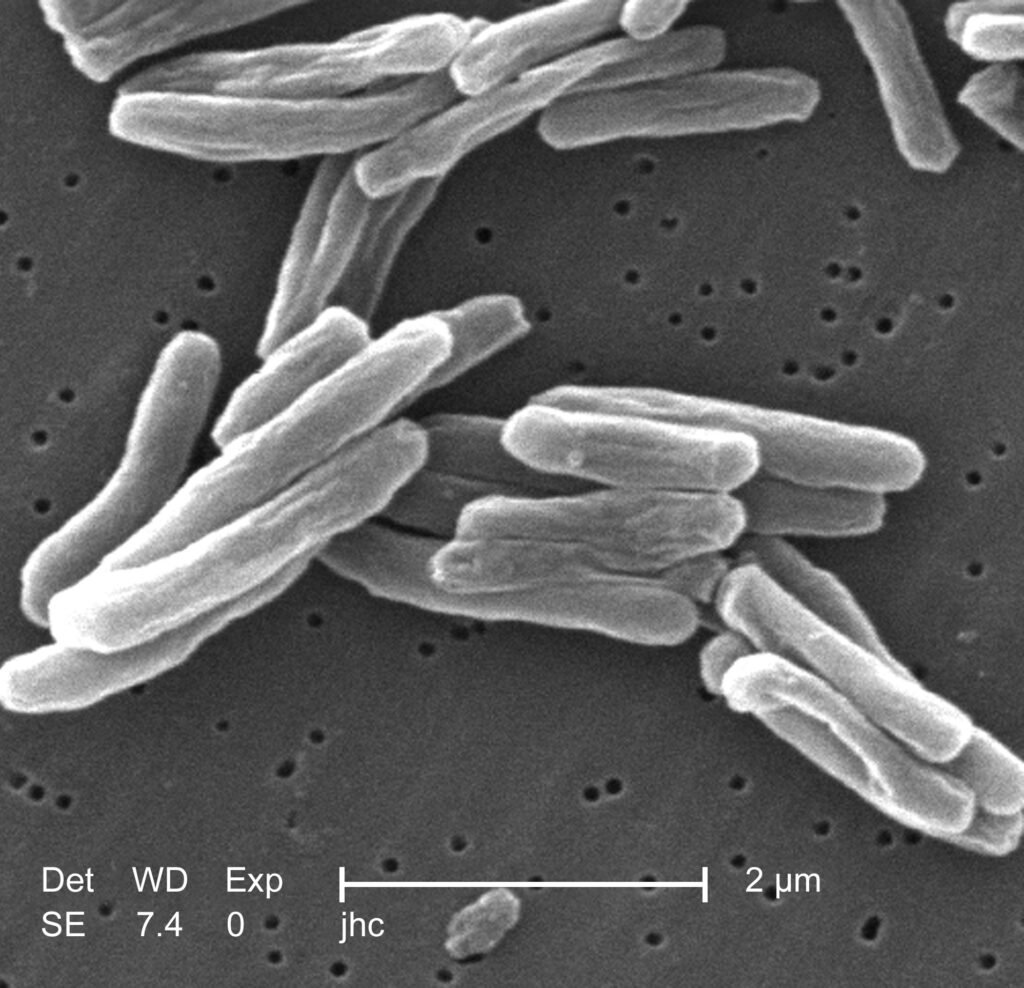
Tuberculosis is a bacterial infectious disease caused by Mycobacterium tuberculosis that most commonly affects the lungs, though it can also spread to affect other parts of the body, including the kidneys, spine, and brain, in a form known as extrapulmonary tuberculosis. Despite being preventable and curable with appropriate treatment, tuberculosis remains one of the leading causes of death from a single infectious agent worldwide, disproportionately affecting lower-income countries and communities with limited access to healthcare, nutrition, and diagnostic resources.
Transmission and Latent Infection
Tuberculosis spreads through the air when a person with active pulmonary tuberculosis coughs, speaks, or sneezes, releasing tiny droplets containing the bacteria that another person can inhale, though transmission typically requires fairly prolonged close contact in a shared indoor space rather than brief casual exposure in passing. Many people who become infected never develop active disease; instead, their immune system contains the bacteria in a dormant state known as latent tuberculosis infection, in which a person carries the bacteria without symptoms and cannot transmit it to others, though the infection can reactivate later, particularly if the immune system becomes weakened by another illness, malnutrition, or immunosuppressive medication.
Symptoms of Active Disease
Active pulmonary tuberculosis typically produces a persistent cough lasting three weeks or longer, often accompanied by chest pain, coughing up blood in more advanced cases, fatigue, unexplained weight loss, fever, and night sweats. Because these symptoms develop gradually and can resemble several other respiratory conditions, tuberculosis is sometimes not suspected or diagnosed until the disease has progressed significantly, or until it has already been unknowingly transmitted to others who share close, prolonged contact with the affected person.
Diagnosis
Diagnosing tuberculosis typically involves a combination of a skin test or blood test to detect immune sensitization to the bacteria, chest X-rays to look for characteristic lung abnormalities, and laboratory analysis of sputum samples to directly identify the bacteria and determine whether a particular strain is drug-resistant. Distinguishing latent infection, which requires no immediate antibiotic treatment but is monitored, from active disease, which requires prompt treatment, is a central part of the overall diagnostic process.
Treatment and Drug Resistance
Standard treatment for active tuberculosis involves a combination of multiple antibiotics taken together for a minimum of six months, a notably longer course than most bacterial infections require, because the bacteria grow slowly and can persist in a dormant state within tissue that shorter courses of antibiotics would fail to fully eliminate. Incomplete or inconsistent treatment is a major driver of drug-resistant tuberculosis, in which the bacteria survive standard antibiotics and require longer, more toxic, and far more expensive treatment regimens, making supervised treatment programs that help ensure patients complete their full course, often called directly observed therapy, an important public health strategy.
Global Public Health Impact
Tuberculosis remains heavily concentrated in regions with limited healthcare infrastructure, often compounded by risk factors including HIV infection, malnutrition, and overcrowded living conditions that facilitate transmission between people in close, prolonged contact. International public health efforts, including the Bacillus Calmette-Guerin vaccine used in many countries with high tuberculosis rates, expanded diagnostic testing, and supervised treatment programs, have reduced global tuberculosis deaths substantially over recent decades, though the disease remains a major ongoing public health challenge, particularly in crowded urban settings and where drug-resistant strains are spreading.
Tuberculosis and HIV
Tuberculosis and HIV interact in a particularly dangerous way, since HIV weakens the immune system’s ability to contain latent tuberculosis infection, making reactivation to active disease substantially more likely in people living with HIV than in the general population, especially as HIV infection progresses without treatment. Tuberculosis is, in turn, one of the leading causes of death among people living with HIV worldwide, which is why many public health programs that address HIV also incorporate routine tuberculosis screening and preventive treatment as a core, standard part of comprehensive care for this population.
Treating both conditions simultaneously requires careful coordination, since some antiretroviral medications used for HIV and some antibiotics used for tuberculosis can interact with each other, and both treatment regimens are demanding to follow consistently over many months, placing a real burden on patients already managing two serious chronic conditions at once. Health systems in regions with high rates of both diseases have developed integrated treatment and monitoring programs specifically to improve outcomes for people managing both infections at once.
Multidrug-Resistant and Extensively Drug-Resistant Tuberculosis
Multidrug-resistant tuberculosis, defined as resistance to at least the two most effective first-line antibiotics, and the even more severe extensively drug-resistant form, which is also resistant to key second-line drugs, represent some of the most difficult infectious diseases to treat anywhere in medicine. Treatment for drug-resistant tuberculosis can take up to two years, involves medications with more frequent and more severe side effects, and succeeds less often than treatment for standard, drug-susceptible tuberculosis, even under close medical supervision, making prevention of resistance through consistent, properly supervised treatment from the very start a critical global health priority.
FAQs
What is the difference between latent and active tuberculosis?
In latent tuberculosis, a person carries the bacteria without symptoms and cannot transmit it to others, while active tuberculosis causes symptoms and is contagious, requiring prompt treatment.
Why does tuberculosis treatment take so much longer than treatment for most bacterial infections?
Tuberculosis bacteria grow slowly and can persist in a dormant state within tissue, so a minimum of six months of combination antibiotic treatment is needed to fully eliminate the infection and prevent relapse or drug resistance.
Quick checkWhat is the difference between latent and active tuberculosis?Show answer
In latent tuberculosis, a person carries the bacteria without symptoms and cannot transmit it to others, while active tuberculosis causes symptoms and is contagious, requiring prompt treatment.
Editorially reviewed by Specialty Digest Editorial TeamLast reviewed November 2, 2026Researched and drafted with AI assistanceReport an issue