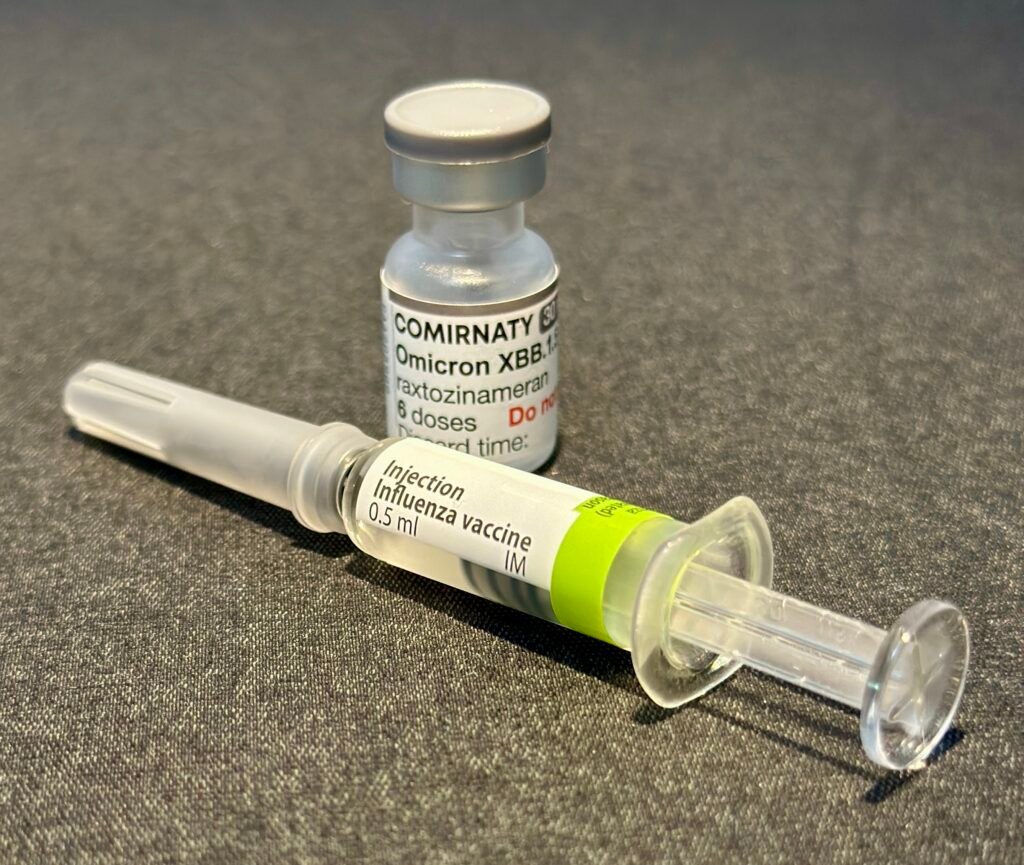
A vaccine is a biological preparation that trains the immune system to recognize and fight a specific pathogen, such as a virus or bacterium, without causing the disease that pathogen normally produces. It works by exposing the immune system to a harmless component or weakened version of the pathogen, prompting the body to produce antibodies and memory immune cells that can respond rapidly and effectively if the person is later exposed to the real, disease-causing version of that pathogen.
How Vaccines Train Immunity
When a vaccine introduces a piece of a pathogen, called an antigen, into the body, specialized immune cells recognize it as foreign and mount a response that includes producing antibodies, proteins that can specifically bind to and help neutralize that antigen, and generating memory B cells and T cells that persist long after the initial exposure. If the vaccinated person later encounters the actual pathogen, these memory cells allow the immune system to recognize and respond far more quickly and powerfully than it would during a first-ever natural infection, often preventing illness entirely or substantially reducing its severity.
Major Vaccine Types
Live attenuated vaccines use a weakened form of the actual pathogen that can still replicate briefly but is not virulent enough to cause serious disease in a healthy person, typically producing strong and long-lasting immunity, as with the measles, mumps, and rubella vaccine. Inactivated vaccines use a pathogen that has been killed or deactivated, which is generally safer for people with weakened immune systems but often requires booster doses to maintain strong immunity. Subunit, recombinant, and conjugate vaccines use only a specific purified piece of the pathogen, such as a particular protein, rather than the whole organism. Messenger RNA vaccines, which gained widespread attention and use during the COVID-19 pandemic, instead deliver genetic instructions that prompt a person’s own cells to temporarily produce a harmless piece of the pathogen, triggering an immune response without introducing the pathogen itself at all.
Herd Immunity and Population Effects
When a sufficiently high proportion of a population becomes immune to a disease, either through vaccination or prior infection, the pathogen struggles to find enough susceptible hosts to sustain ongoing transmission, a phenomenon called herd immunity that indirectly protects even unvaccinated individuals, including those who cannot be vaccinated for medical reasons. The specific vaccination coverage threshold required to achieve herd immunity varies by disease, depending heavily on how contagious that particular pathogen is, with highly contagious diseases like measles requiring notably higher vaccination rates than less contagious ones to reliably prevent sustained community transmission.
Vaccine Safety and Testing
Vaccines undergo extensive testing before approval, progressing through phased clinical trials that first assess safety and appropriate dosing in small groups, then evaluate effectiveness and monitor for side effects in progressively larger and more diverse populations, followed by ongoing safety monitoring after widespread rollout to detect any rare adverse effects that trials involving thousands rather than millions of participants might not have revealed. Like any medical intervention, vaccines can cause side effects, which are typically mild and temporary, such as soreness at the injection site or a brief fever, though serious adverse reactions, while rare, are tracked carefully through established post-approval surveillance systems.
Global Immunization Programs
Coordinated global immunization efforts, supported by organizations including the World Health Organization and Gavi, the Vaccine Alliance, have dramatically reduced the global burden of diseases like measles, polio, and diphtheria over recent decades, with smallpox fully eradicated worldwide through vaccination and polio nearing eradication in most regions. Maintaining high vaccination coverage requires sustained public health infrastructure, reliable vaccine supply chains, particularly challenging in remote or resource-limited regions, and ongoing public trust, since even modest declines in vaccination rates can allow previously well-controlled diseases to resurge in affected communities.
Vaccine Schedules and Boosters
Recommended vaccination schedules, which specify the age or interval at which each dose of a given vaccine should be administered, are developed based on evidence about when a person’s immune system responds most effectively to a particular vaccine and how long protection from each dose is expected to last. Some vaccines provide durable, long-lasting immunity after the primary series, while others require periodic booster doses because either the vaccine-induced immunity naturally wanes over time or, in the case of viruses like influenza that mutate frequently, the circulating strains change enough that a previous vaccine formulation no longer matches them as closely.
Combination vaccines, which protect against multiple diseases in a single injection, such as a shot covering measles, mumps, and rubella together, reduce the total number of injections a person needs and have been shown to be as safe and effective as administering the equivalent vaccines separately, which has made them a standard feature of most childhood immunization schedules worldwide. Adjuvants, substances added to some vaccines specifically to enhance the immune response they generate, allow vaccine manufacturers to use a smaller amount of the actual antigen while still achieving strong immunity, which can also help stretch limited vaccine supply further during periods of high demand.
Vaccine hesitancy, a reluctance or refusal to vaccinate despite vaccine availability, has become a significant public health concern in various forms across many countries, driven by a range of factors including misinformation, historical mistrust of medical institutions in specific communities, and genuine though often statistically small concerns about side effects. Public health researchers generally find that addressing vaccine hesitancy effectively requires building trust through consistent, transparent communication and addressing underlying community concerns directly, rather than relying solely on providing more technical information about vaccine safety data, which alone has often proven insufficient to change minds already shaped by distrust or misinformation.
FAQs
How is an mRNA vaccine different from a traditional vaccine?
Instead of introducing a weakened or inactivated pathogen, an mRNA vaccine delivers genetic instructions that prompt a person’s own cells to temporarily produce a harmless piece of the pathogen, triggering an immune response that way.
Why does herd immunity protect people who aren’t vaccinated?
When enough of a population is immune, a pathogen struggles to find susceptible hosts to sustain transmission, which indirectly reduces exposure risk even for those who cannot be vaccinated.
In the news
Quick checkWhy do some vaccines require periodic booster doses while others do not?Show answer
Either the vaccine-induced immunity naturally wanes over time, or, for viruses that mutate frequently, circulating strains change enough that the original vaccine formulation no longer matches as closely.
Editorially reviewed by Specialty Digest Editorial TeamLast reviewed November 2, 2026Researched and drafted with AI assistanceReport an issue