Overview
Universal basic income, often abbreviated UBI, is a proposed economic policy in which a government provides every individual a regular cash payment without conditions related to income, employment, or need. Proponents frame it as a simpler, more dignified alternative to the patchwork of means-tested programs that characterize most modern welfare systems, while critics raise concerns about cost and potential effects on work incentives.
Pilot Programs
Several governments and organizations have tested basic income concepts through limited pilot programs. Finland ran a two-year experiment from 2017 to 2018 providing a modest monthly payment to a randomly selected group of unemployed citizens. GiveDirectly has conducted long-running basic income trials in rural Kenya, and several American cities have piloted guaranteed income programs targeting specific populations such as low-income families or formerly incarcerated individuals.
Debates and Open Questions
Supporters argue basic income could reduce poverty, simplify administration, and provide a buffer against job displacement from automation. Opponents raise concerns about the enormous cost of a truly universal program, potential inflationary effects, and uncertainty about how an unconditional payment might affect labor force participation over the long term. Most pilot programs to date have been small-scale and time-limited, leaving many questions about a nationwide, permanent program unresolved.
Funding Proposals
Proposals for funding a nationwide universal basic income vary widely, ranging from value-added taxes and carbon dividends to consolidating and replacing existing means-tested programs with a single cash payment. Economists disagree sharply about the fiscal feasibility of a sufficiently generous universal program, with estimates of total cost varying enormously depending on the proposed payment amount and whether it would replace or supplement existing benefit programs.
Labor Market Effects
A central question in basic income research concerns its effect on work incentives. Early pilot results have generally shown modest reductions in work hours, particularly among secondary earners and new parents, though researchers caution that short-term, geographically limited pilots may not reliably predict the effects of a permanent, nationwide program, which could alter behavior and local labor markets in ways a temporary trial cannot fully capture.
Philosophical Arguments
Beyond practical policy debates, universal basic income has attracted philosophical arguments rooted in concepts of unconditional dignity and freedom, with some advocates framing it as a form of social dividend owed to all citizens from shared national wealth or resources. Other thinkers approach the idea from a libertarian perspective, viewing a basic income as a simpler, less paternalistic replacement for a complex web of conditional government programs.
Looking Ahead
Interest in universal basic income has grown alongside concerns about automation displacing workers across many industries, and additional pilot programs continue to launch in cities and regions around the world. Whether any country moves toward a permanent, nationwide program remains uncertain, but the policy continues to attract serious research attention and political debate.
Comparisons to Negative Income Tax
Universal basic income is often discussed alongside a related concept known as the negative income tax, in which the government provides a payment that phases out as earned income rises, rather than providing the same flat payment to everyone regardless of income. Economist Milton Friedman was an early and influential advocate of the negative income tax concept, framing it as a more efficient alternative to a patchwork of separate welfare programs.
Case Study: Alaska Permanent Fund
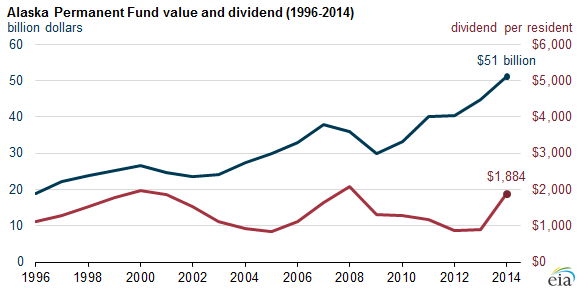
The closest existing approximation of a universal basic income in the United States is the Alaska Permanent Fund Dividend, which distributes a share of state oil revenue to every eligible Alaska resident annually regardless of income. While the payment is far smaller than most proposed basic income amounts and fluctuates with oil revenue and investment returns, researchers have studied it extensively as a real-world natural experiment for understanding the effects of unconditional cash payments on recipient behavior and wellbeing.
Researchers continue to study how recipients of pilot basic income payments allocate the funds, with early results showing spending concentrated on necessities such as food, housing costs, and debt repayment rather than discretionary purchases.
Fiscal Scale Comparisons
Analysts attempting to estimate the fiscal scale of a hypothetical nationwide basic income program often compare proposed costs against existing federal spending on defense, healthcare, or Social Security to contextualize the scale of resources that a universal program at various payment levels would require relative to current government budgets.
Some employers and labor advocates have expressed concern that a basic income could be used to justify reduced employer-provided benefits, a possibility that remains largely theoretical given the limited scale of programs tested so far.
Advocates for basic income sometimes point to reduced administrative costs as a secondary benefit, since a single unconditional payment requires far less eligibility verification infrastructure than dozens of separate targeted programs.
Some proposed basic income designs would phase in gradually by age group, starting with young adults or retirees, as a way of managing fiscal cost while still testing the broader concept at meaningful scale.
Skeptics of universal basic income sometimes argue that targeted programs, despite their complexity, remain more cost-effective at reducing poverty per dollar spent than an equivalent-cost universal payment distributed to everyone regardless of need.
Several nonprofit research organizations maintain ongoing databases tracking active and completed basic income pilots worldwide, providing a resource for comparing designs, funding sources, and preliminary findings across different programs.
City-level basic income pilots in the United States have often targeted specific vulnerable populations, such as pregnant individuals or young adults aging out of foster care, rather than entire general populations.
Debate over universal basic income frequently resurfaces during periods of heightened concern about automation, each wave bringing renewed pilot funding and research attention from both governments and philanthropic foundations.
Key facts
- Array
Quick checkWhat distinguishes universal basic income from traditional welfare?Show answer
Universal basic income provides the same unconditional cash payment to every individual regardless of income or employment, while traditional welfare programs are typically means-tested and target specific needs or populations.
Sources
- Array
Editorially reviewed by Specialty Digest Editorial TeamLast reviewed November 4, 2026Researched and drafted with AI assistanceReport an issue