Ten years of reef surveys across the Pacific and the Atlantic are converging on an uncomfortable, and oddly hopeful, conclusion: coral reefs are not dying in unison. Some are eroding fast. Others, sitting in water that looks nearly identical from a boat, are holding their ground — and the difference has as much to do with local water chemistry and land-use history as with the planet’s rising average temperature.
What a decade of diving surveys turned up
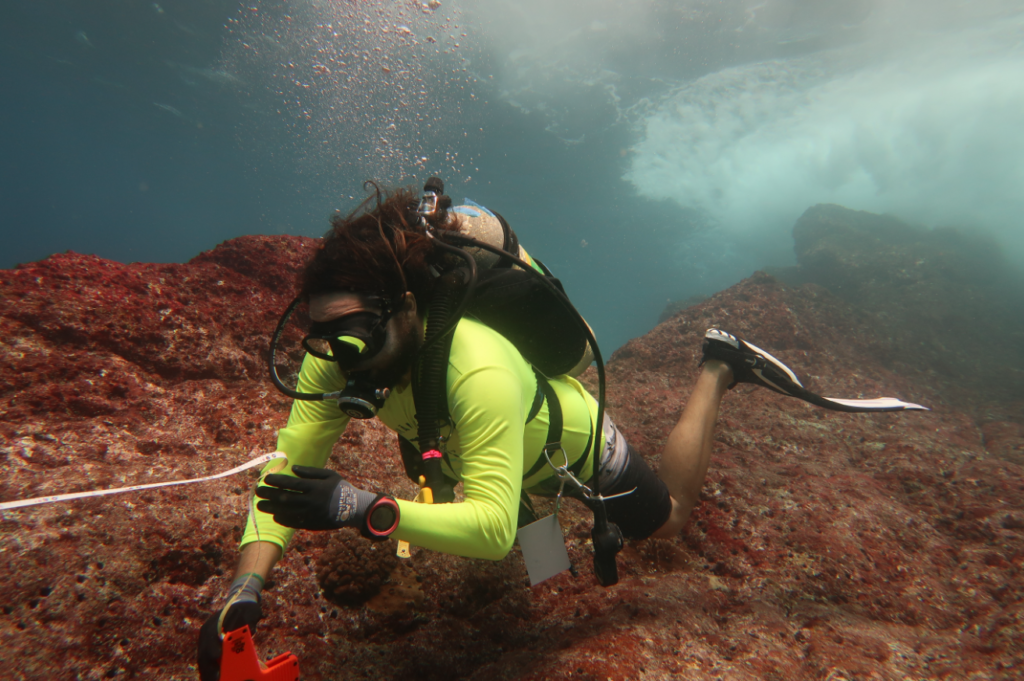
NOAA’s National Coral Reef Monitoring Program (NCRMP) — described by the agency as the largest coral reef monitoring effort in the world — has spent more than a decade doing the unglamorous fieldwork headlines rarely capture: divers laying transect tapes, counting coral colonies, and collecting water samples at the same fixed sites, year after year, across the U.S. Virgin Islands, Puerto Rico, Florida, the Flower Garden Banks, and the Pacific territories. NOAA’s Atlantic Oceanographic and Meteorological Laboratory (AOML), which leads the Atlantic side of the program, has logged more than 6,500 water samples and 16 research cruises since monitoring there began in 2013.
One of the clearest local case studies comes from the Pacific. In January 2020, a NOAA survey team dove 60 sites across two adjacent bays on the island of Tutuila, American Samoa — Vatia Bay and Faga’alu Bay — to check how each was faring roughly six years after Faga’alu became the target of a watershed-management effort to cut sediment and nutrient runoff from the surrounding hillsides. The contrast was stark. In Faga’alu’s shallow northern forereef, the survey team reported rising coral cover, writing plainly that “the corals are growing here again.” A few hundred meters away in Vatia Bay, which had no comparable runoff intervention, high turbidity and sediment stress persisted, even though Vatia held more coral species overall. The same surveys found one Porites lobata colony — a massive dome roughly 13 feet wide and 10 feet tall — with more than 80 percent of its surface still alive despite heavy sedimentation, apparently by continuously shedding mucus to clear silt from its tissue. Not every colony nearby had managed the same trick: researchers also found the invasive corallimorph Rhodactis howesii establishing itself at several mid-depth Vatia sites, a species capable of smothering slower-growing coral outright.
The reefs keeping their skeletons — and the ones losing them
A separate, larger NOAA-led analysis makes the same point with harder numbers. In a November 2022 study in Scientific Reports, NOAA AOML’s Travis Morris, Ian Enochs and colleagues measured the net carbonate balance — whether a reef is building its limestone skeleton faster than it erodes — at 723 sites across the Florida Reef Tract. Seventy percent of those sites were net erosional, meaning the reef structure itself is now shrinking. The erosion wasn’t spread evenly: reefs off densely developed southeast Florida were losing ground fastest, averaging −0.51 kilograms of calcium carbonate per square meter per year, with 98 percent of sites there in decline. Reefs in the remote Dry Tortugas were roughly holding steady at −0.023 kilograms — essentially a wash. And mid-channel reefs in the Florida Keys were doing something almost no one expected: gaining ground, at a positive 0.84 kilograms per square meter per year, making them, in the study’s own phrase, potential “hold-outs for reef development” even as reefs closer to shore decline.
The study traced that difference less to temperature than to two more local variables: how much living coral cover a reef retains, and how much bioerosion its resident parrotfish are doing by grazing algae off the reef surface — a process that is, confusingly, both essential to reef health (parrotfish keep algae from smothering coral) and a direct source of the erosion showing up in the carbonate math.
Why local water quality is doing more work than anyone expected
Put the Pacific and Atlantic findings together, and the pattern NOAA’s monitoring keeps surfacing is not simply “reefs are dying” but “reef fate is being decided locally, reef by reef, by conditions a satellite can’t fully see.” NOAA Coral Reef Watch, the agency’s satellite-based bleaching early-warning system, is very good at forecasting basin-wide heat stress — but heat stress alone doesn’t explain why a Faga’alu forereef under active runoff management is recovering while an unmanaged bay next door is not, or why a mid-channel Keys reef is gaining limestone while a reef twenty miles closer to Miami is dissolving.
That doesn’t make warming a secondary problem — NOAA’s long-term data still shows the broad trend running toward loss, and severe basin-wide bleaching events can overwhelm even well-managed local reefs. The honest reading of a decade of surveys is a mixed one: local water quality, sediment management, and herbivore populations appear to buy individual reefs real, measurable resilience, but that resilience has limits nobody has fully mapped, and researchers still disagree about how much of it can be engineered versus how much simply reflects each reef’s underlying geography and depth. What the survey data has settled is narrower, and still significant: the old assumption that all reefs are declining at roughly the same rate no longer holds up against the numbers.
Sources: NOAA Fisheries, “Hope for Coral Reef Recovery in American Samoa? Preliminary Observations from the Field” (fisheries.noaa.gov); NOAA Pacific Islands Fisheries Science Center, “Identifying coral reef resilience potential in Tutuila, American Samoa” (InPort record); Morris, T., Enochs, I., Besemer, N., et al., “Low net carbonate accretion characterizes Florida’s coral reef,” Scientific Reports, November 2022 (nature.com); NOAA AOML, National Coral Reef Monitoring Program (aoml.noaa.gov); NOAA Coral Reef Watch (coralreefwatch.noaa.gov).
- NOAA Fisheries, “Hope for Coral Reef Recovery in American Samoa? Preliminary Observations from the Field,” survey conducted January 2020, Vatia and Faga’alu Bays, Tutuila. fisheries.noaa.gov.
- NOAA Pacific Islands Fisheries Science Center, “Identifying coral reef resilience potential in Tutuila, American Samoa based on NOAA coral reef monitoring data,” resilience assessment using field data collected 2010–2016 across 11 measurable resilience factors. InPort record 50521.
- Morris, T. M., Enochs, I. C., Besemer, N., et al. “Low net carbonate accretion characterizes Florida’s coral reef.” Scientific Reports 12, article 19583 (2022). nature.com; open-access version at PMC.
- NOAA Atlantic Oceanographic and Meteorological Laboratory, National Coral Reef Monitoring Program (NCRMP) overview and Florida carbonate-accretion research summary. aoml.noaa.gov/ncrmp; summary.
- NOAA Coral Reef Watch, satellite-based coral bleaching monitoring and decision-support system. coralreefwatch.noaa.gov.