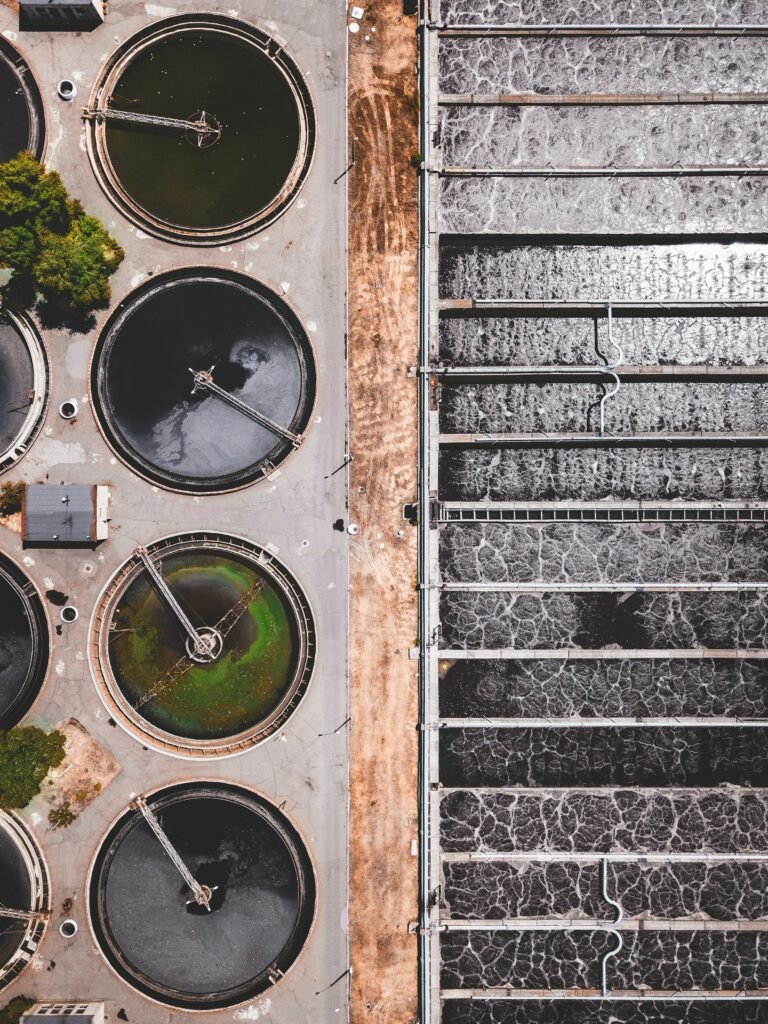
Sensor networks and old infrastructure are an unlikely but increasingly common pairing, and the results are already reshaping how utilities decide where to dig.
Most of the pipes carrying drinking water under major cities were laid before anyone thought to make them smart. Some of the cast-iron mains beneath American streets predate the automobile. Retrofitting a century of buried infrastructure with digital sensors sounds impractical — and mostly is, if attempted all at once. So utilities have settled on a narrower strategy: instrument the junctions most likely to fail, listen continuously for the acoustic signature of a leak, and fix problems while they are still small.
Listening for Leaks Before They Become Sinkholes
The clearest public example sits under Las Vegas Boulevard. In a partnership between the Las Vegas Valley Water District, Mueller Water Products, AT&T, IBM, and the Nevada Center of Excellence, engineers installed 13 permanent acoustic sensors along three miles of a 30-inch water main built in 1963 that supplies up to 7.5 million gallons a day. The sensors, part of Mueller’s EchoShore-TX platform, listen for the faint sound of water escaping through a crack or joint, upload the audio data over AT&T’s wireless network at set intervals, and let IBM-built algorithms flag anomalies for review on a utility dashboard.
“By having this technology we’re allowed to monitor the pipe on a continuous basis to detect those small leaks before they get to be big leaks,” said Charles Scott, an engineering project manager at the Las Vegas Valley Water District, in a statement describing the program. Since it began deploying acoustic monitoring in 2004, the district says it has found and fixed more than 1,600 underground leaks and conserved roughly 290 million gallons of water — a meaningful figure in a desert city where replacing a mile of water main can cost well over a million dollars.
The economics explain why more utilities are following a similar path. A sensor network is comparatively cheap; excavating a city street to replace a main that has not yet failed is not. By concentrating instrumentation on the highest-risk segments — older pipe, high-pressure zones, sections with a history of breaks — utilities can extend the working life of infrastructure they cannot afford to replace wholesale for decades.
From Leak Detection to Real-Time Sewer Control
A parallel, and arguably more ambitious, version of this idea has played out in South Bend, Indiana, where the target was not drinking water but the city’s combined sewer system — pipes that carry both stormwater and wastewater and can overflow into the St. Joseph River during heavy rain. Working with a University of Notre Dame spinoff called EmNet, electrical engineering professor Michael Lemmon and then-graduate student Luis Montestruque built a network of sensors and remotely controlled valves that monitor flow throughout the sewer system in real time and redirect wastewater to available capacity elsewhere in the network before it overflows.
The city had been operating under a roughly $700 million-plus consent decree with the Environmental Protection Agency to curb sewer overflows through traditional means — bigger pipes, bigger storage tanks. The smart-sewer network let South Bend hit its environmental targets for a fraction of that projected cost: officials and Notre Dame estimated the technology saved the city more than $400 million against original projections, later revised toward $437 million, while extending the deadline for near-zero overflows to 2038. Xylem, the water technology company that acquired EmNet in 2018, has since marketed the underlying platform to other cities. “These savings could not have been achieved without the technology and support from the University of Notre Dame,” South Bend Mayor James Mueller said of the project.
Why the Approach Is Spreading
What makes both examples notable is what they are not: neither required tearing out and replacing the underlying pipe network. The Las Vegas system layers acoustic sensors and cellular connectivity onto a six-decade-old water main. The South Bend system layers sensors, software, and a handful of adjustable valves onto sewer infrastructure that in places dates to the early twentieth century. In each case, the intervention is additive rather than wholesale — a response to the reality that most water utilities operate on tight capital budgets and cannot simply replace everything that is old.
That reality is a large part of why sensor retrofits, rather than full pipe replacement, have become the default upgrade path in cities from Nevada to the Midwest. The U.S. Environmental Protection Agency has documented “smart sewer” real-time control programs as a case study for other municipalities weighing similar consent-decree obligations, and vendors like Mueller and Xylem now sell versions of these platforms as standard products rather than one-off pilots. The pipes underneath American cities are still, in most cases, exactly as old as they were a decade ago. What has changed is the amount the utilities managing them now know about what is happening inside.
Sources: Mueller Water Products, “Echologics’ Cutting Edge Leak Detection in the Las Vegas Valley Water District with AT&T and IBM” (muellerwaterproducts.com); Xylem, “South Bend, Indiana Reduces Combined Sewer Overflow and Saves $500 Million,” case study (xylem.com); University of Notre Dame News, “‘Smart sewer’ technology leads to nearly $450 million in savings for South Bend,” August 25, 2021 (news.nd.edu); U.S. Environmental Protection Agency, “Smart Sewers” program overview (epa.gov).
- Mueller Water Products, “Echologics’ Cutting Edge Leak Detection in the Las Vegas Valley Water District with AT&T and IBM” — muellerwaterproducts.com
- Xylem, “South Bend, Indiana Reduces Combined Sewer Overflow by 70% and Saves $500 Million” (case study) — xylem.com
- University of Notre Dame News, “‘Smart sewer’ technology leads to nearly $450 million in savings for South Bend,” August 25, 2021 — news.nd.edu
- U.S. Environmental Protection Agency, “Smart Sewers” and “Combined Sewer Overflow Smart Sewers” program pages — epa.gov